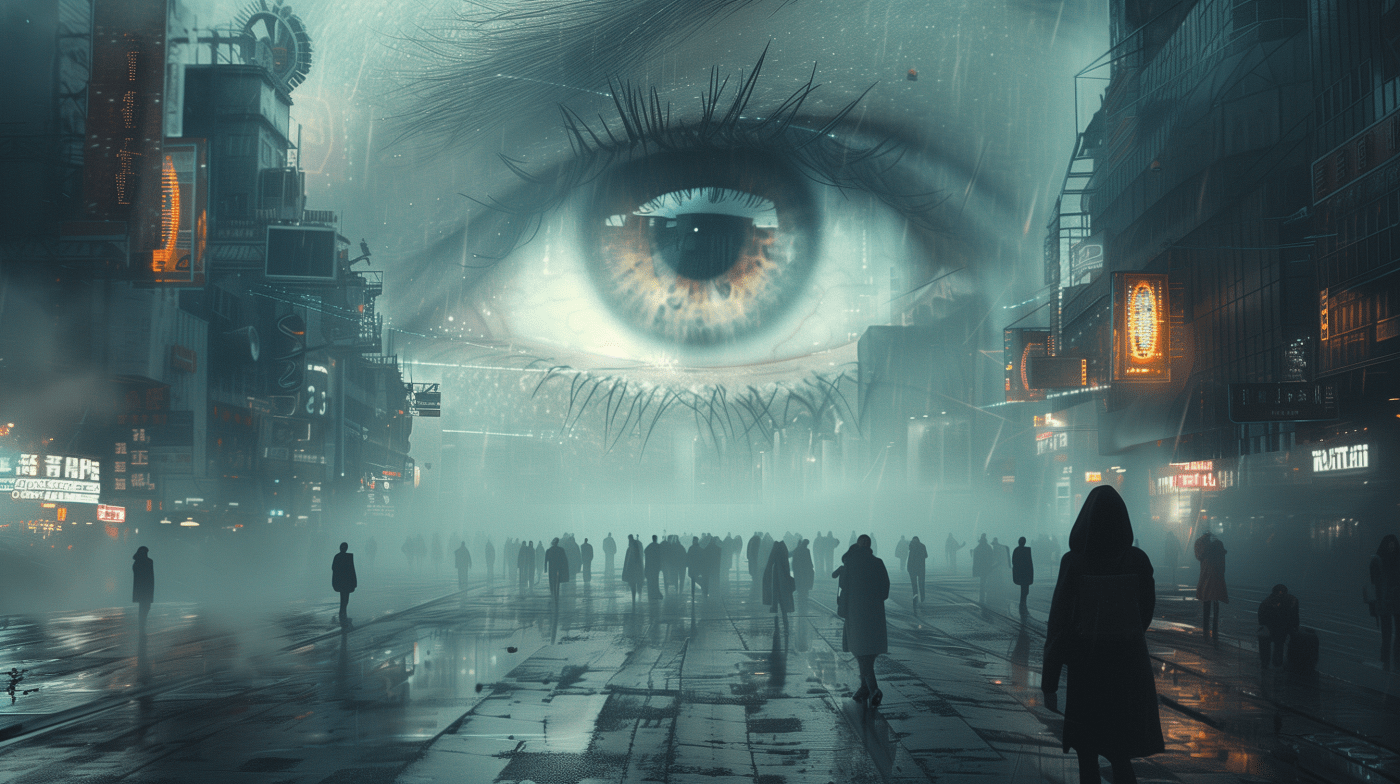
It was February 2007. I was in my late 20s, scraping by on $1200 a month, living in a small shared apartment with a friend. Kraft dinners were a regular meal, and each day felt like a grind. The world seemed rigged in favor of older generations, who controlled the power, the wealth, and the future. Sitting in university lectures, I felt the weight of a society that had left my generation—Millennials—on the fringes. The injustice gnawed at me. I was frustrated, even angry, with the imbalance of power. I believed it was our duty, my duty, to take some of it back, to at least balance it out.
Like many of my peers, I was eager to challenge authority. We saw ourselves as the antidote to a world broken by older generations. The Boomers seemed out of touch, and we, the Millennials, wanted to tear down their institutions, reclaim our future, and set a new course for humanity. It was exhilarating to think we could be part of a revolution.
I craved change. I wanted to be part of something bigger than myself, to disrupt the status quo, to overthrow the powers that had led us to this point. Activism felt like the only way forward, and I believed that radical action was the key to righting the wrongs of the past. In that moment, it felt righteous, necessary—like we had no choice but to fight.
But time—and history—has taught me that change is not as simple as overthrowing the old guard. Movements born out of righteous anger often fall into the same traps as those they seek to replace. We wanted change, but we rarely stopped to consider what that change would look like, or what unintended consequences might arise. I now realize how critical it is to strike a balance between pushing for progress and respecting the foundational principles that keep society intact.
Looking back, I see how dangerous that thinking can be. The grass is always greener on the other side, as they say, but there’s a real risk that, in our rush to change the world, we end up repeating the very mistakes we sought to correct. There’s a delicate balance between pushing for necessary change and descending into unchecked revolution. Without careful consideration of the consequences, we risk tearing apart the fabric of our society—something Orwell warned us about in Animal Farm and 1984. The parallels between these iconic works and today’s movements, particularly Wokeism, are stark and unsettling.
The Rise of Wokeism: Division and Isolation
Having witnessed the recent rise of Wokeism, both among friends and in places of work, I’ve seen firsthand how it alienates people and sows division. What initially presented itself as a movement for justice and awareness has begun to fracture the very relationships and communities it once sought to uplift. It worries me that the worst is yet to come for our society, especially as we become more isolated, thanks to the dominance of technology.
We’re forgetting how to socialize in the ways we once did—face-to-face, with nuance and empathy. Now, ridicule and exclusion are easier than ever before. Social media has created platforms where disagreements quickly turn into public shaming, and those who fall out of step with the prevailing narrative are often cast out, humiliated, and silenced. As future generations grow up in this digital environment, we’re already seeing the impact on a massive scale: young people raised in the age of Wokeism, learning to navigate a world where disagreement is dangerous, and conformity is the safest route.
This online culture of exclusion and ridicule, coupled with the rise of Woke ideology, threatens to isolate us further. It makes me worry for the future, where polarization and hostility may become the new normal, and we lose the very things that bind us together—conversation, understanding, and tolerance.
“The more we rely on technology to mediate our relationships, the more alienated we become from one another. Real connections are eroded by digital interactions, leaving us vulnerable to isolation and division.” – Sherry Turkle, Alone Together
Defining Woke Ideology and the Dangers of Its Critics
Woke ideology, at its core, emerged from the desire to confront and address social inequalities. It emphasizes awareness of privilege, systemic injustices, and the importance of rectifying these wrongs. At first glance, these seem like commendable goals. However, over time, Wokeism has evolved into something far more complex and, in many cases, far more dangerous.
Wokeism operates on the belief that the world is divided into the oppressed and the oppressors, and it often frames every conversation, interaction, and institution within this binary. The movement encourages the amplification of marginalized voices, but in doing so, it often silences anyone who questions the methods or ideologies behind it. It’s not enough to be neutral—one must actively align with the cause or be seen as part of the problem. This “with us or against us” mentality has turned dialogue into conflict and disagreement into moral failure.
Critics of Woke ideology face significant dangers. To question or critique the movement is often equated with defending oppression or injustice, making it nearly impossible to engage in a meaningful discussion. This creates a chilling effect where people are afraid to express dissenting views, fearing backlash, ridicule, or even losing their jobs. In the workplace, friendships, and broader society, the consequences of criticizing Wokeism can be swift and severe—ostracization, public shaming, or career damage.
The most concerning aspect of Woke ideology is its inflexible nature. It doesn’t allow for growth, learning, or alternative perspectives. Once labelled as an oppressor or someone who holds “problematic” views, there is little chance for redemption or conversation. This rigidity stifles progress rather than encourages it, making society more fractured and divided.
The danger, then, is not just the alienation of individuals but the gradual erosion of open dialogue and critical thinking in society. As Orwell warned in 1984 and Animal Farm, when a movement becomes so dominant that dissent is impossible, it stops being about justice and starts becoming about control. The ideals that Wokeism claims to champion—equality, empathy, and justice—are undermined by the very tactics it uses to silence its critics.
“Freedom is the freedom to say that two plus two make four. If that is granted, all else follows.” – George Orwell, 1984
Orwell’s Warning: The Road to Tyranny
In Animal Farm, the animals overthrow their human oppressors in the name of equality and justice. Yet, as Orwell so masterfully illustrates, the revolution soon sours. The pigs, who promised liberation, become indistinguishable from the humans they replaced. The slogan, “All animals are equal, but some animals are more equal than others,” captures the hypocrisy that so often accompanies revolutions. What began as a movement for justice becomes yet another system of oppression.
Today, movements like Wokeism claim to champion justice and equality, but they run the risk of replicating the very systems of control they seek to dismantle. Ideological purity is enforced, dissenting voices are silenced, and those who don’t conform are punished—sometimes ruthlessly. This bears chilling similarities to the world of 1984, where freedom of thought is forbidden, and “doublethink” becomes a way of life. Cancel culture, while initially a tool for accountability, has evolved into a form of modern-day thought policing.
In my younger years, I couldn’t see how these things could happen. I believed in the purity of our cause. But now, I understand how easy it is for a movement, even one born out of good intentions, to slide into authoritarianism. The road to hell is often paved with good intentions, and Orwell’s works remain a powerful reminder of how revolutions, unchecked, can quickly spiral into new forms of tyranny.
The Cyclical Nature of Revolution
Human history is haunted by a relentless cycle: societies rise against oppression, only to eventually succumb to the very forces they sought to overthrow. Orwell’s works capture this tragic pattern, where movements for freedom and justice often devolve into new forms of tyranny. The Bolshevik Revolution in Russia, with its promises of equality and justice for all, descended into one of the bloodiest and most oppressive regimes in history under Joseph Stalin. Similarly, in Cambodia, an idealistic revolution under the Khmer Rouge spiralled into genocide, leaving behind a trail of death and destruction.
Stalin’s Russia
Stalin’s reign of terror claimed an estimated 20 million lives, a figure that sends shivers down the spine. His rule was marked by mass purges, brutal forced labor camps known as the Gulag, orchestrated famines like the Holodomor, and widespread executions. Communities were decimated, families torn apart, and any hint of dissent was crushed under the weight of Stalin’s iron fist. The systematic brutality was so far-reaching that entire populations were reduced to ashes—victims of one man’s ruthless pursuit of power. Beneath the promise of a socialist utopia lay unimaginable suffering, as millions perished in agony, starved or worked to death, their cries for help swallowed by the oppressive machinery of the state.
Pol Pot’s Cambodia
If Stalin’s terror was nightmarish, Pol Pot’s Cambodia was nothing short of a descent into hell. Under the Khmer Rouge, a radical vision of equality devolved into one of the most horrifying experiments in social engineering the world has ever seen. Pol Pot’s regime turned Cambodia’s peasants into instruments of destruction, pitting them against the middle and upper classes—teachers, doctors, lawyers, business owners, and intellectuals. The slaughter was not clinical; it was primal. Hammers, axes, and pitchforks became the tools of execution, chosen to save bullets for more “worthy” endeavours. The revolution, sold as a path to liberation, quickly devolved into madness.
Nearly 2 million people, or approximately 25% of Cambodia’s population, were annihilated through mass executions, forced labour, and starvation. Cambodia’s cities were emptied, and its people were herded like livestock into rural labour camps where disease and hunger ravaged the land. The Khmer Rouge labelled anyone with an education as an enemy of the state, and the “killing fields” became their final resting place—grotesque mass graves scattered across the country. Pol Pot’s vision of an agrarian utopia became a genocidal nightmare, where idealism mutated into barbarism.
Aftermath: The Endless Cycle
Stalin’s Soviet Union and Pol Pot’s Cambodia stand as chilling reminders of the catastrophic consequences of unchecked ideological zeal. Both revolutions followed the same terrifying pattern: a society in crisis, a movement ignited by righteous anger, and an inevitable descent into terror and oppression. What began as revolts against tyranny became the very embodiment of tyranny itself. As Orwell so presciently observed, “Tyranny is part of humanity.” The liberators, once seen as saviours, soon become indistinguishable from the oppressors they overthrew.
In our rush to dismantle old systems, we often forget that not all structures are beyond repair. While real injustices demand action, the dangers of pursuing change without fully considering the consequences are immense. We risk replacing one form of oppression with another, repeating the same tragic cycle that has plagued humanity for centuries.
The staggering loss of life in these historical revolutions is a chilling reminder of how noble intentions can spiral into unspeakable atrocities. Movements that begin with the promise of equality and justice can easily transform into systems of control, censorship, and violence. Orwell warned us that the fight for a better world, when unchecked, often leads to oppression in a new guise. The cycle continues, and humanity remains trapped in its vicious grip.
The Danger of Censorship and the Need for Open Dialogue
One of the greatest threats to society today is the growing trend of censorship, particularly on social media. In 1984, Orwell envisioned a world where language itself was manipulated to control thought. Newspeak, the fictional language of the novel, was designed to limit freedom of expression and make certain ideas unthinkable. Today, we see something eerily similar in the way online discourse is policed. Cancel culture, fueled by social media, has created an environment where deviation from accepted norms is met with swift and often brutal reprisal.
Censorship—whether it comes from governments or grassroots movements—poses a grave danger to the principles of freedom and liberty. As Orwell warned, the suppression of dissenting ideas is the first step toward totalitarianism. But liberty, as Aristotle noted, can also destroy itself. Too much freedom, without responsibility, leads to chaos and societal collapse, as we saw in ancient Rome and Greece.
The challenge is to strike a balance, allowing for open dialogue and the exchange of ideas, while maintaining the values that hold society together. Movements like Wokeism, which advocates for social justice, must be careful not to fall into the trap of authoritarianism. Censorship may seem like a quick fix, but in the long run, it will destroy the very fabric of the society it seeks to protect.
Finding the Middle Ground
In my younger years, I believed that radical change was the only way forward. Now, I see that the path to progress is far more nuanced. There is a delicate balance between pushing for change and preserving the stability of society. As Orwell and so many others have shown, revolutions often have unintended consequences. We must be mindful of these consequences as we advocate for progress.
Open dialogue, mutual respect, and an understanding of history are essential if we are to avoid repeating the mistakes of the past. Censorship, alienation, and ideological purity will only lead to division and oppression. Instead, we must strive to create spaces where all voices can be heard, even those we disagree with. The goal should be to create a society where change is possible, but not at the expense of freedom or stability.
Conclusion: The Path Forward
As I reflect on my own journey, I realize how easy it is to be swept up in the fervour of revolution. In my 20s, I wanted to be part of something bigger, to overthrow the Boomers and take back the world for my generation. But I now see how dangerous that thinking can be. The grass may seem greener on the other side, but we must be careful not to destroy the very foundations that hold our society together in our pursuit of change.
Orwell’s works remind us that tyranny is never far away and that revolutions, no matter how well-intentioned, can quickly become oppressive. The danger of movements like Wokeism lies not in their goals, but in their methods. Censorship, alienation, and ideological rigidity are the seeds of tyranny.
As we move forward, we must ask ourselves: Which path will humanity take? Will we learn from the mistakes of the past, or are we doomed to repeat them? Will we create a world where open dialogue and freedom of thought are cherished, or will we succumb to the allure of control and conformity? The answer to these questions will determine the future of our society.
 Notes Beyond the Map
Leave a comment