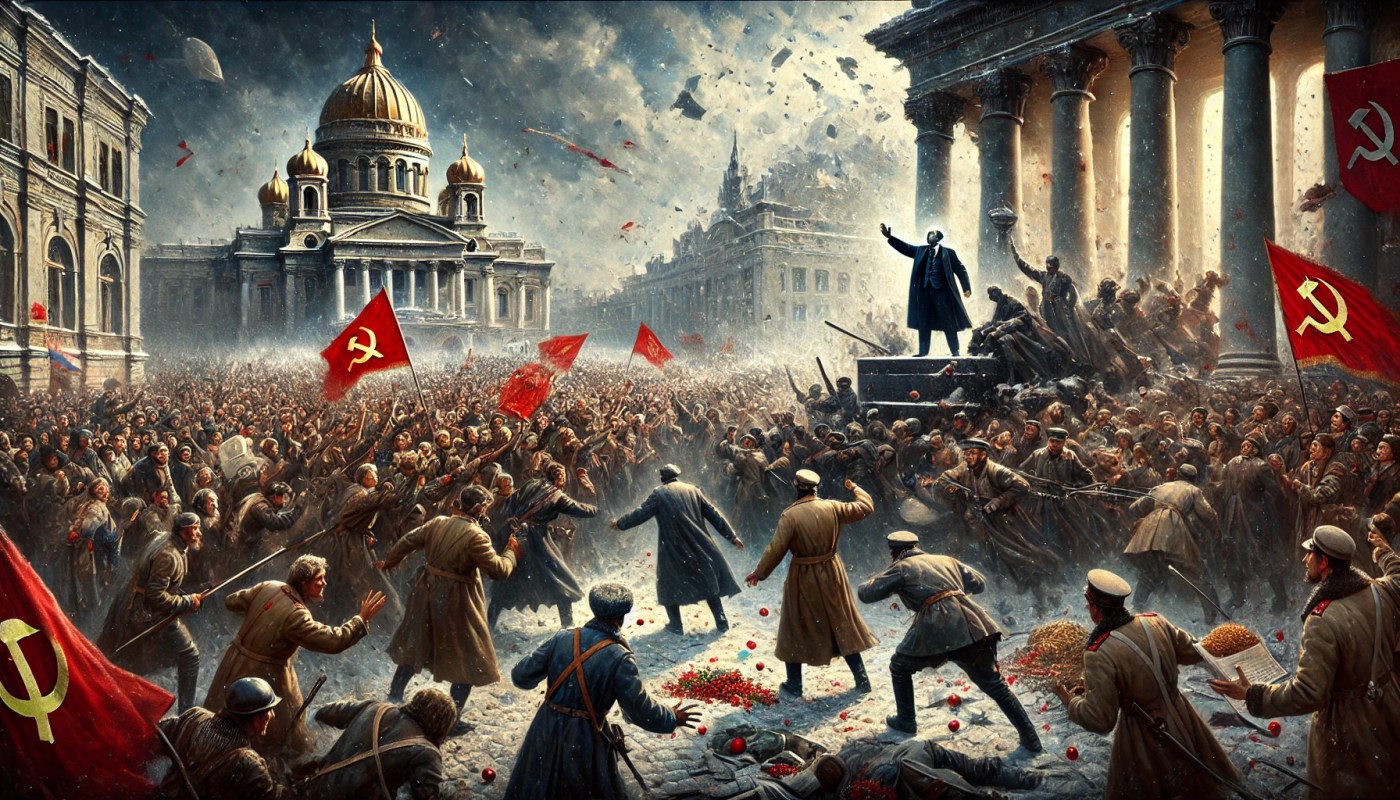
There’s an old Russian proverb that says, “A fish begins to rot from the head.” When the Bolsheviks stormed the Winter Palace in 1917, they weren’t conquering a mighty empire; they were stepping over the bloated corpse of one. Russia, tired, fractured, and leaderless, was like a great bear on its last legs—staggering under the weight of its own misery. But did the Russian people, en masse, embrace communism with open arms? Hardly.

The Storming of the Winter Palace in 1917 marked the moment the Bolsheviks seized power, not by the will of the people, but through chaos and force—ushering in a revolution that many never truly chose.
Lenin and his Red Army didn’t sweep in as liberators; they snatched power in the night like a thief cracking open a safe. They found a country so weary of war and mismanagement that even the devil himself, if he promised bread, land, and peace, might have been welcomed at the door. The Bolsheviks won the revolution not because the people chose them, but because no one could muster the strength to resist them. And those who did—well, that’s where the White Army comes in.
The Fall of a Mighty Empire
At its height, the Russian Empire stretched from the Baltic to the Pacific, spanning eleven time zones and holding within it the weight of a thousand cultures, a hundred dialects, and a singular, overarching autocracy. It was the largest contiguous empire on Earth, a land so vast that the sun was said never to set upon it. But for all its grandeur, the empire was rotting from within. The seeds of collapse had been sown long before Lenin ever uttered a word about revolution.
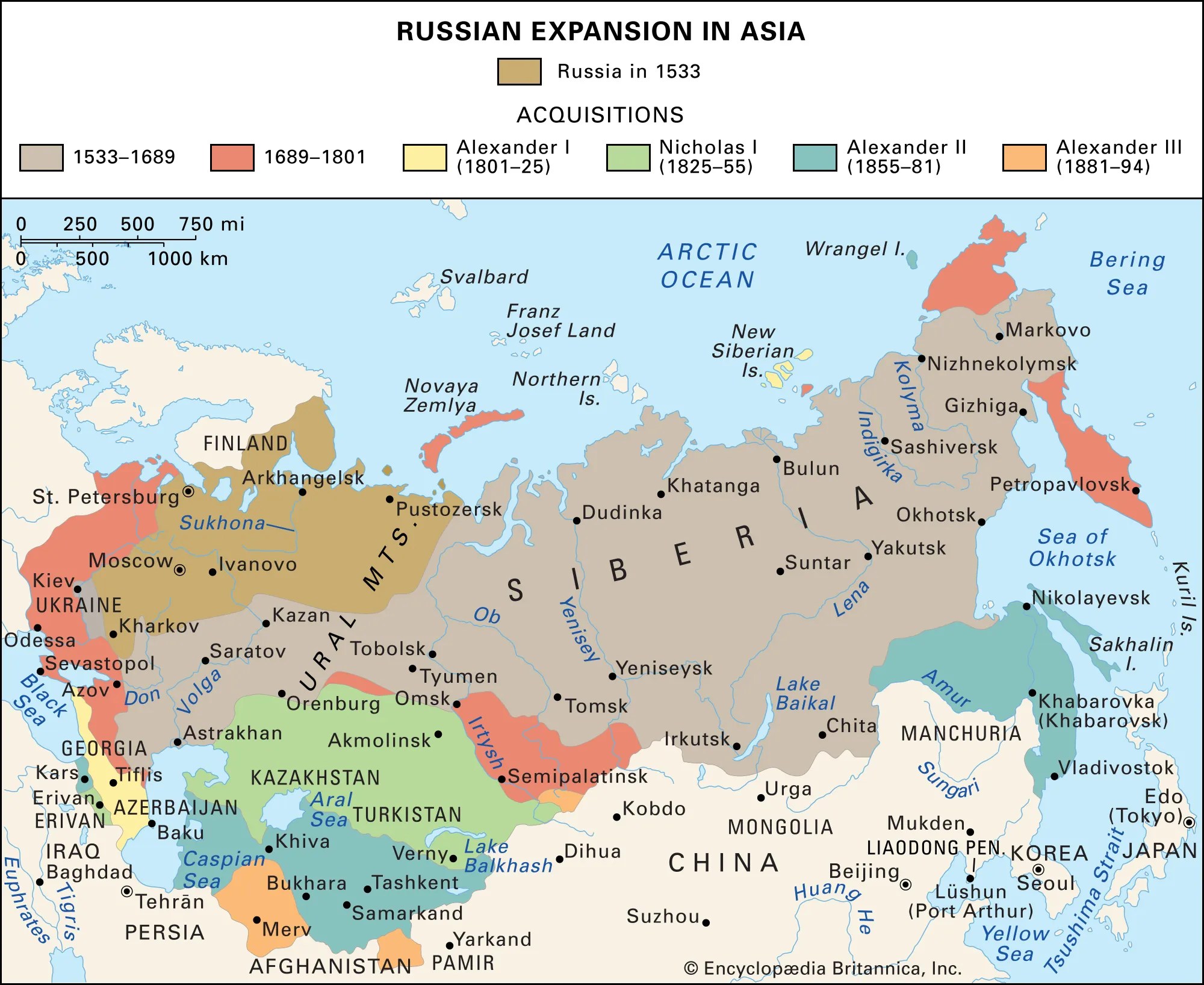
At its height, the Russian Empire was the largest contiguous land empire on Earth, stretching from the Baltic to the Pacific. Yet, despite its vastness, internal strife, war, and incompetence would reduce it to a crumbling relic—paving the way for Lenin’s revolution.
The Russo-Japanese War of 1904-1905 humiliated the Tsarist regime, proving that Russia was no longer the indomitable force it once believed itself to be. Defeated by an upstart Asian power, the empire lost not only its prestige but also its grip on internal stability. The failed 1905 Revolution should have been a wake-up call, but Nicholas II—the last Tsar—responded with half-measures and repression, leaving the populace angrier than before. When World War I erupted, the Tsarist military crumbled against the Germans, and millions of Russian soldiers returned home disillusioned, hungry, and ready to turn their rifles on their own government. By the time 1917 rolled around, Russia was less an empire and more a pile of splintered wood, waiting for a match. Lenin and the Bolsheviks simply provided the spark.

Tsar Nicholas II and his family, symbols of a fading dynasty, stood unaware that their rule was already over. Years of mismanagement, war, and public discontent sealed their fate—leaving a power vacuum that the Bolsheviks would exploit with ruthless efficiency.
The White Army: A Motley Crew of Resistance
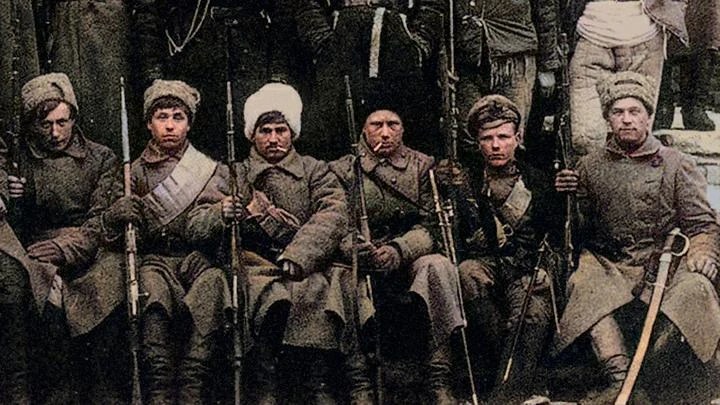
The White Army wasn’t a singular force but a chaotic collection of monarchists, liberals, moderate socialists, nationalists, and even a few foreign mercenaries. It was less of an army and more of an anti-Bolshevik stew, with officers from the old Tsarist regime, landlords who had everything to lose, Cossack warriors longing for their past freedoms, and Western-backed interventionists who had more interest in crushing Bolshevism than saving Russia. The Whites lacked a common ideology—some wanted to restore the monarchy, others wanted a democratic republic, and a few just wanted to return to the days before everything turned to chaos.
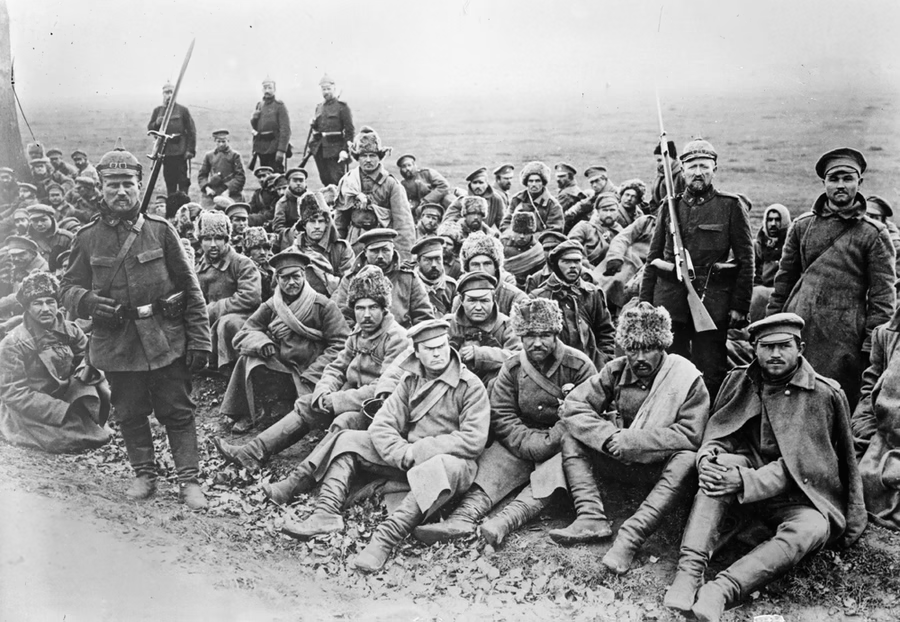
Russian soldiers return from the horrors of World War I, battered, starving, and betrayed. Defeated on the battlefield and abandoned by their own leaders, they carried home not just their weapons, but a deep resentment—one that would soon ignite the Bolshevik uprising.
They were ethnically diverse, with Slavs, Caucasians, and various indigenous groups fighting alongside each other. Class divisions ran deep—elite officers fought alongside desperate peasants who had no love for the Reds but didn’t exactly adore the Whites either. The White Army had money, experience, and foreign aid, yet they lacked one thing: unity. The Reds, for all their brutality, had a singular vision. The Whites had too many cooks in the kitchen and, as history often teaches us, an army that can’t decide what it’s fighting for usually loses.
A Revolution’s Long Shadow
Lenin’s success wasn’t inevitable, but once the Bolsheviks had their hands on power, they tightened their grip like a vice. The Russian Civil War (1917–1922) was less a battle of ideas and more a survival contest. The Bolsheviks enforced their rule with ruthless efficiency—using the Cheka (secret police) to eliminate opposition, implementing War Communism that crushed any economic independence, and centralizing power under the Party with an iron fist. The White Army was defeated not just by Red military strength, but by Bolshevik propaganda, organizational discipline, and a war-torn population that simply wanted the bloodshed to end.
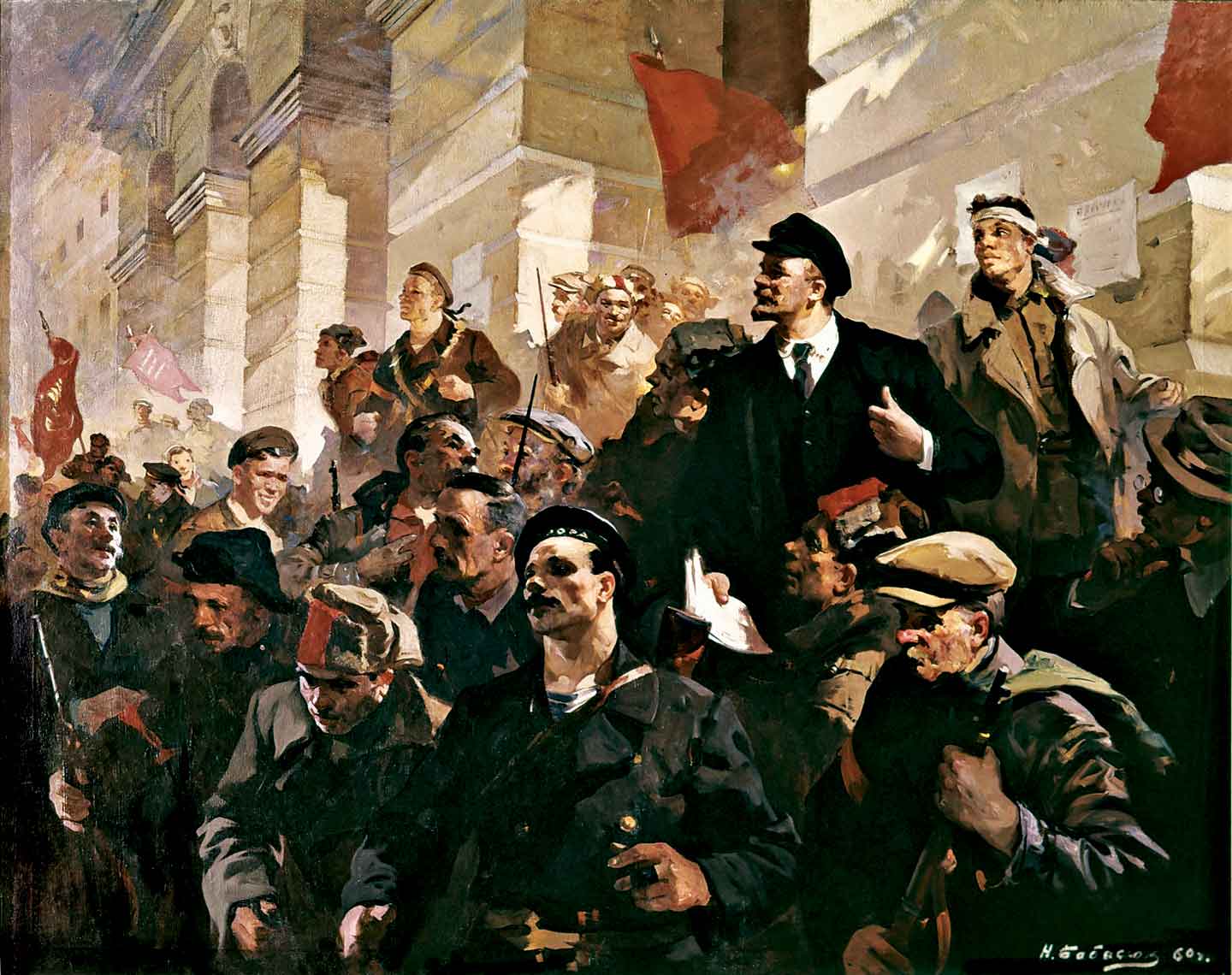
Lenin rallies the revolutionaries with promises of a brighter future, but behind the fervor and red banners lay the seeds of a ruthless dictatorship. What began as a movement for the people would soon become an iron-fisted regime that crushed dissent and ruled through terror.
And yet, the very system the Bolsheviks installed would eventually rot from the head, just as the Tsar’s empire had. The grand communist experiment would, decades later, collapse under the weight of its own inefficiencies, proving once again that revolutions eat their own children.
Parallels in Modern History
The lessons of 1917 aren’t confined to dusty history books. Revolutions rarely play out like fairy tales; they’re more often tragedies where the victors become the villains. Look at Venezuela—once one of Latin America’s wealthiest nations, now a shell of itself after radical shifts in power and ideology. Or consider the Arab Spring, where hopeful uprisings against tyranny too often led to new forms of oppression. Even Canada, in its own subtle way, is experiencing the consequences of unchallenged shifts in governance.
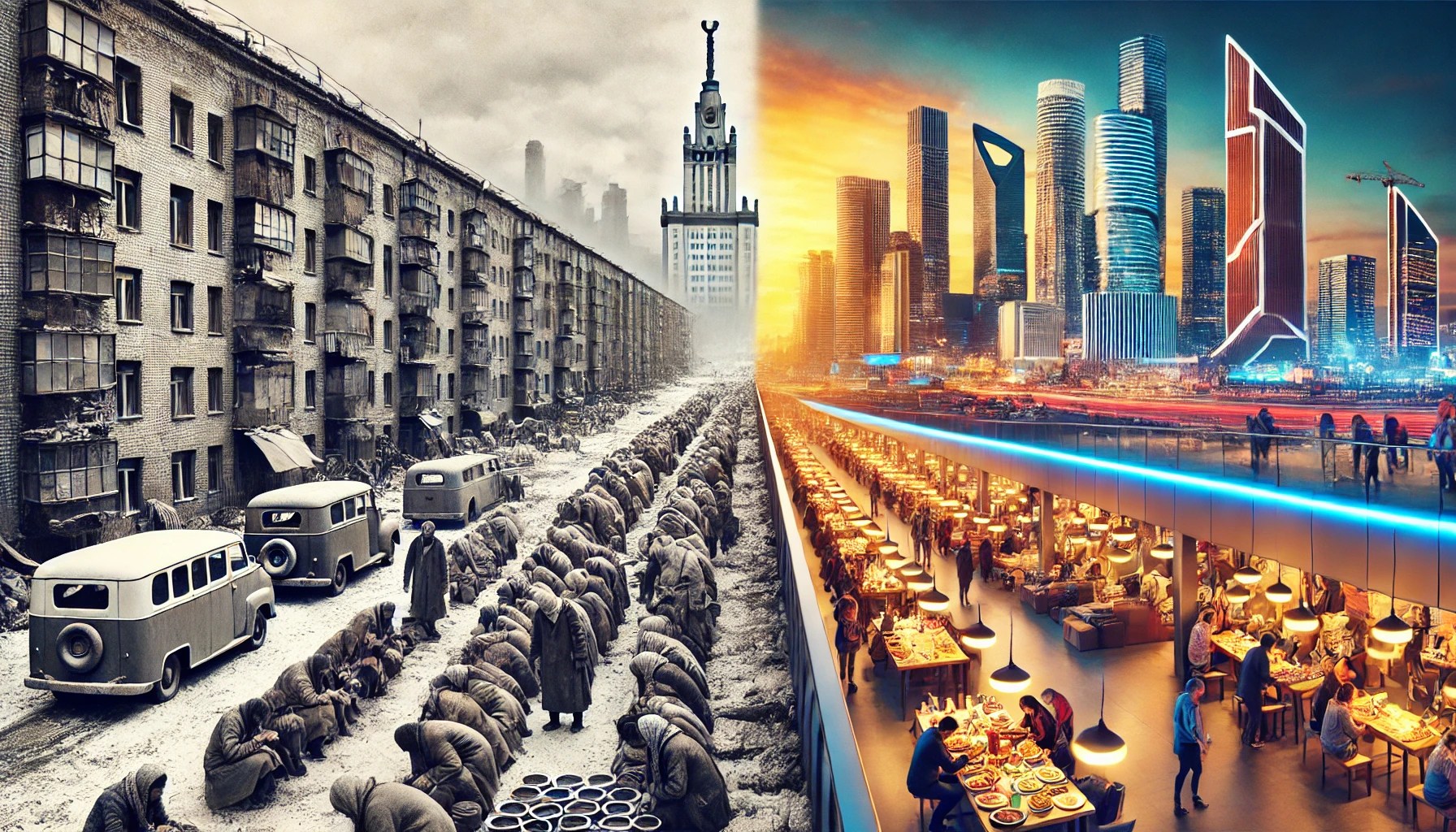
On the left, the bleak reality of Soviet-era hardship—crumbling buildings, endless bread lines, and a people bound by scarcity. On the right, the prosperity of modern capitalism—skyscrapers, thriving markets, and an abundance of opportunity. A stark reminder that economic systems determine not just wealth, but the quality of life itself.
Canada’s current economic and political trajectory should raise alarms. With a population roughly equivalent to California’s, our GDP per capita sits closer to Mississippi’s. In 2015, Canada’s GDP per capita was around $43,594 USD; by 2023, it had risen to approximately $53,372 USD. Contrast that with California’s soaring $99,329 USD GDP per capita, and it’s clear we are falling behind. Meanwhile, disparity is rising, our industries are stagnating, and political polarization is deepening. Canadians are not storming any palaces just yet, but the foundations of discontent are being laid.
Conclusion: The Illusion of Choice
Did the Russians embrace communism? Only in the way a man embraces the executioner’s axe when all other doors have been locked. The Bolsheviks were not so much elected as they were the last ones standing in a game of survival. Their victory was as much about the failures of their opponents as it was about their own cunning.
And today, as we look at the political and economic turmoil brewing across the world, one has to wonder: are we making choices, or are we simply surrendering to the illusion of choice? The past teaches us that when leaders fail, the desperate will turn to anyone who promises salvation, no matter the cost. And that, my friends, is how revolutions are won—not through the embrace of ideas, but through the exhaustion of resistance.
 Notes Beyond the Map
Leave a comment