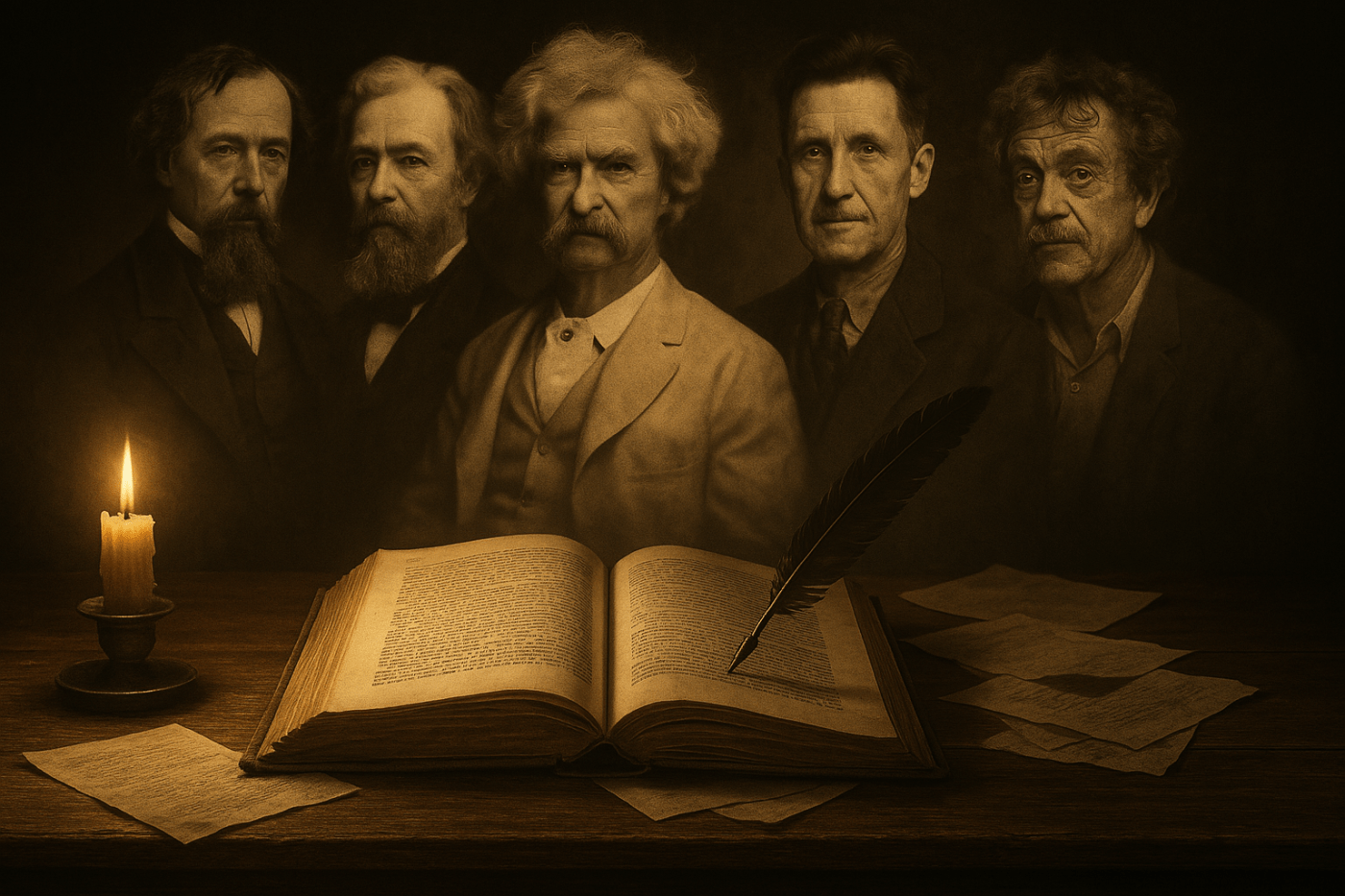
Introduction: The Writers Who Never Left
Some writers fade with time. Their words, once powerful, lose their grip, dissolving like ink in water. And then there are the rare few whose influence only grows—who seep into the marrow of our culture, whispering their wisdom through the centuries. They don’t just write books; they rewrite the way we see the world. These literary titans shape our humor, our politics, our sense of justice, and even the way we understand ourselves. They are the ghosts in our pages, lingering long after they’ve left this world.
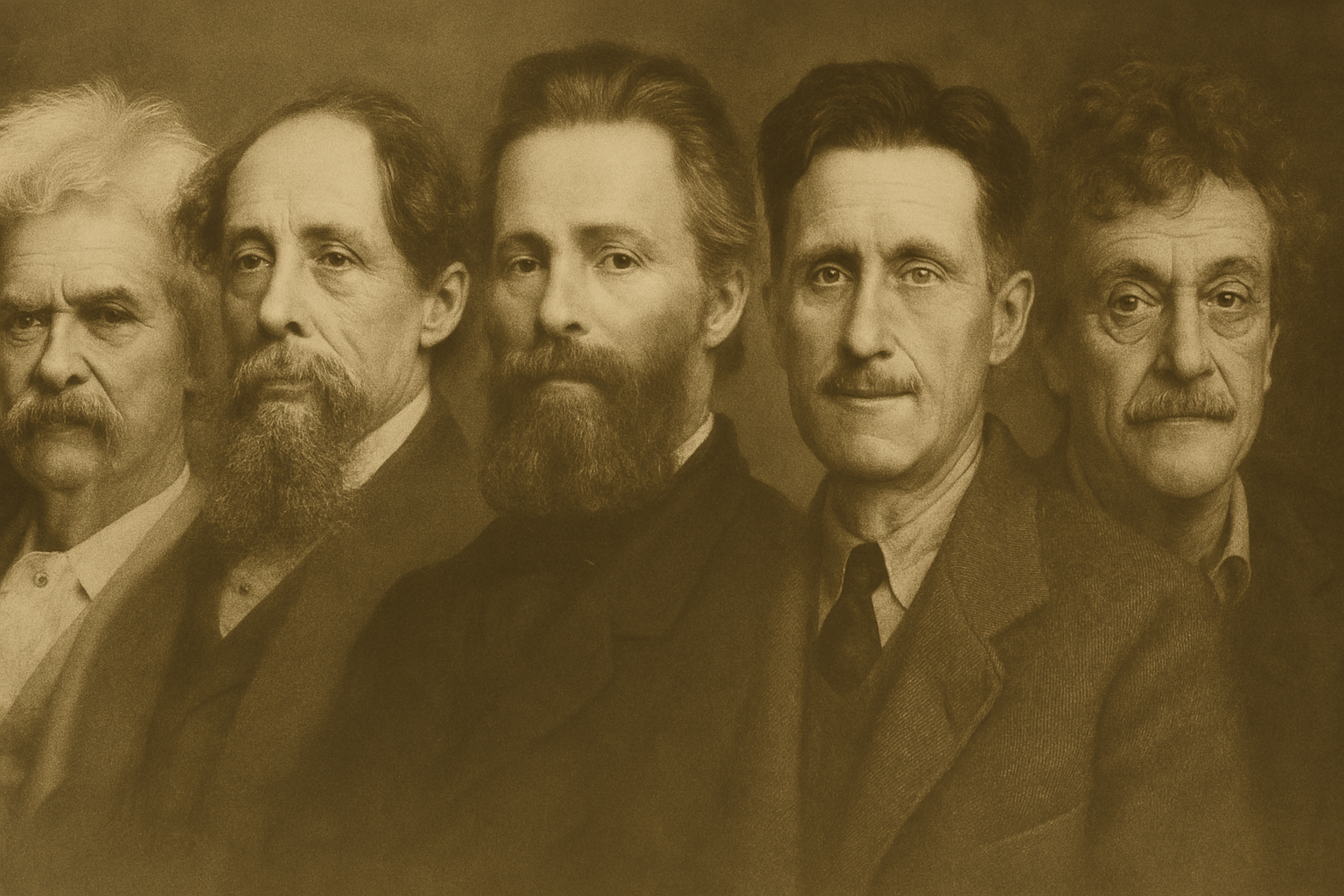
Mark Twain, Charles Dickens, Herman Melville, George Orwell, and Kurt Vonnegut belong to this rare breed. They didn’t just write stories; they wrote the Western mind. Each in their own way—through satire, social critique, and fearless storytelling—these men held up a mirror to their societies, forcing us to confront hypocrisy, absurdity, and the human condition. And the wildest part? They’re still winning. In the 21st century, their voices echo across literature, film, politics, and popular culture, proving that great writing isn’t just for the past—it’s forever.
What sets these five apart from the countless others who once crowded the literary scene? It’s not just their ability to tell a good story, although they certainly did that. It’s their audacity to tackle the fundamental flaws of their societies, to take the ugly truths and polish them until they gleamed with irony and wit. They didn’t just entertain—they provoked. Their works continue to speak to modern readers, reminding us that while the world may change, human nature rarely does.
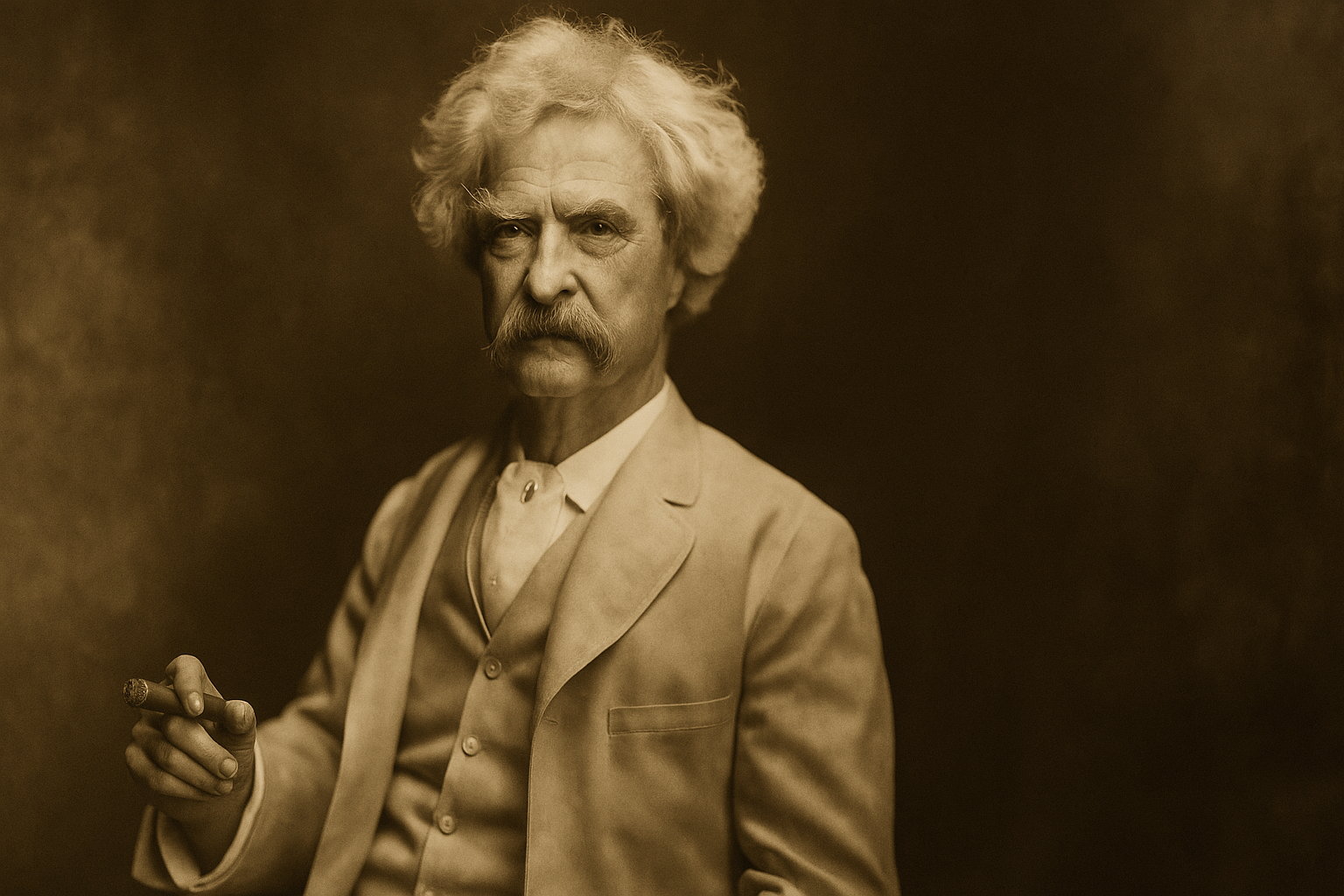
Mark Twain: America’s Irreverent Conscience
Samuel Langhorne Clemens, better known as Mark Twain, was born in 1835 in Missouri, a state divided by slavery and progress. His early life along the Mississippi River shaped his worldview, giving him firsthand experience with the conflicts and contradictions of American society. From working as a riverboat pilot to writing for newspapers, Twain’s sharp observational skills and knack for storytelling developed naturally, preparing him to become America’s most beloved—and most controversial—writer.
Twain’s works didn’t just entertain; they served as cultural critiques wrapped in humor. The Adventures of Huckleberry Finn (1885) remains one of the most debated novels in American literature, not just for its portrayal of race but for its fearless questioning of societal norms. The story of Huck and Jim’s journey down the Mississippi is more than a boy’s adventure—it’s a subversive exploration of freedom, morality, and the hypocrisy of a society that claims to value liberty while enslaving human beings. The Adventures of Tom Sawyer (1876) gave readers a snapshot of childhood mischief, while A Connecticut Yankee in King Arthur’s Court (1889) cleverly juxtaposed medieval superstition with modern ingenuity.
Twain’s influence on Western thought is profound and enduring. He gave America its distinct literary voice—a blend of sarcasm, irony, and earnest critique. His biting humor still resonates in modern satire, from late-night comedy shows to political cartoons. More than that, Twain dared to confront uncomfortable truths with a wit so sharp that it continues to cut through the noise of modern discourse. Twain’s voice was not just America’s conscience; it was a declaration that humor can—and should—be a tool for change.
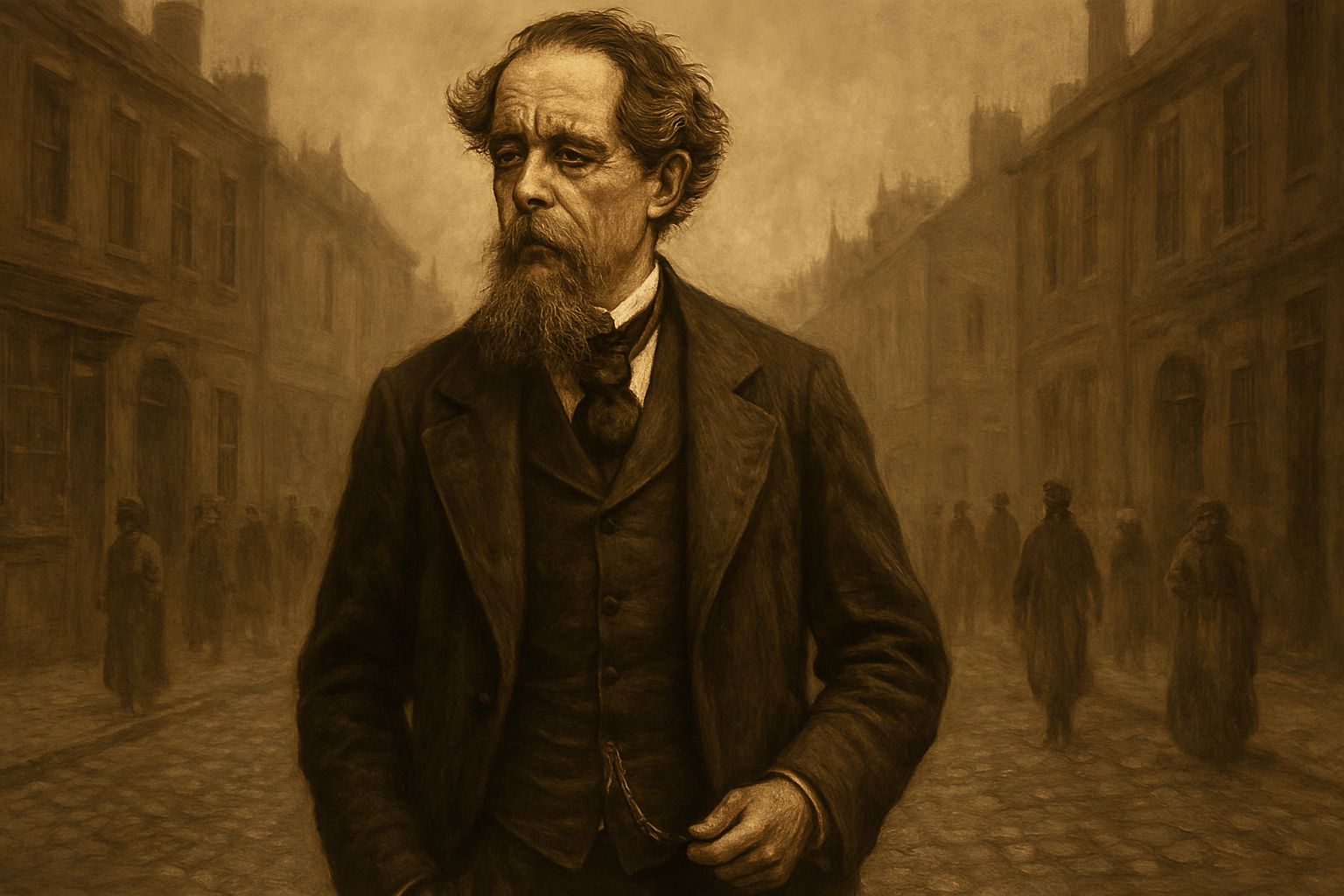
Charles Dickens: The Conscience of the Industrial Age
Born in 1812 in Portsmouth, England, Charles Dickens emerged from a childhood marked by hardship and resilience. His father’s imprisonment for debt forced young Dickens into factory work, an experience that left him with a lifelong empathy for the poor and a burning desire to challenge societal injustices. Unlike other writers of his time, Dickens wasn’t just telling stories—he was demanding reform. His novels weren’t mere fiction; they were blueprints for a more compassionate society.
In works like Oliver Twist (1837), Dickens didn’t shy away from exposing the harsh realities of child labor, poverty, and crime. He gave a voice to the voiceless, depicting the brutality of Victorian England’s workhouses and orphanages. A Christmas Carol (1843) wasn’t just a festive tale—it was a scathing critique of greed and a call for human kindness. In A Tale of Two Cities (1859), Dickens tackled the chaos of revolution, emphasizing that systemic inequality inevitably breeds violence.
Dickens’ impact on Western ideology is enormous. His storytelling humanized the struggles of the lower class, making the wealthy confront the uncomfortable truth that their privilege came at a cost. Today, his influence lingers in modern narratives that focus on social justice and economic disparity. Dickens didn’t just document the Industrial Revolution—he held it accountable. His legacy lives on in every piece of social commentary that calls for empathy, reform, and a fairer world.
Herman Melville: The Prophet of Obsession
Herman Melville, born in 1819 in New York, led a life marked by adventure and hardship. As a young man, Melville worked on whaling ships and experienced the brutal realities of life at sea, which profoundly influenced his writing. Initially celebrated for his early works like Typee (1846), his later masterpiece Moby-Dick (1851) was met with critical indifference, leaving Melville in relative obscurity until long after his death. Today, however, he is considered one of America’s greatest literary minds.
Moby-Dick is much more than a seafaring tale; it’s an exploration of human obsession, madness, and the struggle against an indifferent universe. Captain Ahab’s relentless pursuit of the white whale is a timeless metaphor for ambition unchecked by reason. The novel’s dense symbolism and philosophical depth puzzled readers of Melville’s time, but its exploration of humanity’s darker impulses now resonates as a profound commentary on the dangers of single-minded pursuits. In Bartleby, the Scrivener (1853), Melville offered a quieter yet equally impactful narrative, portraying passive resistance through the enigmatic character of Bartleby, who “prefers not to” engage with the world around him.
Melville’s influence on modern thought is profound yet subtle. His depiction of obsession as self-destructive predates modern psychological narratives, while his complex characters foreshadow the morally ambiguous protagonists of contemporary literature. Melville’s vision of human ambition as both noble and damning continues to challenge readers, reminding us that the pursuit of greatness can often lead to ruin. His works linger in the collective consciousness, cautioning us about the cost of chasing unattainable ideals.

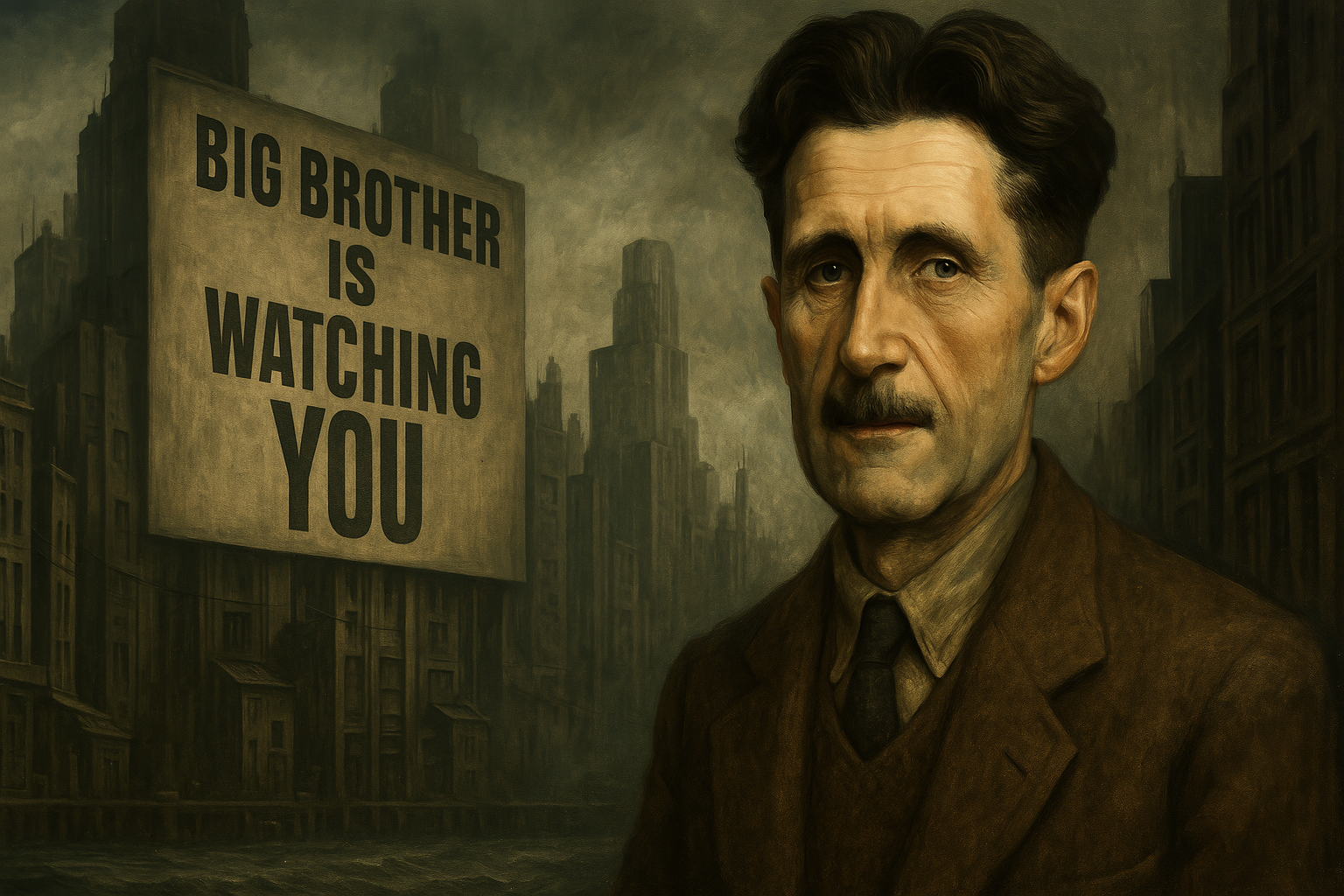
George Orwell: The Prophet of Paranoia
Born in 1903 in British-controlled India, George Orwell, whose real name was Eric Arthur Blair, was shaped by his experiences with class disparity and imperialism. Educated at Eton, he later served as a colonial officer in Burma, an experience that fueled his disdain for oppression and authoritarianism. Orwell’s writing was not just literary but political, aiming to expose the mechanisms of control and the perils of unchecked power.
Animal Farm (1945) transformed political critique into a fable, showing how revolutionary ideals can become corrupted. Its allegorical portrayal of the Russian Revolution warned against the dangers of totalitarianism. 1984 (1949), Orwell’s most enduring work, created a dystopian world where surveillance, censorship, and propaganda crush individuality. The concepts of “Big Brother” and “doublethink” have become integral to discussions about government overreach and media manipulation, proving that Orwell’s dark vision was more prescient than paranoid.
Orwell’s legacy is rooted in his fierce commitment to truth and his belief in the individual’s duty to resist oppression. His ideas pervade Western thought on civil liberties, human rights, and the importance of dissent. Every time we question government surveillance or challenge censorship, we are living out Orwell’s cautionary lessons. His work remains a relentless reminder that freedom is fragile and must be defended against those who would rewrite reality for their own ends.
Kurt Vonnegut: The Jester Who Saw It All
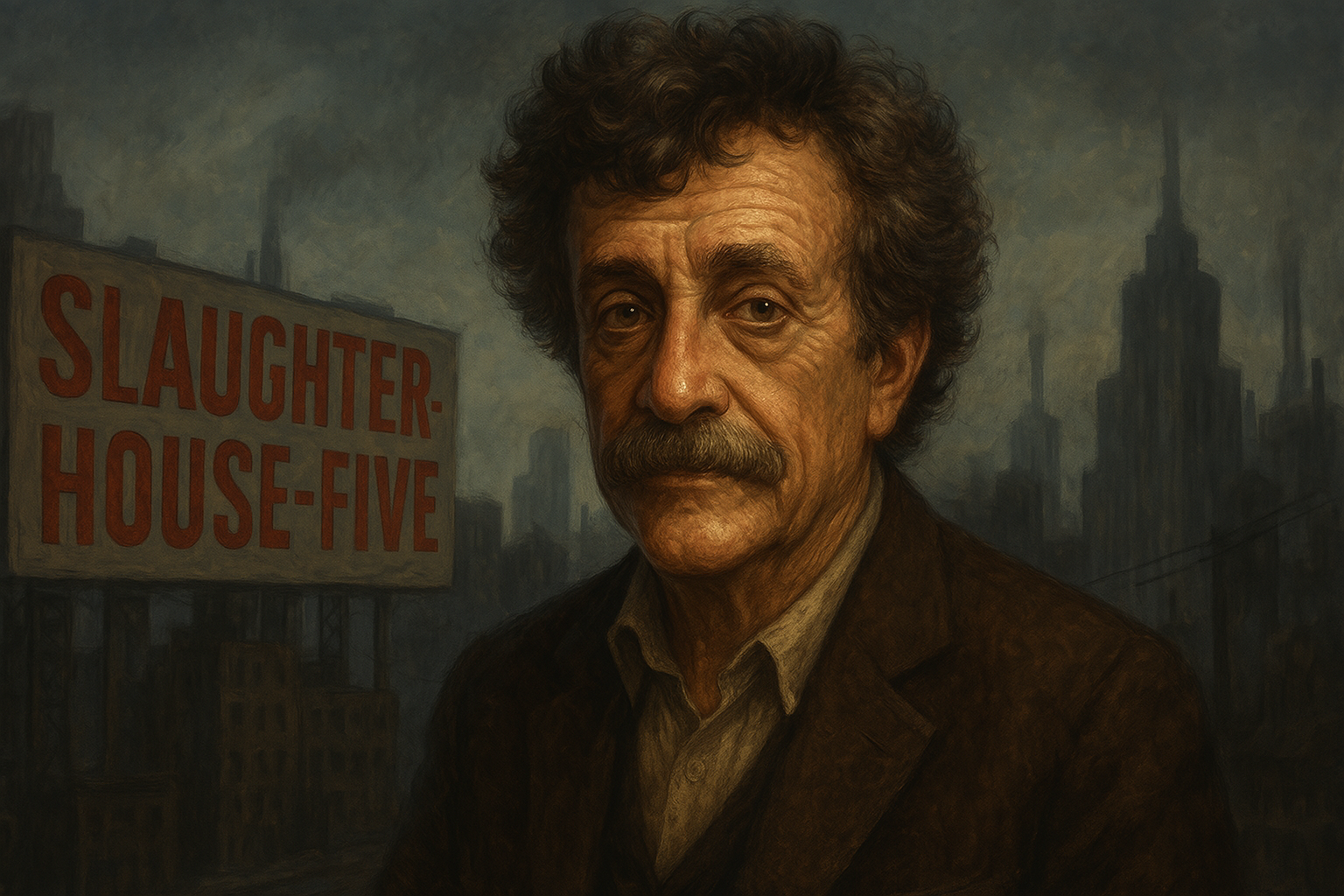
Kurt Vonnegut was born in 1922 in Indianapolis, Indiana, and his life was a kaleidoscope of tragedy, humor, and surreal experiences. As a young soldier, he was captured during World War II and survived the firebombing of Dresden—an event that left an indelible mark on his worldview. Vonnegut’s style was unorthodox: part science fiction, part satire, part existential contemplation, all delivered with a wry, almost resigned sense of humor.
His most famous novel, Slaughterhouse-Five (1969), captures the futility of war through the fractured timeline of Billy Pilgrim, a soldier who becomes “unstuck in time.” Vonnegut’s ability to blend stark realism with fantastical elements challenged traditional narrative forms, making his critique of war and human violence both poignant and absurdly funny. Cat’s Cradle (1963) lampooned the blind faith placed in scientific progress, while Breakfast of Champions (1973) tackled American consumerism and the absurdity of modern existence.
Vonnegut’s impact on Western thought is in how he made us laugh while exposing the most absurd and tragic aspects of human nature. His work challenges the notion of heroism and questions the narratives that societies build to justify violence and progress. Today, his irreverent tone and cynical realism continue to inspire writers who aim to critique society without losing their sense of humor. Vonnegut’s genius lies in his refusal to offer clear solutions, instead presenting life’s chaos as something to be acknowledged, critiqued, and ultimately laughed at.
Conclusion: The Ink That Holds Us Together
In a world increasingly distracted by the next viral trend or fleeting controversy, we often overlook the literary giants who shaped how we think and question the world around us. Twain, Dickens, Melville, Orwell, and Vonnegut did more than write stories—they crafted frameworks through which we examine ourselves and our societies. They questioned authority, exposed hypocrisy, and illuminated the human condition with both humor and gravity.
We take for granted how much these writers still influence modern thought. Whether it’s Twain’s irreverence, Dickens’ call for social justice, Melville’s exploration of obsession, Orwell’s warnings against tyranny, or Vonnegut’s dark humor in the face of absurdity, their ideas persist. They are the bedrock of critical thinking, reminding us that literature is not just about entertainment but about challenging the status quo.
The legacy of these authors transcends time because they dared to confront uncomfortable truths while weaving tales that remain compelling long after their passing. Their words continue to shape public discourse, artistic expression, and the way we interpret reality. In an era often characterized by noise and confusion, we should remember that the ink of great writers doesn’t merely dry—it seeps into the fabric of our culture, reminding us that real wisdom comes from those willing to speak truth to power.
 Notes Beyond the Map
Leave a comment