It was an ordinary Sunday in early August. The kind you wish could last a lifetime. West Coast summers are short. Three, maybe four months if we’re lucky. Days like this have an expiry date you can’t see until it’s too late. You savour them like the big days in life. Your wedding. Your child’s first cry. Without realizing that sometimes the day will demand more of you than you ever planned to give.
After a beautiful service at our local church, my wife Lui and I went for Thai food with my aunt Suedelle and my parents. Over lunch, the conversation kept circling back to Pastor Pepe’s message. Knowing our identity in Christ. It resonated with all of us. There was a stillness to it, a conviction, as if the Lord Himself was reminding us: Your confidence isn’t in your own strength. It’s in who you are in Me.
The sun was high and warm. We decided to make the most of it and head to Durrance Lake, our favourite swimming spot in Victoria, tucked deep in the Highlands. The drive wound along Millstream Lake Road, through quiet forests and rugged hills I’ve known since childhood. I’ve swum these lakes, biked these roads, and walked these trails for decades. They are as much a part of me as my own skin.
Finding parking was a headache. The lot was full, and traffic from people leaving blocked the entrance. I backed up the car to drop everyone off, then turned around and found a spot along the roadside. I walked in quickly, the breeze carrying the smell of pine and warm soil, laughter from the lake growing louder with each step. I couldn’t wait to get in the water.
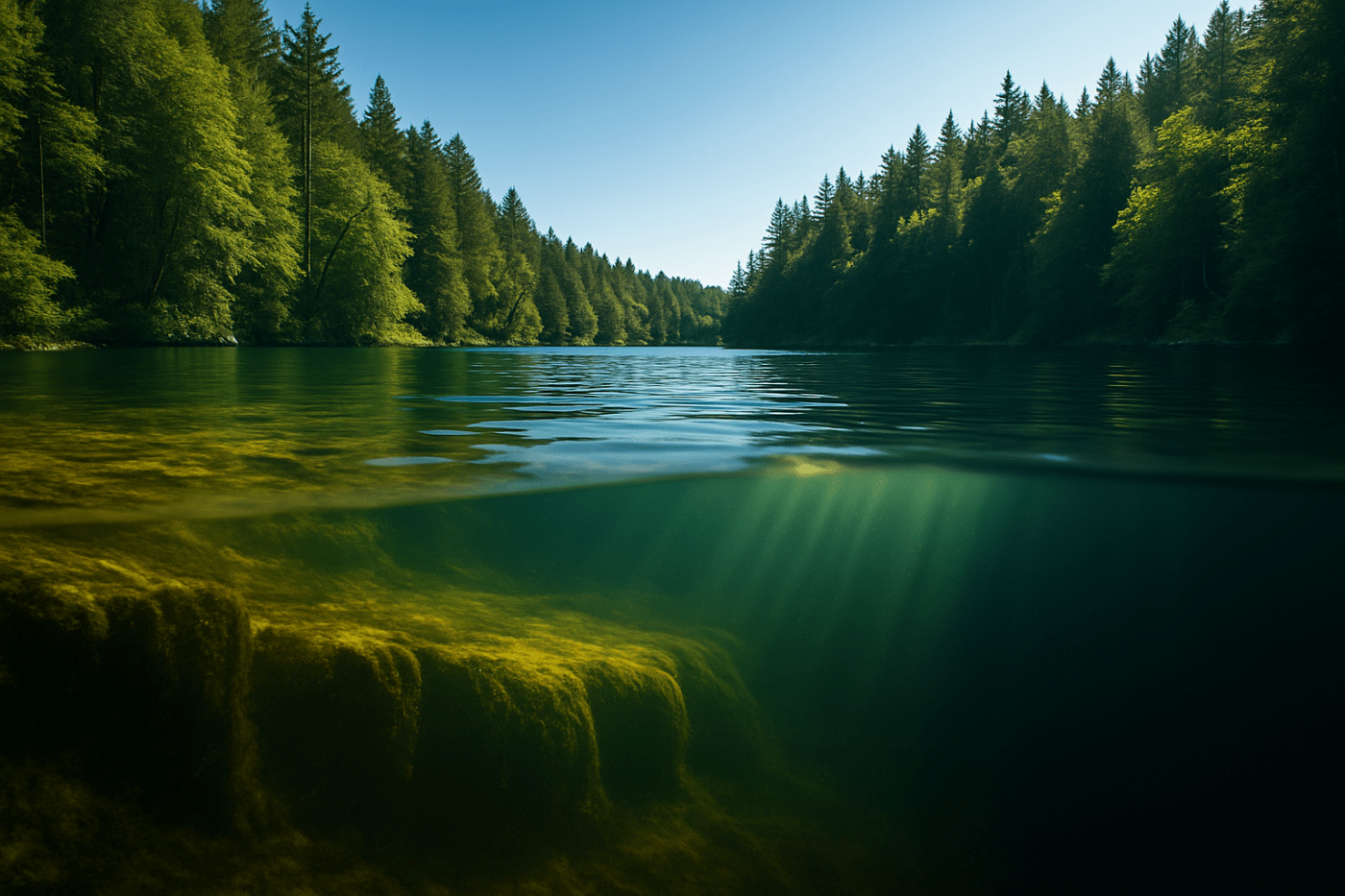
The lake was alive. Sunlight flickering across the surface, maybe 200 people scattered on inflatables, docks, and along the shore. That day, we went in from the wharf for convenience. Once we were in, teenagers climbed a massive tree leaning over the water, hurling themselves twenty or thirty feet into the depths. Eagles circled overhead. It was the sound, smell, and sight of summer. Pure bliss.
We started on the path, but later moved to the wharf. We drifted lazily on air mattresses for about half an hour, the wind pushing us gently around. My wife held onto mine. She doesn’t swim. She was six months pregnant. When we decided to head in, I helped her out and passed the air mattresses to my mom and aunt. Then I went for a quick swim. I pushed hard at the water. Sometimes it comes easy, other days you feel every stroke. I mixed freestyle and breaststroke, feeling my heart and breath working hard. By the time I reached the wharf again, I was tired but satisfied.
As I clung to the side, a couple in their seventies wandered down to the dock. They weren’t there to swim, just curious. “How deep is it here?” they asked. “About twelve feet. Drops off quick,” I told them. They looked surprised. Harmless enough. Until later, when that question would echo back.
The Shift in the Air
By 5:35 p.m., the sun had begun to turn the water into a field of glitter. My mom and aunt were reminiscing about people they’d met earlier. Visitors from Colombia and Mexico. Out of the corner of my eye, I noticed four young Indian men wading near the shore where the lake bottom slopes gently for about fifteen feet before dropping off sharply. It’s perfect for wading, but only if you can swim. I didn’t know any of them. They were strangers to me. But our lives were about to cross paths in a big way.
Then movement. Shouts. Splashes. Two heads bobbing about thirty meters out, their friends struggling to keep them afloat.
The glare off the water made it hard to see, but panic is unmistakable. Someone tossed a pool noodle, and one man grabbed it, managing to make it to shore. Many thought it was over. That everyone was safe.
But the shouts continued. Frantic. Punjabi. Nobody around understood a word.
My wife did. She speaks Hindi and caught enough to translate: “They’re saying Sonu is still there.”
One was still missing. Still under the water.
That’s when my mother’s voice cut through the noise: “Josh, go help them!” She’d said it before, but now it was a command. No one else nearby was moving. I knew what I had to do.
Into the Deep
I dropped my gear, ducked under the dock rail, and pushed off hard. Adrenaline did something to my arms and legs. Time slowed. I swam as fast as my body would allow. By the time I reached the spot he’d gone under, he’d been down for two minutes. Maybe three.
I took a deep breath and dove. Eight feet down, the muddy brown bottom came into view. Nothing there. My chest tightened. Every instinct said surface, reset, try again. But something else said: go deeper. Clear. Firm. I pushed another two or three feet into the murk, where visibility shrank to almost nothing. Air was short. Lungs burning.
Then a flash of orange.
I moved toward it. As the shape resolved, I saw him. A man, sitting upright on the lakebed, face down. Unconscious. It felt like finding a buried treasure. I almost couldn’t believe it.
The Ascent
I closed the distance, slid my arms under his, and drove my feet hard into the lakebed. With every ounce of strength, I heaved upward. The buoyancy gave me just enough lift, but it still felt like dragging a stone from the depths. We broke the surface. I gasped for air. His body, limp and unresponsive, hung heavy in my grasp. I shouted, “I have him!”
A woman on a paddleboard maneuvered close, and with others, we got him onto the board and rushed him the last fifteen meters to shore. An off-duty lifeguard and another man grabbed him, carrying him quickly to the bank. His head hit the ground hard in the process. He was in brown boxers, clearly not prepared to swim. The lifeguard began CPR immediately, pressing with force.
His eyes were open. But there was nothing behind them.
A pharmacist joined in, giving mouth-to-mouth. Still nothing. Minutes dragged like hours. Then a twitch. Another pump. A flicker of breath. A cough. Water poured from his mouth. Life was returning. The off-duty lifeguard turned him on his side. The lake wasn’t done with him yet.
Sirens wailed in the distance, growing louder. My wife, mother, aunt and I waited nearby. The man’s three friends stood close, still terrified, still processing what they had just watched. Ten minutes passed. They loaded him onto a stretcher and into the ambulance. He caught my eye. He knew. He gave me a thumbs-up and a smile.
Echoes of the Day
On the drive home, winding through the Highlands, we replayed it all. It wasn’t just me. It was the lifeguard, the pharmacist, the paddleboarder, Lui translating, my mother’s urgent voice. It was the right people, at the right time, each doing what they could.
They say it takes a village to raise a child. It also takes a community to save a life. That day, God used every part. Skills I’d had since boyhood, my wife’s ability to speak multiple languages, strangers’ courage, the voice of my mother. To work a miracle.
The next day, a local news station shared the story: Quick-thinking strangers save man from drowning at Durrance Lake. For me, it’s not about boasting. It’s about showing how God works through His children when we know our place. Knowing who we are, and walking in that confidence, can save not only our own life but someone else’s. The choice is ours whether we step up when called.
When God calls you to dive deeper. Into the water, into the work, into the unknown. You go. Because sometimes, that’s where life is saved. And sometimes, it’s where you finally see why you were here all along.
 Notes Beyond the Map
Leave a comment