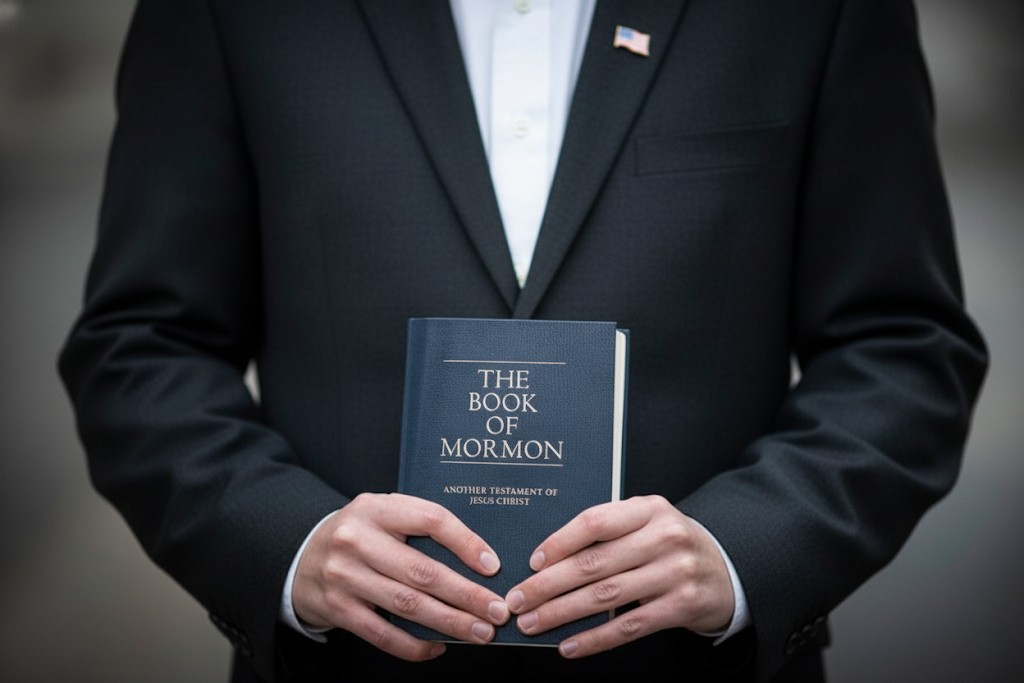
Here we are again, talking about religion—that peculiar human invention where we take our deepest fears about death and our most ambitious dreams about eternity and wrap them in rules about underwear. But the story of Mormonism, or as they prefer to be called now, The Church of Jesus Christ of Latter-day Saints, is not just another tale of faith gone sideways. It’s a masterclass in American entrepreneurship, a study in how charisma can trump truth, and a warning about what happens when we’re so desperate for certainty that we’ll follow a treasure hunter into the wilderness.
The thing about Mormonism is that it’s new. Uncomfortably new. Most religions have the decency to shroud their origins in the mists of antiquity, where contradictions can hide and miracles seem more plausible because, well, who can fact-check the Bronze Age? But Joseph Smith founded his religion in 1830, when newspapers existed, when literacy was common, when people were writing things down. This presents something of a problem for the faithful and something of a gift for the rest of us.
And yet, despite mountains of evidence suggesting that Smith was, at best, a creative storyteller with a knack for manipulating the vulnerable, millions of people believe.
They tithe their incomes, follow restrictive rules, wear special underwear, and defend a faith that contradicts not only historical evidence but the very words of Jesus Christ Himself. Why? Well, that’s what we’re here to explore. Buckle up. This is going to be uncomfortable.
I. The Birth of a Prophet (Or: How to Start a Religion in Five Easy Steps)
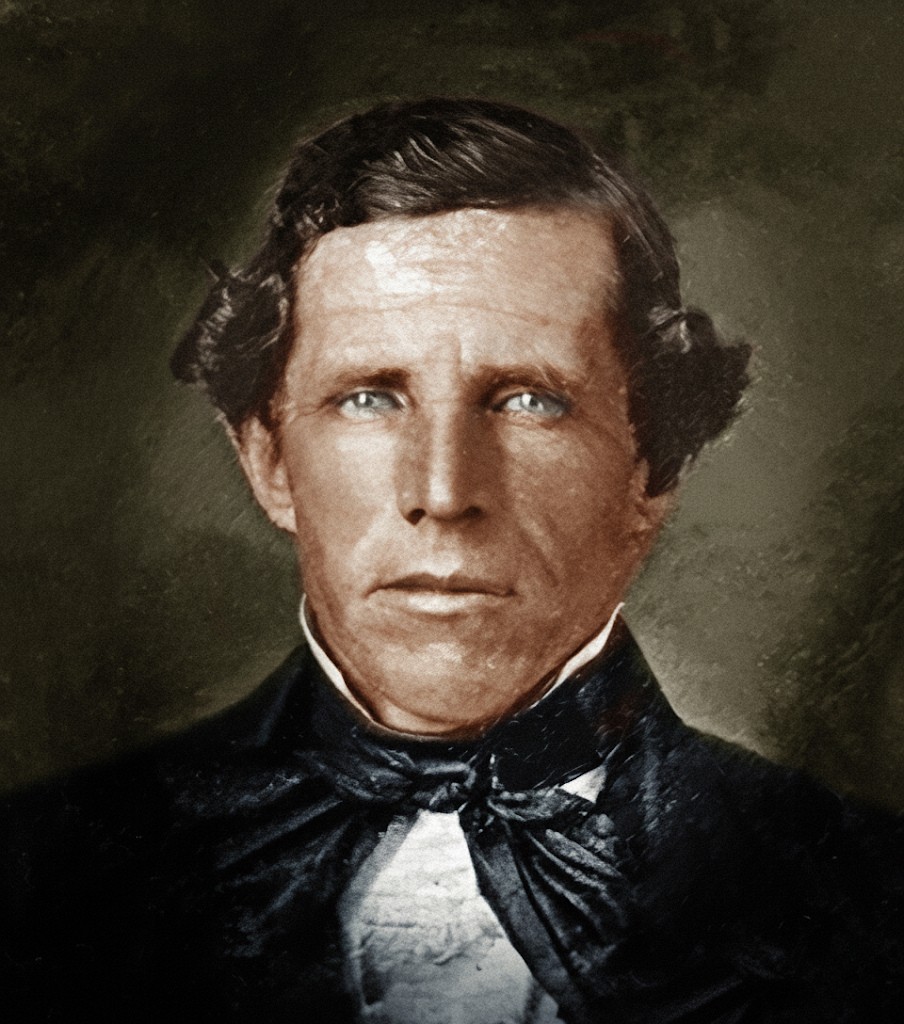
Joseph Smith Jr. was born in 1805 in Vermont, and by all contemporary accounts, he was what we might charitably call an “enterprising young man” and what others might call a con artist. Before his divine revelations, Smith was known in his community for “glass looking”—using a seer stone placed in a hat to locate buried treasure. He was actually convicted of being a “disorderly person” for this activity in 1826. Remember this detail. It will become hilariously ironic.
According to Smith’s later account (which changed several times in the telling), in 1820, at age 14, he went into the woods to pray about which church to join. There, he claimed, God the Father and Jesus Christ appeared to him in bodily form and told him that all existing churches were wrong. This “First Vision” is the foundation of Mormon theology, yet Smith didn’t mention it publicly until 1838—eighteen years after it allegedly occurred. The earliest account, written in 1832, describes only one personage, not two. As Mark Twain might say, “If you tell the truth, you don’t have to remember anything.”

Then came the golden plates. In 1823, Smith claimed an angel named Moroni (yes, really) appeared and told him about gold plates buried in a hill near his home. These plates, written in “reformed Egyptian” (a language that doesn’t exist), supposedly contained the history of ancient peoples in the Americas. After four years of annual visits from Moroni, Smith finally retrieved the plates in 1827. He translated them using—wait for it—the same seer stone he’d used for treasure hunting, placing it in a hat and dictating while his face was buried in said hat.
Let’s pause here for theological inventory. Jesus said in John 14:6, “I am the way, and the truth, and the life. No one comes to the Father except through me.” Not through golden plates. Not through special stones in hats. Through Jesus alone. The Apostle Paul warned in Galatians 1:8, “But even if we or an angel from heaven should preach to you a gospel contrary to the one we preached to you, let him be accursed.” An angel appearing with a new gospel? That’s not a feature; it’s a bug.
The Book of Mormon, published in 1830, reads like a King James Bible fan fiction set in the Americas. It tells of Israelites sailing to America around 600 BCE and dividing into warring factions—the righteous Nephites and the wicked Lamanites (whom Smith claimed were the ancestors of Native Americans, a theory thoroughly debunked by DNA evidence). The book is filled with anachronisms: horses, cattle, wheat, and steel in pre-Columbian America, none of which archaeological evidence supports. It quotes extensively from the King James Bible, including translation errors unique to that version—odd for documents supposedly written a thousand years before the KJV existed.
Eleven witnesses signed statements testifying they saw the golden plates. What the church doesn’t advertise is that most of these witnesses later left the church or were excommunicated, several recanted their testimonies, and Smith admitted they saw the plates with “spiritual eyes” rather than physical ones, which is to say, they didn’t see them at all. As Twain observed about the Book of Mormon: “It is chloroform in print.”
But here’s what Smith understood that makes him dangerously brilliant: people crave certainty, hierarchy, and purpose. He offered all three, wrapped in American exceptionalism and the promise of becoming a god yourself one day. Who needs evidence when you’ve got ambition?
II. Go West, Young Cult (Or: How to Build an Empire on Broken Promises)
Once the religion was established, Smith did what any good cult leader does: he gathered followers, isolated them, and created an us-versus-them mentality. The early Mormons moved frequently—from New York to Ohio to Missouri to Illinois—usually one step ahead of angry mobs or legal authorities. To hear Mormons tell it, they were persecuted for their faith. To hear everyone else tell it, they were running pyramid schemes, committing bank fraud, and Smith was secretly marrying other men’s wives.
Let’s talk about that last bit, because it’s important. In Nauvoo, Illinois, Smith introduced the doctrine of “plural marriage”—polygamy—which he conveniently received as a revelation in 1843 (Doctrine and Covenants 132). This wasn’t about increasing the population; Smith had already secretly married at least thirty-four women, including teenagers as young as fourteen and women who were already married to other men. When confronted, he denied it publicly while continuing privately. Jesus said in Matthew 19:4-6 that God made them “male and female” and “the two shall become one flesh”—not three, not thirty-four, but two.
The pattern here is textbook cult behaviour: the leader gets special privileges that don’t apply to followers. Smith could have multiple wives; his followers mostly couldn’t. Smith received revelations; his followers had to obey them. When a Nauvoo newspaper, run by disaffected Mormons, published exposés about Smith’s polygamy and theocratic ambitions, Smith ordered the printing press destroyed. This illegal act led to his arrest.
On June 27, 1844, while awaiting trial in Carthage Jail, Illinois, a mob stormed the building and killed Joseph Smith. He died shooting back with a smuggled pistol, hitting two men. Not exactly a martyrdom in the Christian sense—Jesus went willingly to the cross without resistance, telling Peter in Matthew 26:52, “Put your sword back into its place. For all who take the sword will perish by the sword.”
After Smith’s death, the church fractured. The largest group followed Brigham Young—a man who would prove even more ruthless and ambitious than his predecessor. Young was Smith’s most loyal lieutenant, a fiery preacher with an iron will and zero tolerance for dissent. He led the faithful on their famous exodus to Utah, then Mexican territory beyond the reach of U.S. law. If Smith was the visionary founder, Young was the empire builder, the enforcer, the man who transformed a religious movement into a theocratic state.
And what an empire he built—largely by taking from others what wasn’t his.
Young served as the second president of the church from 1847 until his death in 1877, thirty years of absolute control. Under his leadership, the church didn’t just survive; it dominated. Young served simultaneously as church president, territorial governor, and superintendent of Indian affairs. He controlled the territorial militia. He decided who could marry whom, who could do business, who would prosper and who would be “blood atoned”—a euphemism for murder sanctioned by religious authority. If you watch Netflix’s American Primeval, you’ll see Young portrayed during this brutal period of Mormon expansion, when the Utah Territory was less kingdom of God and more feudal fiefdom.
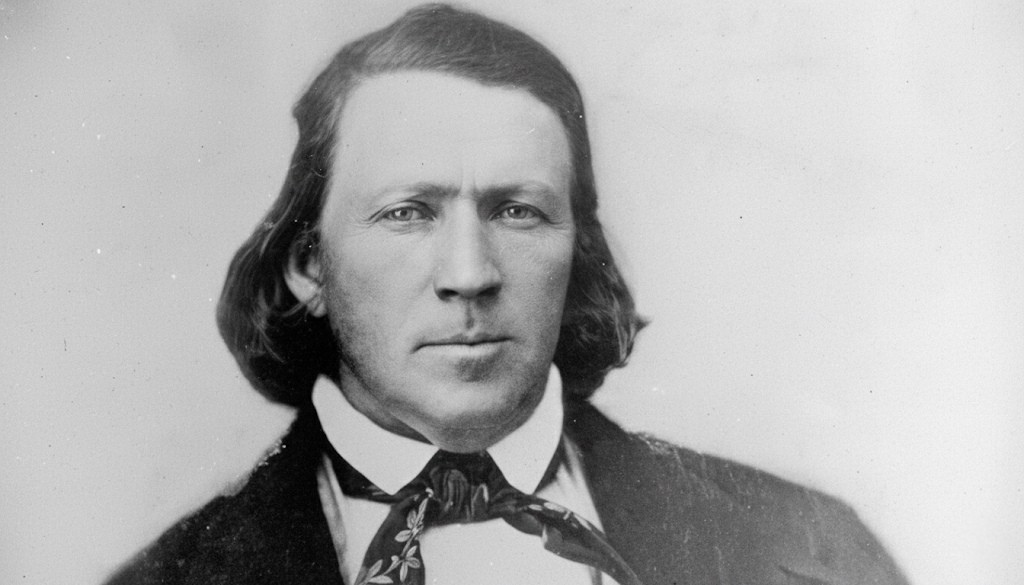
How did Young provide for his massive family? Brigham’s household consisted of fifty-six wives and fifty-seven children—sixteen of his wives bore him twenty-six sons and thirty-one daughters. The logistics alone boggle the mind. But Young didn’t worry about logistics because he helped himself to the resources of the entire community. Tithing flowed to him personally. He claimed ownership of choice lands. He taxed non-Mormon merchants mercilessly while exempting Mormon businesses. He established the Perpetual Emigration Fund, ostensibly to help poor converts reach Utah, but which functioned more like an indentured servitude scheme—immigrants arrived deep in debt to the church and worked for years to repay it.
Young preached the doctrine of “consecration”—members were expected to deed their property to the church, receiving back only what Young deemed appropriate. Disobey, and you might find yourself without land, without business, without community. It was spiritual extortion backed by temporal power. This is the man who said, “I am the voice of God to you”—not a servant of Christ, but God’s voice itself. One wonders what Jesus would say about that, He who washed His disciples’ feet and said in Matthew 23:11, “The greatest among you shall be your servant.”
Young was also explicit about matters the modern church tries to soft-pedal. He taught that Adam was actually God the Father in physical form (the “Adam-God doctrine”), that blood atonement required the literal shedding of blood for certain sins, and that people of African descent were cursed and could not hold the priesthood—a doctrine the church didn’t officially abandon until 1978, when continued racism became too financially costly. Young said in 1863, “Shall I tell you the law of God in regard to the African race? If the white man who belongs to the chosen seed mixes his blood with the seed of Cain, the penalty, under the law of God, is death on the spot. This will always be so.”
That’s not Christianity. That’s not even close. Peter declared in Acts 10:34-35, “Truly I understand that God shows no partiality, but in every nation anyone who fears him and does what is right is acceptable to him.” Paul wrote in Galatians 3:28, “There is neither Jew nor Greek, there is neither slave nor free, there is no male and female, for you are all one in Christ Jesus.”
The Mormon migration to Utah is often portrayed as a heroic pioneer story, and certainly, the hardships were real. But it was also a strategic retreat by a group that had worn out its welcome everywhere else, led by a man who saw opportunity in isolation. In Utah, dominant and beyond federal oversight (initially), Young could enforce his doctrines without outside interference. They built an empire—literally. The church controlled not just spiritual life but also economics, politics, law enforcement, and even relationships through arranged marriages.
The practice of polygamy continued openly until 1890, when church president Wilford Woodruff issued a manifesto officially discontinuing it—coincidentally right when Utah wanted statehood and the federal government was seizing church assets. Some splinter groups continue the practice today, though the mainstream church excommunicates polygamists. This convenient flexibility in “eternal principles” should tell you something about divine revelation versus political expediency.
III. The Corporation of the Latter-day Saints (Or: Tax-Exempt Billions)
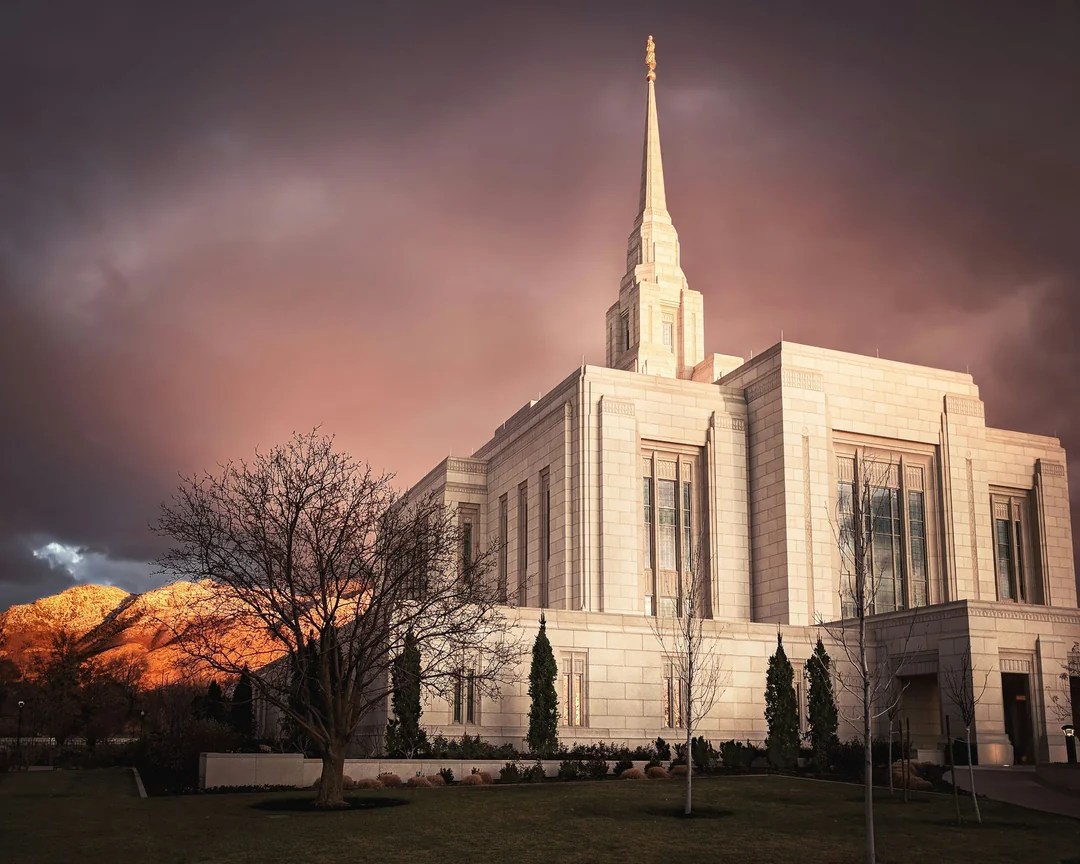
Today’s Mormon church bears little resemblance to the scrappy cult that fled westward. It’s a multi-billion-dollar corporation masquerading as a religion, with an estimated $236 billion in assets according to a 2024 whistleblower report. They own Ancestry.com (ironic, given their false claims about Lamanite DNA), vast real estate holdings, ranches, media companies, shopping malls, and an investment portfolio that would make Wall Street envious. And they pay no taxes on any of it.
The church requires members to pay 10% of their income as tithing—not after taxes, not of surplus, but of gross income. Fail to pay, and you can’t attend temple ceremonies necessary for the highest degree of heaven. This isn’t a suggested donation; it’s spiritual extortion. Meanwhile, the church’s finances are completely opaque. Members have no idea how their money is spent. Jesus overturned tables when the temple became a marketplace (John 2:13-17). One wonders what He’d do with a church that operates as a hedge fund.
The modern Mormon experience is heavily structured. Members are expected to attend three-hour Sunday services, hold weekly “Family Home Evening,” accept whatever calling (unpaid job) they’re assigned, participate in temple work, and engage in missionary service. Young men are strongly encouraged—practically required—to serve two-year missions, which they or their families pay for ($12,000-15,000 plus personal expenses). Young women can serve 18-month missions starting at age 19, but it’s less emphasized.
The church operates on a rigid hierarchy. At the bottom are regular members. Above them are priests, elders, bishops, stake presidents, and, climbing up to the Quorum of the Twelve Apostles and finally the Prophet/President, who claims to speak directly for God. It’s a corporate structure disguised as spiritual authority—middle management for eternity.
Let’s address the underwear, because it’s too bizarre not to. After going through temple ceremonies, Mormons receive “garments”—special underwear marked with symbols they believe offer spiritual protection. They’re supposed to wear them day and night, removing them only for swimming, showering, and sex. The church gets cagey when outsiders mention this, but it’s real. It’s also completely unbiblical. Paul wrote in Romans 14:17, “For the kingdom of God is not a matter of eating and drinking”—or we might add, special underwear—”but of righteousness and peace and joy in the Holy Spirit.”
Temple ceremonies themselves, kept secret from non-members and new members alike, involve bizarre rituals borrowed from Freemasonry (Smith was a Mason). Members wear white robes, special hats and veils, take oaths while making slashing motions across their throats and stomachs (until the church changed these in 1990), and learn secret handshakes and passwords necessary to get into heaven. None of this appears anywhere in the Bible. Jesus said in John 18:20, “I have spoken openly to the world. I have always taught in synagogues and in the temple, where all Jews come together. I have said nothing in secret.”
The church also practices baptism for the dead, where living members are baptized as proxies for deceased people, ostensibly giving them a chance to accept Mormonism in the afterlife. This is why they’re so interested in genealogy (hence Ancestry.com). It sounds generous until you realize they’ve baptized Holocaust victims, genocided peoples, and millions who explicitly rejected Christianity in life. Paul mentions baptism for the dead once in 1 Corinthians 15:29, but as a practice “they” do—not “we”—and he’s using it rhetorically to argue for resurrection, not endorsing the practice.
But here’s the thing about empires built on sand: eventually, people start noticing. The internet has been devastating for the Mormon church. Young people, raised on information abundance, are discovering the messy history the church tried to hide. In 2021, popular YouTube filmmaker and influencer Johnny Harris publicly announced his departure from the church, citing his discovery of historical facts the church had concealed. Harris, who has millions of subscribers, detailed his faith crisis in a vulnerable video that resonated with thousands of other doubting members. He’s not alone. The church’s own data shows declining activity rates, particularly among millennials and Gen Z, who can Google “Joseph Smith seer stone” and find the church’s own carefully worded admissions buried in obscure Gospel Topics essays.

The church is hemorrhaging members, particularly young people who refuse to ignore cognitive dissonance. They’re being told to “doubt their doubts” while evidence of deception piles higher. That’s not faith; that’s willful blindness.
IV. The Deception of Counterfeit Christianity (Or: Why This Matters)
Here’s the uncomfortable truth: Mormonism is not Christian. It’s not a denomination of Christianity or a different interpretation. It’s a separate religion that borrowed Christian vocabulary while fundamentally rejecting Christian theology.
Christians believe in one eternal God, existing as Trinity—Father, Son, and Holy Spirit. Mormons believe God the Father was once a man who became a god, that Jesus and Satan are spirit brothers, and that faithful Mormon men can become gods of their own planets. This isn’t a minor difference; it’s a completely different cosmology. Isaiah 43:10 is unambiguous: “Before me no god was formed, nor shall there be any after me.”
Christians believe salvation comes through faith in Jesus Christ alone, by grace, not works. Ephesians 2:8-9 states, “For by grace you have been saved through faith. And this is not your own doing; it is the gift of God, not a result of works, so that no one may boast.” Mormons believe salvation requires faith plus ordinances (baptism, temple ceremonies), plus obedience, plus enduring to the end. They’ve added requirements to grace, which Paul explicitly condemns in Galatians.
Christians believe the Bible is God’s complete revelation. 2 Timothy 3:16-17 says, “All Scripture is breathed out by God and profitable for teaching, for reproof, for correction, and for training in righteousness, that the man of God may be complete, equipped for every good work.” Complete. Equipped. Not needing golden plates or continuing revelation from guys in Salt Lake City. Mormons claim the Bible is corrupted and incomplete, requiring the Book of Mormon, Doctrine and Covenants, and Pearl of Great Price—plus whatever the current prophet announces.
The Jesus of Mormonism is not the Jesus of the Bible. The Mormon Jesus was created by God the Father through sexual relations with Mary (yes, they teach this), is the spirit brother of Lucifer, atoned for sins in the Garden of Gethsemane (not primarily on the cross), and offers salvation only through the Mormon church. This is a different Jesus. Paul warns in 2 Corinthians 11:3-4, “I am afraid that as the serpent deceived Eve by his cunning, your thoughts will be led astray from a sincere and pure devotion to Christ. For if someone comes and proclaims another Jesus than the one we proclaimed… you put up with it readily enough.”
Why does this matter? Because Mormons are genuinely nice people. They’re family-oriented, hardworking, and sincere. But sincerity doesn’t equal truth. You can be sincerely wrong. And when that wrong belief concerns where you’ll spend eternity, it matters desperately.
The cultic deception operates on multiple levels. First, there’s the love-bombing—potential converts are showered with attention, invited to activities, given gifts. Once you’re in, you’re assigned a visiting teacher or home teacher who checks on you. Community is weaponized. Leave, and you lose your entire social network, sometimes your family.
Second, there’s the sunk-cost fallacy. Once you’ve served a mission, married in the temple, paid years of tithing, the psychological cost of admitting it was wrong becomes overwhelming. So you double down. You defend it. You raise your children in it.
Third, there’s the epistemology of feelings. When doubts arise, members are told to pray and trust their feelings—”a burning in the bosom.” But feelings aren’t reliable guides to truth. Jeremiah 17:9 warns, “The heart is deceitful above all things, and desperately sick; who can understand it?” Truth isn’t determined by feelings but by correspondence with reality and, for Christians, with Scripture.
Fourth, the church controls information. Members are discouraged from reading “anti-Mormon” literature, which includes historical facts the church finds inconvenient. They’re told to trust leaders, not Google. In an information age, this control is slipping, which is why the church is hemorrhaging members, particularly young people who discover the truth online.
Conclusion: The Truth Shall Make You Free
So it goes. Another American religion, another profitable delusion, another generation of sincere people trapped in a system that profits from their faith.
If you’re reading this as a faithful Latter-day Saint, I know you’re angry right now. I know you feel attacked. I know you’re thinking of all the counterarguments, the faithful explanations, the ways to dismiss this as persecution. But somewhere, deep down, in a place you’re afraid to look, you know something is wrong. You’ve felt the inconsistencies. You’ve noticed how the history doesn’t quite add up. You’ve wondered why prophets and apostles speak as men so often and as God so rarely. You’ve felt the exhaustion of never being quite good enough, of always owing more—more time, more money, more obedience.
Jesus said in John 8:31-32, “If you abide in my word, you are truly my disciples, and you will know the truth, and the truth will set you free.” Not the word of Joseph Smith. Not the word of Brigham Young, who declared himself God’s voice while stealing from his followers and preaching racial supremacy. Not the continuing revelation of elderly businessmen in Salt Lake City. The word of Jesus Christ, preserved in Scripture, available to everyone, without secret handshakes or special underwear or 10% of your income or two years in a foreign country knocking on doors.
The gospel—the real one—is shockingly simple. “For God so loved the world, that he gave his only Son, that whoever believes in him should not perish but have eternal life” (John 3:16). That’s it. Believe in Jesus—the real Jesus, who is eternal God incarnate, not a created spirit brother of Satan. Trust in His finished work on the cross, where He said, “It is finished” (John 19:30)—not “It is finished plus temple ordinances plus perfect obedience plus eternal progression.” Receive salvation as a free gift of grace, not something you earn through works that never quite suffice.
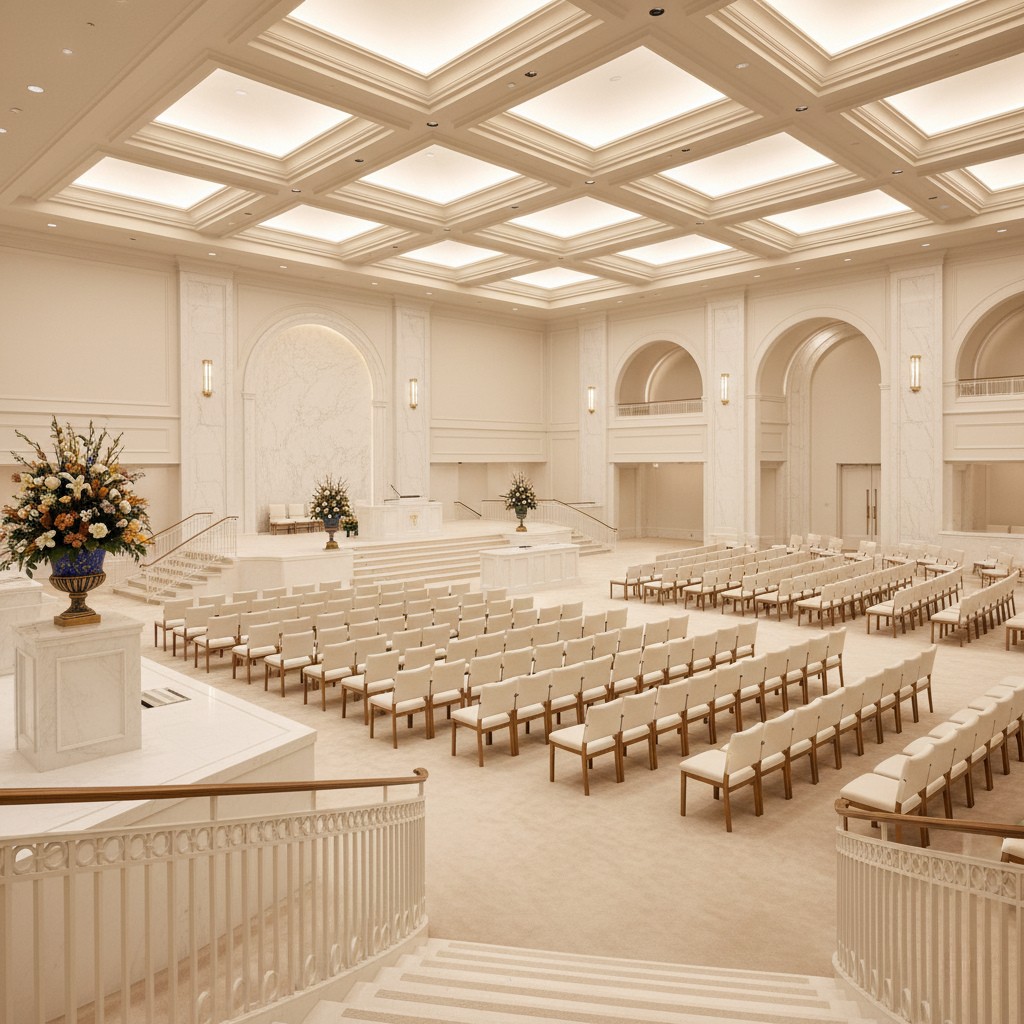
The Mormon church has built an empire on a foundation of sand. It has billions of dollars, beautiful temples, impressive organization, and sincere followers. But sincerity and success don’t equal truth. Jesus asked in Mark 8:36, “For what does it profit a man to gain the whole world and forfeit his soul?” What does it profit a religion to gain billions and lose the gospel?
You can leave. Yes, it will cost you—possibly relationships, certainly community, maybe even family. But you’ll gain something infinitely more valuable: freedom in Christ. Not freedom to sin but freedom from the crushing weight of self-salvation. Freedom from religious performance. Freedom from the anxiety of never measuring up. Jesus promises in Matthew 11:28-30, “Come to me, all who labor and are heavy laden, and I will give you rest. Take my yoke upon you, and learn from me, for I am gentle and lowly in heart, and you will find rest for your souls. For my yoke is easy, and my burden is light.”
That’s the gospel. That’s Christianity. That’s Jesus.
Everything else is chloroform in print.
 Notes Beyond the Map
Leave a comment