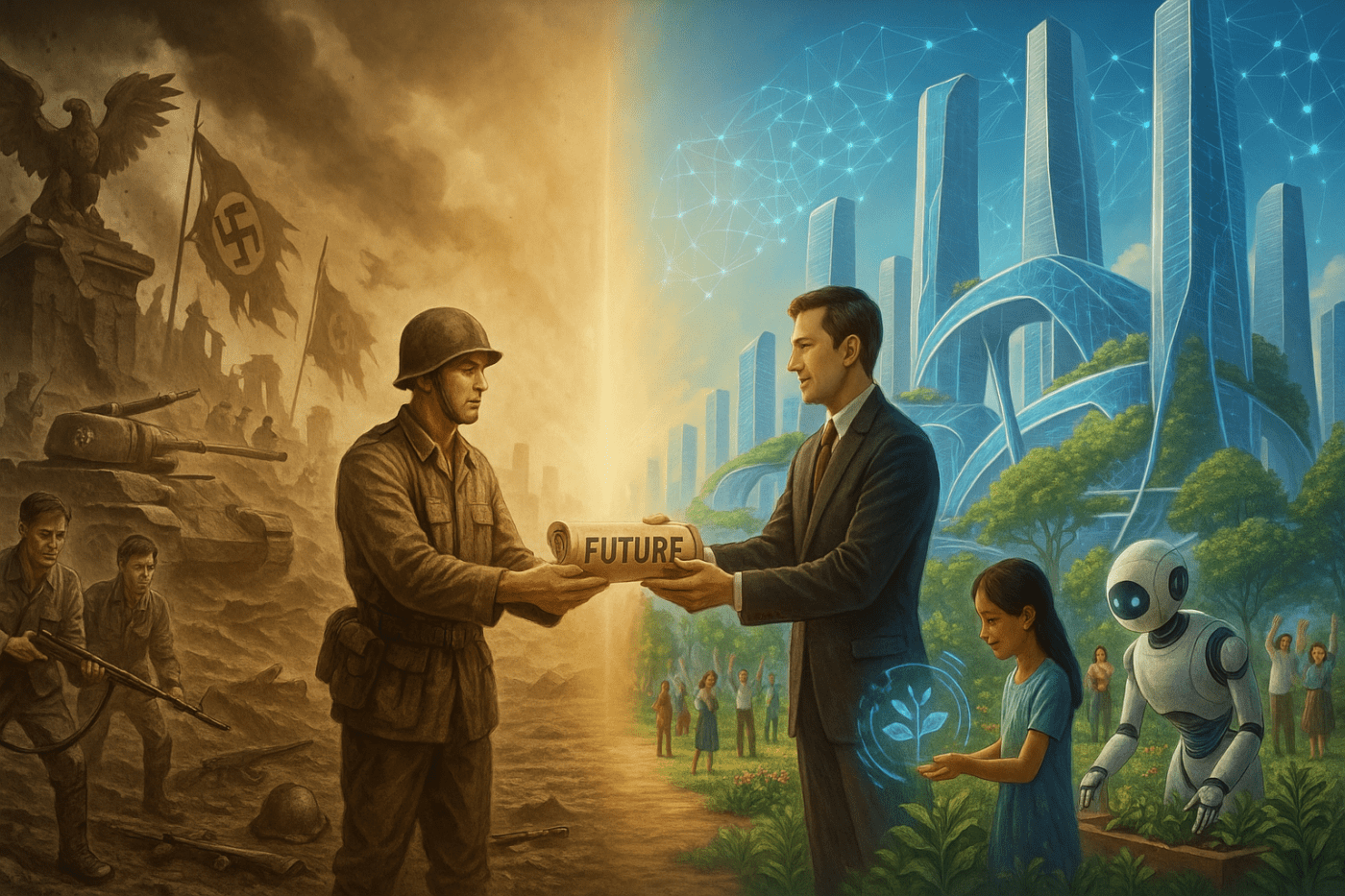
Why we’re solving yesterday’s problems with tomorrow’s tools—and how to stop
On December 7, 1941, the Empire of Japan bombed Pearl Harbor. America reeled. The world watched as democracy itself seemed under siege—fascism spreading across Europe, militarism engulfing Asia, freedom retreating on every front.
Thirty-two days later, Franklin Delano Roosevelt stood before Congress and spoke words that would define a generation: “The only thing we have to fear is fear itself.”
Not the bombs. Not the enemy fleets. Not the industrial might of empires bent on conquest. Fear itself—the paralysis that stops us from acting, from building, from becoming what crisis demands we become.
Less than four years later, we had defeated fascism on two continents. It was humanity’s greatest hour. We chose freedom and liberty over autocracy and tyranny. We chose to build rather than to cower.

An M4 Sherman tank rolls onto the beaches of Normandy on June 6, 1944. This is what courage looked like then. Courage in 2025 asks something different: not landing tanks, but steering our most powerful technologies toward human dignity.
And then—in what might be the most audacious act of the 20th century—we rebuilt the global economy by partnering with our former enemies. Germany and Japan, the fascist powers that had threatened to plunge the world into eternal darkness, became cornerstones of the most robust global economy the world had ever seen. We didn’t just win. We transformed victory into shared prosperity.
Roosevelt understood something we’ve forgotten in 2025: Humans are the most ingenious, adaptive species this planet has ever produced. We’ve survived ice ages, plagues, famines, and our own worst impulses. We’ve built civilizations from scratch, decoded our own DNA, and walked on the moon.
But here’s what we’ve also forgotten: We weren’t meant to build alone. Research across cultures shows that people living within large family networks and close-knit communities are significantly happier—by large majorities—than those pursuing the modern myth of independence. The castle we’ve been sold—isolated homes, nuclear families, self-sufficiency—isn’t the pinnacle of human existence. It’s a deviation from it.
Interdependence, not independence, is how humans thrive. AI might just help us remember that. It can help us think above our current mindset, beyond the assumptions we’ve been conditioned to accept as inevitable.
So why, at one of our greatest hours—standing on the threshold of technologies that could solve our most intractable problems—are we paralyzed by fear?
So it goes.
I spent years studying the 20th century—the European theatre, the Russian convulsions, the rise and fall of empires. Not because I enjoyed reading about suffering, but because I needed to understand what humans are capable of surviving. And overcoming.
Listen, I’m going to tell you something uncomfortable: You’re not losing your mind. You’re losing your job. Or your relevance. Or your competitive edge. Or maybe you’re just waiting for the Terminators to show up. The headlines scream all of the above.
But here’s what a history degree in 20th-century European conflict teaches you that Silicon Valley panic merchants miss: We’ve been to hell and back. Multiple times. And we’re still here.
The 20th century threw everything at humanity: The Great Depression put a quarter of Americans out of work and sparked mass unemployment across the globe. Two world wars killed over 100 million soldiers and civilians. Fascism swept across Europe like a plague. Stalin’s purges. The Holocaust. Hiroshima. The Cold War threat of nuclear annihilation hung over every child’s head.
And yet. And yet.
We didn’t just survive. We built the most prosperous, peaceful, innovative period in human history on the other side. We went from monarchy and autocracy to democracy and liberalism, spreading across continents. From empires built on subjugation to institutions built on human rights. From a life expectancy of 47 to 73. From a world where most people lived in poverty to one where billions escaped it.
The generation that beat fascism didn’t do it by thinking small. They didn’t wring their hands about whether new technologies would disrupt their livelihoods. They looked at an existential crisis and asked: “What civilization do we want to build on the other side?”
The year is 2025. AI is everywhere. Your fear is real. But so is your amnesia about what real existential threats look like—and how we’ve always answered them.
Here’s the uncomfortable truth: The generation that beat fascism would be ashamed of our AI panic. They’d look at us—with all our technological capability, all our wealth, all our knowledge—cowering before the very tools that could solve humanity’s greatest challenges, and they’d wonder what happened to our courage.
The Godfather’s Warning (And Why We’re Missing the Point)
Geoffrey Hinton—the “Godfather of AI” himself, winner of the Turing Award—quit Google in 2023 so he could “freely discuss the dangers of AI.” He’s been on a Paul Revere-style campaign ever since, warning that AI poses an existential threat. In interviews and YouTube videos with titles like “Musk Will Get Richer, People Will Get Unemployed,” Hinton argues that AI will fundamentally compromise human livelihood and agency.
Hinton has compared AI to nuclear weapons repeatedly, suggesting both are technologies with overwhelming destructive potential. And while he’s not predicting Terminator scenarios explicitly, the apocalyptic framing feeds our Hollywood-conditioned fears of Skynet, HAL 9000, and killer robots hunting us through the streets.
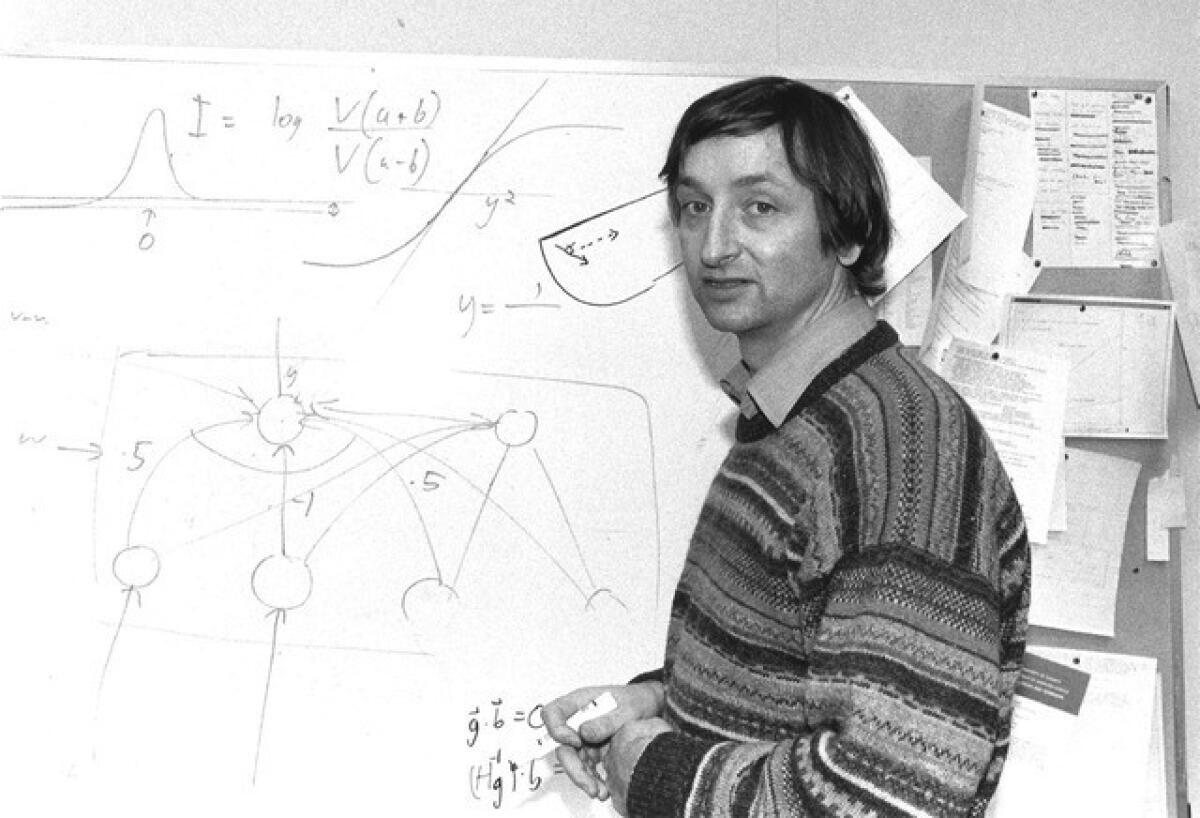
Geoffrey Hinton in the 1980s, sketching the neural blueprints that would one day reshape the world.
But here’s where Hinton—brilliant as he is—misses the historical nuance, and where we’re all missing the real threat.
The robots aren’t coming to destroy humanity. The real risks aren’t sentient machines but far more human problems: algorithmic bias, wealth concentration, privacy erosion, job displacement without social safety nets, surveillance capitalism on steroids. Humans with AI-powered tools might consolidate power in unprecedented ways—unless we make different choices about governance, distribution, and purpose.
Nuclear weapons weren’t purely destructive. Yes, the bombs dropped on Hiroshima and Nagasaki were horrific. But the doctrine of Mutually Assured Destruction that followed prevented World War III. Nuclear deterrence saved an estimated million lives by making large-scale conventional warfare between superpowers unthinkable. The technology that could annihilate cities also forced humanity into an uneasy peace that’s held for eighty years.
Every transformative technology has destroyed something while building something greater. Andrew Carnegie’s steel mills and John D. Rockefeller’s oil refineries were built on technologies people swore would destroy them. Instead, they built the industrial foundation that would defeat fascism and rebuild the world.
The question is never binary. It’s directional: What are we building toward?
The Real Question Nobody’s Asking
Here’s what keeps me up at 3 AM: The danger isn’t whether AI will destroy us. The danger is letting the wrong people decide what we build with it.
Hinton is right about one thing: Billionaires like Musk will get richer, and people will get unemployed—if we let AI development be driven purely by wealth concentration and quarterly earnings reports. If AI becomes another tool for automating away human dignity while funnelling profits upward, then yes, we’ll have squandered our greatest opportunity.
But that’s not an AI problem. That’s a human choice problem.
Research on distributed cognition shows that intelligence isn’t confined to our brains but emerges from our environment, tools, and relationships. We’ve always been cyborgs in a sense—our intelligence has always been distributed across our tools. The abacus. The printing press. The computer.
AI isn’t replacing human intelligence. It’s the next evolution in distributed cognition—amplifying our capability to process, analyze, and create at scales previously impossible. Whether it destroys or builds depends entirely on the story we choose to write.
The Ambition Gap: We’re Thinking Too Small
Here’s the most frustrating thing about the AI debate: We’re still looking at the world through the lens of our capabilities from seventy years ago. Our collective problem-solving capacity has increased exponentially, yet we’re still trying to solve the same tired problems with incrementally better solutions—the same challenges that faced the generation who rebuilt the world after 1945.
Steve Jobs once challenged us to “Think Different.” Not incrementally better. Not 10% more efficient. Different. He understood that breakthrough innovation requires abandoning the assumptions that constrain conventional thinking.
So let’s think differently about what AI actually offers us: Not replacement. Not competition. But liberation from a system we were never meant to endure.
Since the 1980s and 1990s, we’ve been the system. We’ve built the processes, maintained the workflows, managed the coordination, and kept everything running. We’ve become cogs in machines of our own design. And now—finally—we have an opportunity to give it back to an actual system: artificial intelligence.
Here’s a heretical truth: Humans are not meant to sit at a desk eight hours a day, five days a week, staring at screens until their eyes burn and their bodies break down. We’re not meant to spend our prime years in fluorescent-lit cubicles, developing heart disease, cancer, diabetes, and depression from sedentary work that slowly kills us.
We’re meant to be out in the world. Interacting with others. Creating with our hands—growing our own vegetables, building our own furniture, making our own bread and wine. We’re meant to be making art, not spreadsheets. Cultivating gardens, not email chains. Spending time with friends and family. Being social. Being physical. Being free.
The idea that humans must be chained to computers, working absurd hours, sacrificing their health and relationships to “be productive”—it’s insanity. It’s a betrayal of everything we evolved to be.
AI can handle the systematization. The coordination. The optimization. The repetitive cognitive labour that keeps the machine running. That’s what it’s for. Not to replace human purpose, but to free us from the soul-crushing work we convinced ourselves was necessary.
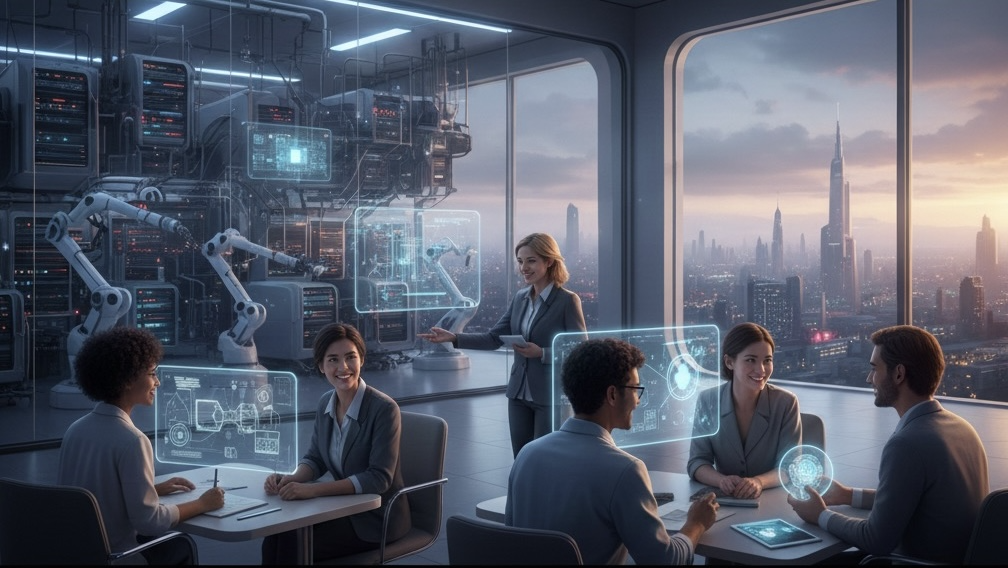
Think about what’s now possible that wasn’t even conceivable a decade ago:
Mass space exploration and industrialization: AI-coordinated missions could establish permanent lunar bases, mine asteroids for rare earth elements worth quadrillions, and build orbital manufacturing facilities where zero gravity enables materials impossible to create on Earth.
Ending homelessness: AI-designed modular housing, 3D-printed using locally-sourced materials, could be manufactured and assembled at costs 70-90% below traditional construction. But maybe we’ve been asking the wrong question. Maybe the goal isn’t everyone in their own isolated castle. Maybe it’s designing communities where interdependence is the feature, not the bug—multigenerational housing, shared spaces, connection built into the architecture.
Revolutionizing food production: AI-optimized vertical farming, precision agriculture, and cellular agriculture could reduce food production costs by 80% or more while using a fraction of the land and water. Hunger becomes a choice, not a constraint.
Achieving fusion energy: AI modelling plasma physics could finally crack controlled fusion, giving humanity virtually unlimited clean energy at near-zero marginal cost. Free energy isn’t fantasy—it’s physics waiting to be solved.
Technologies we haven’t even imagined yet: AI could discover entirely new fields of physics, chemistry, and biology. Room-temperature superconductors. Programmable matter. Quantum computing breakthroughs that make today’s AI look like an abacus. Technologies that solve problems we don’t yet know we have.
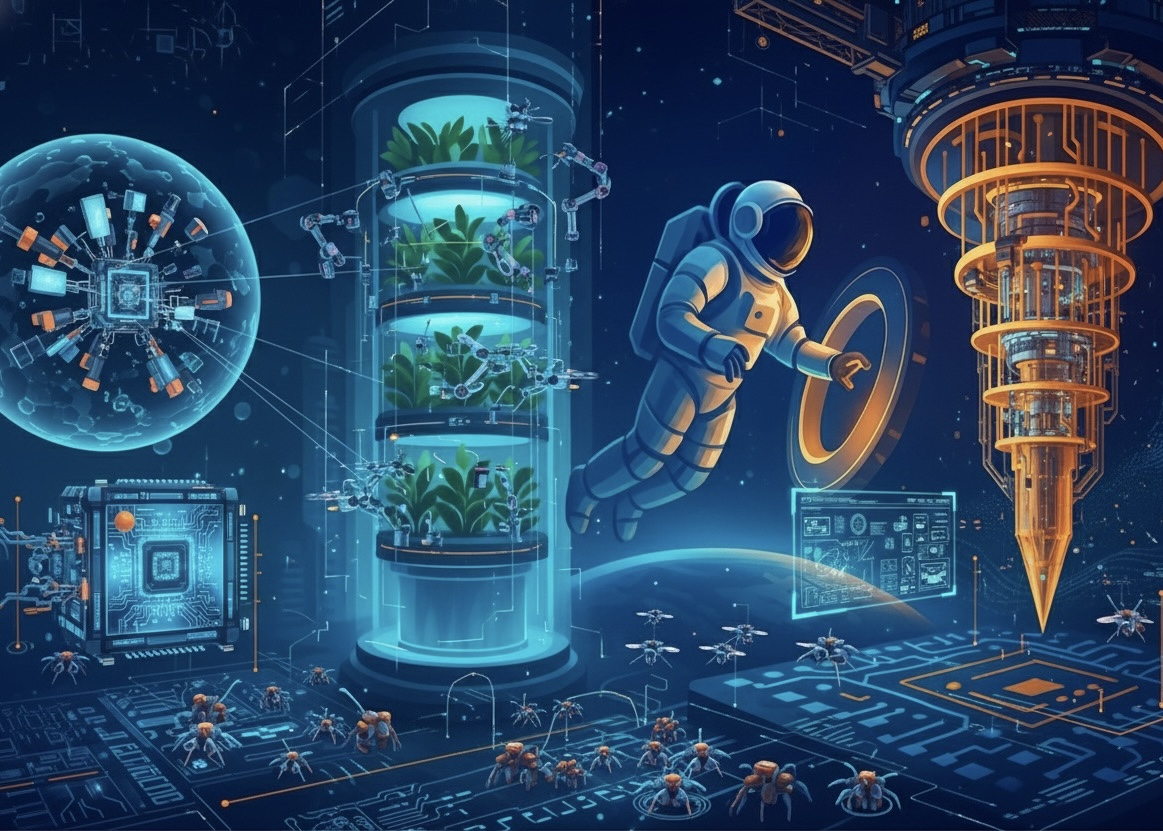
These aren’t science fiction fantasies. These are problems that AI-amplified human ingenuity could actually solve in the next decade—if we choose to aim there instead of fighting over whose job ChatGPT might replace.
The tragedy isn’t that AI might disrupt certain jobs. The tragedy is that we’re so fixated on protecting the economy we have that we’re not building the civilization we could have.
The Civilization We Can Build
We’ve spent decades optimizing for productivity and independence when we should have been optimizing for connection and interdependence. We’ve built a world of isolated workers in isolated homes, measuring success by how much we can accomplish alone. And we’re miserable for it.
What if we had purpose in a new way? What if AI could amplify our capabilities so profoundly that we’re freed to build the civilization we always deserved but never had the bandwidth to create? Not a civilization of isolated castles and 60-hour workweeks, but one of vibrant communities, meaningful relationships, and human flourishing.
Think about what becomes possible when the cost of everything collapses:
If we achieve free energy through fusion, reduce housing costs by 70% through AI-designed construction, drop food production costs by 80% through precision agriculture, and slash the cost of nearly every necessity, we fundamentally change the equation of human existence.
You wouldn’t need as much money because things would simply be cheaper. Dramatically, radically cheaper.
Capitalism as we know it can’t survive radical abundance. That’s not a threat—it’s physics. Capitalism emerged when we needed motivation to be productive, to compete for scarce resources. But when AI and technology create such abundance that scarcity becomes obsolete, the entire paradigm transforms.
The motivation shifts from making money to making meaning. From accumulating wealth to advancing humanity. From competition over resources to collaboration on civilizational challenges.
This only happens if we build AI for civilization and humanity, not for billionaires and their greed. We need AI development driven by how it can serve human flourishing, not quarterly earnings.
The people who thrive in an AI-amplified world won’t be those who compete with algorithms. They’ll be those who bring the uniquely human capabilities machines can’t replicate: wisdom, compassion, creativity, ethical reasoning, and consciousness itself.
Writing Our Own Story
Here’s what Roosevelt understood that we’ve forgotten: Fear itself is the enemy. Not the technology. Not the change. Not even the uncertainty.
The generation that beat fascism didn’t sit around debating whether tanks and bombers would displace cavalry officers. They asked: “What do we need to build to win? What civilization do we want on the other side?”
They built the arsenal of democracy. They created the greatest industrial mobilization in human history. They invented radar, sonar, nuclear energy, computers, and jet engines—technologies that terrified them but which they knew they needed to master or perish.
And when they won, they didn’t squander their victory. They built the United Nations. The Marshall Plan. NATO. The Bretton Woods system. The foundations of modern prosperity. They looked at the ashes of 100 million dead and said: “Never again. We’re building something better.”
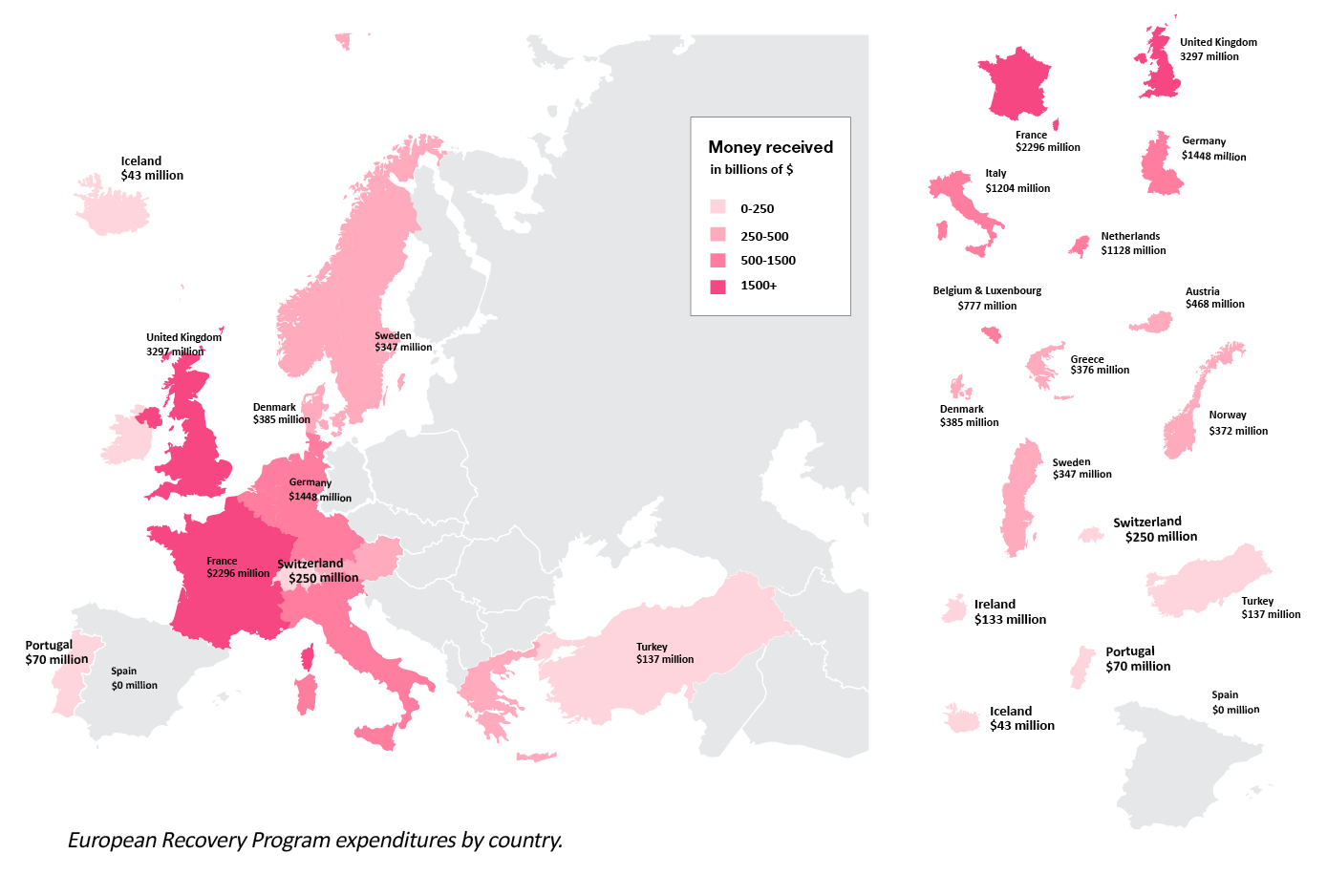
Marshall Plan distributions across Europe reveal the strategic investment that kick-started Western recovery and stabilized the postwar order.
That generation understood something we’ve forgotten: We don’t just survive history. We write it.
So how do we write this story?
We choose what we’re building for. Not shareholder value. Not quarterly earnings. Not billionaire vanity projects to Mars while people starve on Earth. We build AI systems designed to solve humanity’s greatest challenges—poverty, disease, climate, energy, and education.
We choose who controls it. Open-source development. Democratic governance. International cooperation. We don’t let five tech companies in Silicon Valley decide the future of eight billion people.
We choose to think bigger. Stop arguing about job displacement. Start designing the civilization where humans are freed to be human—connected, creative, purposeful, and free.
We choose courage over fear. The same courage that defeated fascism. The same audacity that rebuilt enemies into allies. The same vision that asked “what civilization do we deserve?”
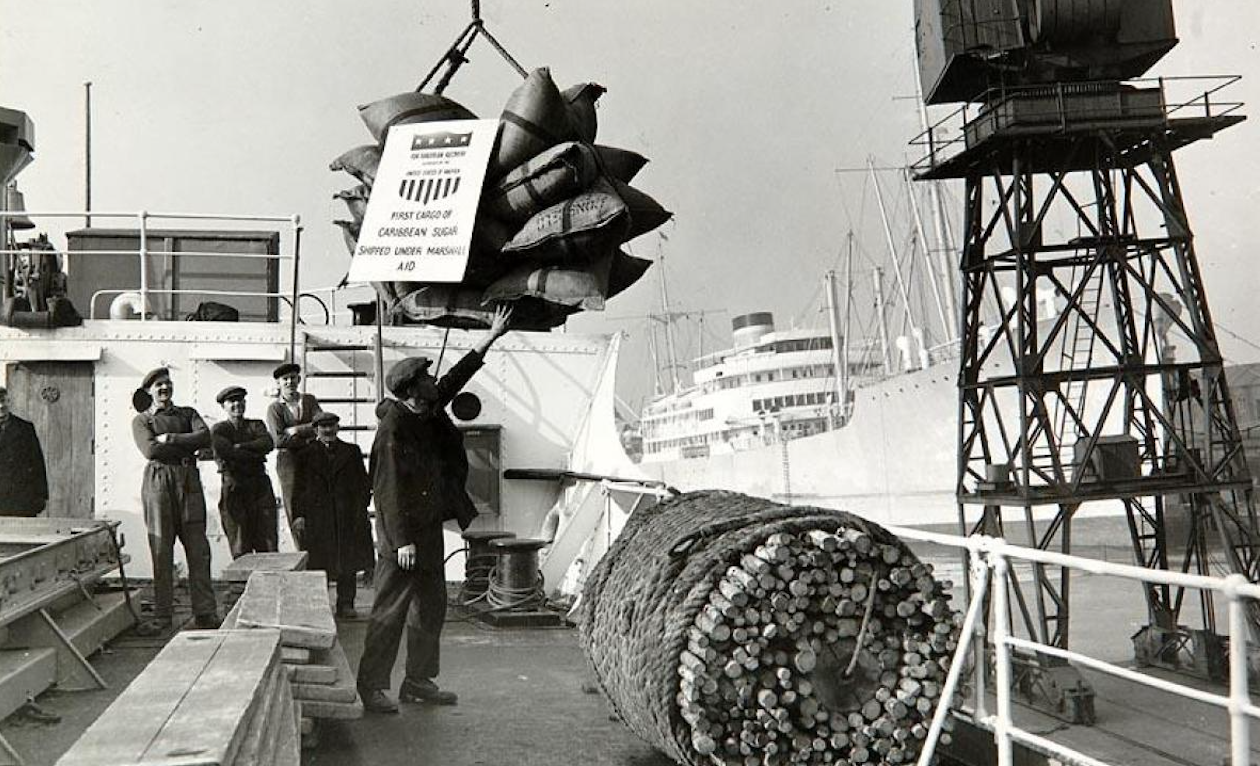
From Caribbean shores to a rebuilding Europe, the first Marshall Aid sugar shipment lifts off—sweet fuel for a continent rising from the ashes.
This moment—December 2025, this apex point we’re standing on—isn’t about whether AI will change everything. It already has. This moment is about whether we’ll have the courage to aim AI at our highest aspirations rather than our basest fears.
So It Goes
The question for you—yes, you reading this in 2025, or 2030, or 2035—isn’t whether AI will change everything. It already has. The question is what story you’re going to write with it.
Geoffrey Hinton is right to sound the alarm. But the alarm isn’t about AI becoming too smart. It’s about humans forgetting to ask: “What are we building this for? Who does it serve? What civilization are we trying to create?”
Because in the end, every technology is a mirror. It reflects back the values, intentions, and consciousness we bring to it.
The robots aren’t coming to destroy us. But if we’re not careful about who controls AI and what it’s built for, we might destroy each other with it—not through some Skynet apocalypse, but through the far more mundane horrors of inequality, surveillance, and dehumanization that humans have always been capable of inflicting on each other.
The automobile could amplify mobility or compromise safety. We chose seat belts, traffic laws, and driver education.
Electricity could amplify progress or compromise workers. We chose labour unions, safety standards, and rural electrification.
AI can amplify human capability or compromise human dignity.
The choice, as it always has been, is ours.
Roosevelt was right. We have nothing to fear but fear itself—the fear that paralyzes us from building, from choosing, from writing the story we want to live in.
The generation that beat fascism understood this. They faced an existential threat and asked: “What civilization do we deserve on the other side?”
It’s time we asked ourselves the same question.
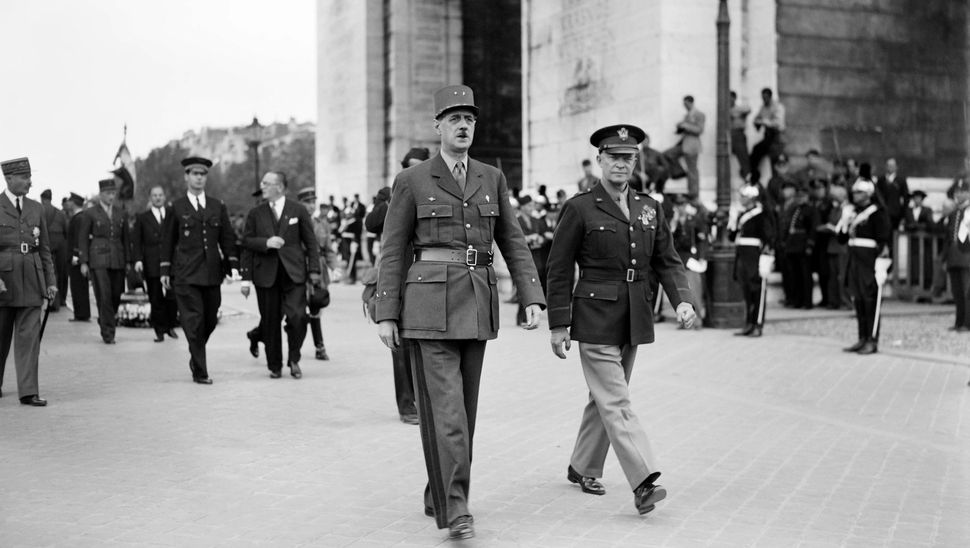
 Notes Beyond the Map
Leave a comment