A Story About Russia, Redemption, and the Quiet Power of Boring Institutions
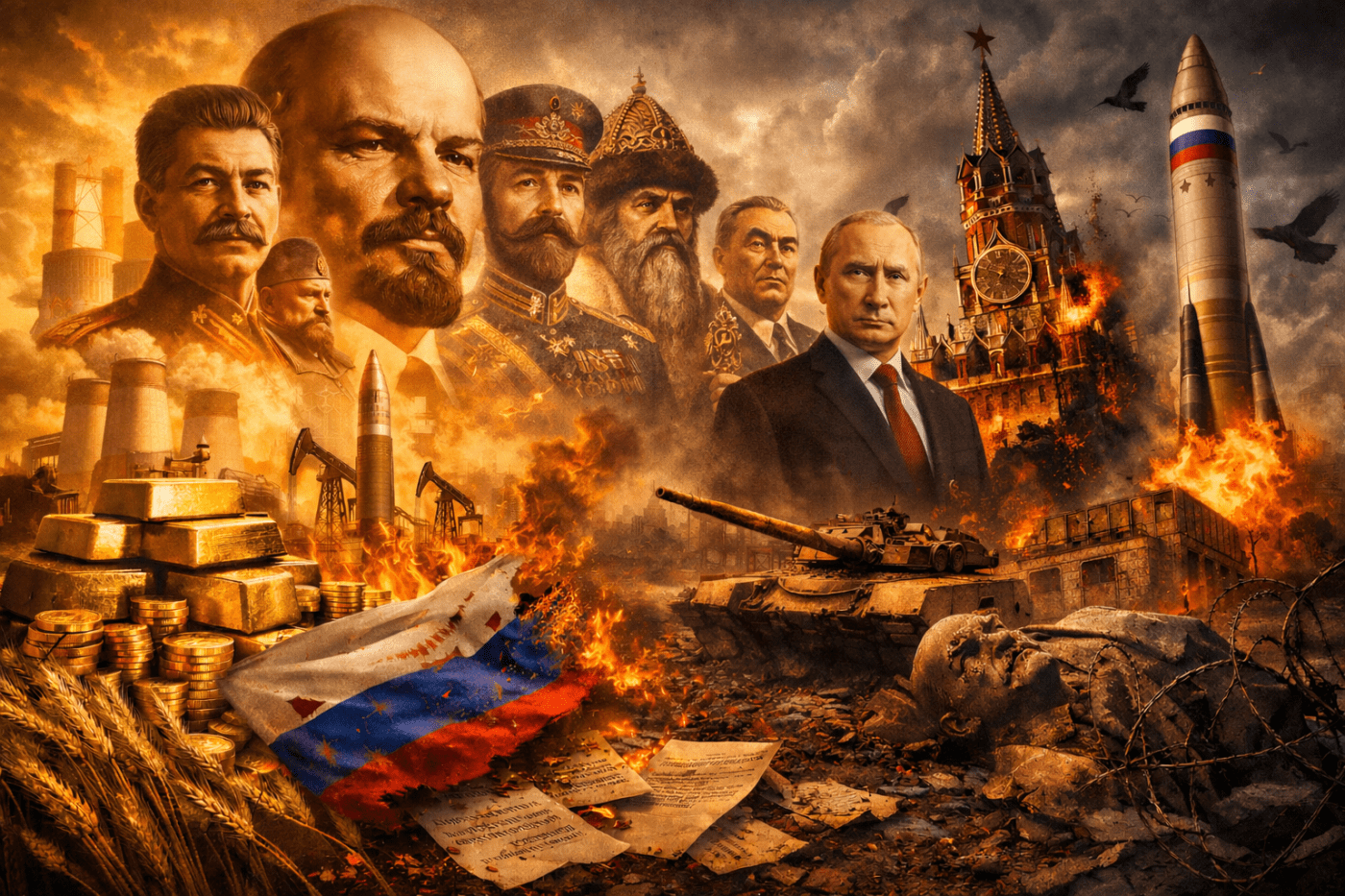
Russia should have won the twentieth century by accident.
Picture 1950. The Soviet Union stretches across eleven time zones like a geological event. Oil. Gas. Gold. Wheat. Timber. Scientists who beat America into space. Engineers who could do calculus before breakfast. On paper, it looks inevitable. History has already crowned a winner.
But then something embarrassing happens.
Nothing.
Today, Russia’s economy is smaller than Canada’s. Canada. A country with forty million people, winters that hurt your feelings, and a national personality built around saying sorry while quietly running one of the most stable banking systems on Earth.
This is not a story about bad luck. It’s not even a story about ideology. It’s a story about imagination. Or rather, what happens when a nation has none.
Because you cannot build what you have never seen. And you cannot imagine what your history has never allowed.
The Old Habit of Control
Russia has practiced autocracy the way some countries practice soccer. Daily. Religiously. With deep muscle memory.
Tsars. Then Soviets. Then strongmen with better suits and worse press conferences. Same structure. Different slogans. Power flows down. Fear flows up. Everyone learns early which questions not to ask.
Autocracy does many things efficiently. It builds armies. It extracts resources. It silences dissent. What it does not do is innovate. Innovation requires disagreement, failure, and the uncomfortable possibility that someone younger than you is right.
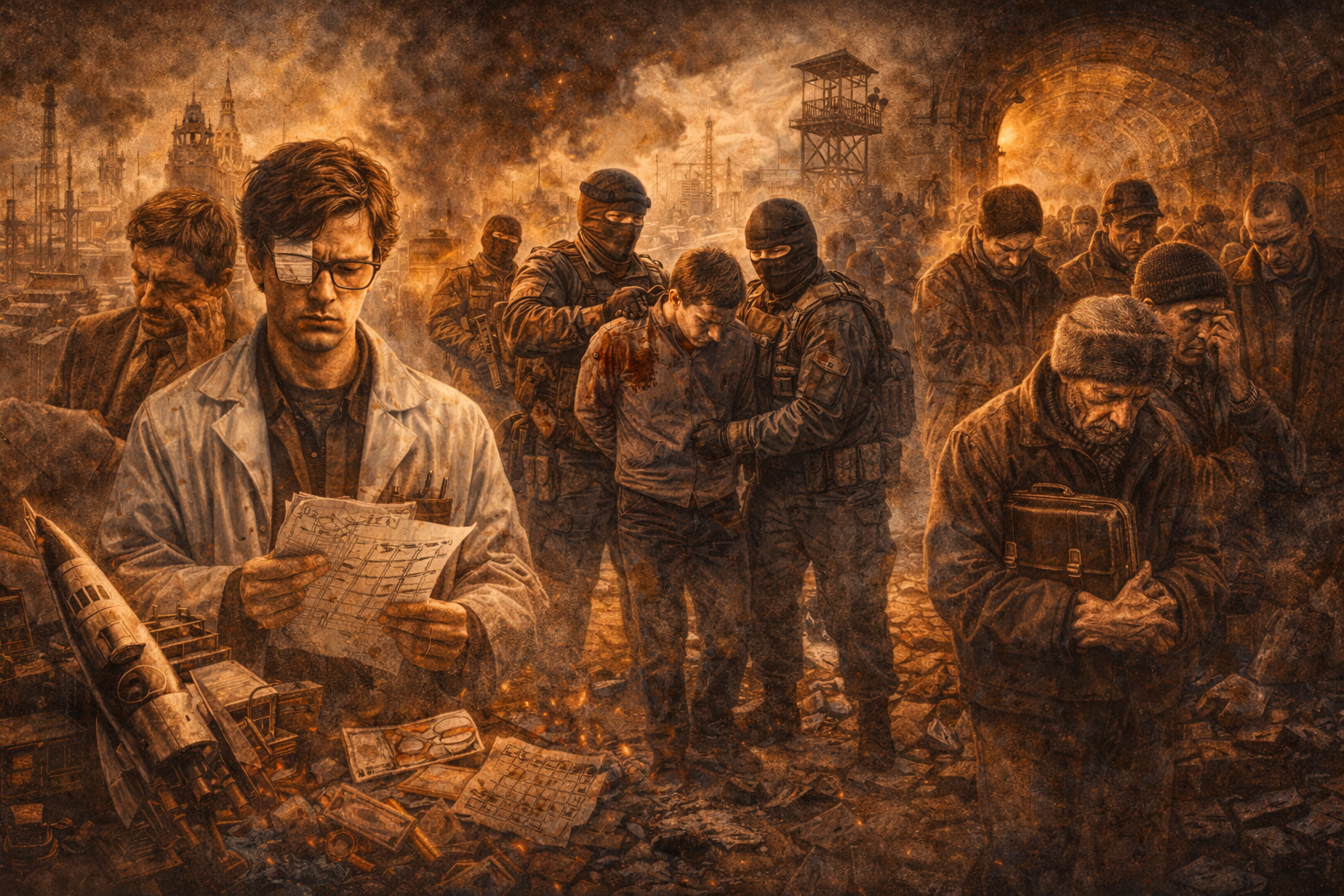
In Russia, being right too early has historically been a good way to disappear.
So people adapt. They learn to survive. They learn to endure. They learn to keep their heads down and their expectations lower. Over time, hardship stops feeling like a failure of the system and starts feeling like the system itself.
This matters more than ideology ever could.
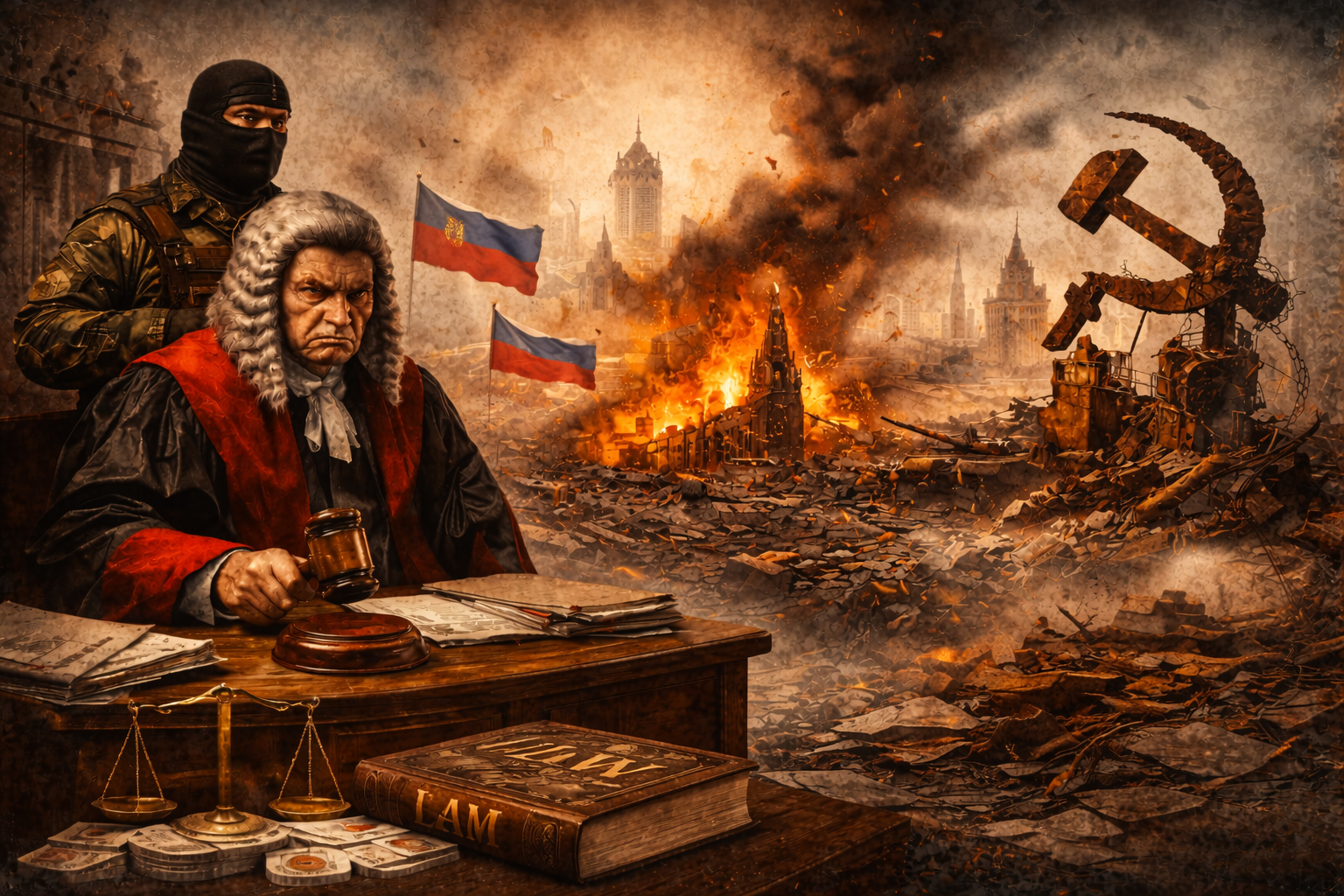
When you grow up in a place where courts serve power, contracts are suggestions, and property belongs to whoever currently holds the keys to the jail, trust becomes a liability. And without trust, prosperity never compounds. It resets. Over and over again.
Russia did not stagnate because Russians lack intelligence or grit. Quite the opposite. It stagnated because four centuries of control trained imagination out of the population.
You do not dream big in a place where dreams get punished.
The War That Changed Everything Else
Now let’s talk about Germany and Japan. Two countries that did everything wrong, lost spectacularly, and somehow came out better for it.
In 1945, Germany was rubble. Not metaphorical rubble. Actual rubble. Cities flattened. Currency worthless. Moral authority incinerated. Japan was no better. Two nuclear shadows burned into the ground and a population staring at the wreckage of imperial fantasy.
Both countries had something Russia never had.
They lost so completely that denial was impossible.
The old systems were not reformed. They were dismantled. Germany was forced to abandon authoritarianism and accept constitutional democracy, independent courts, federalism, and property rights enforced by law rather than loyalty. Japan was forced to give up militarism, empower civilian government, protect speech, and build an economy where companies competed rather than obeyed.
These changes were not cultural miracles. They were institutional surgeries performed without anesthesia.
And then something strange happened.
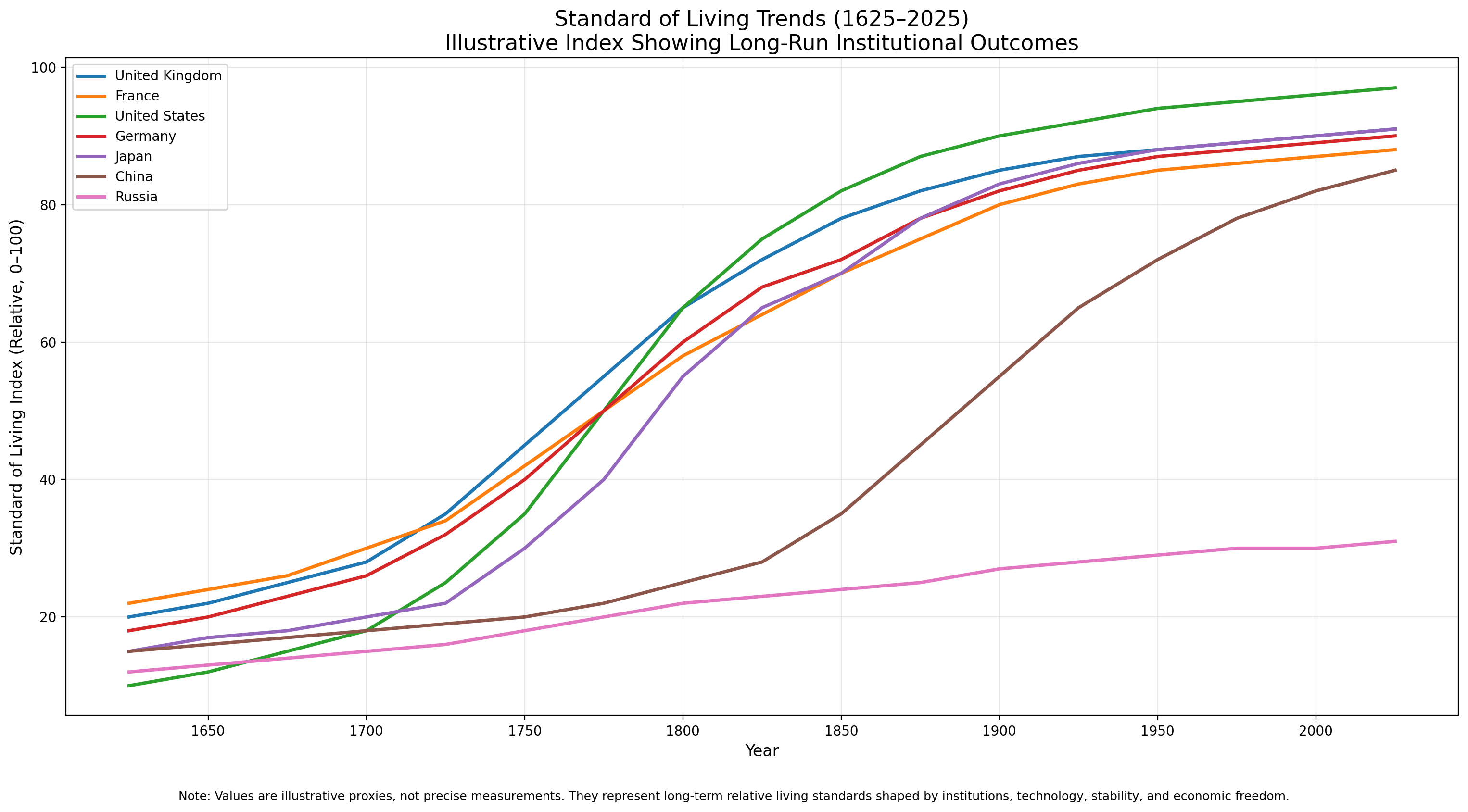
Within a generation, Germany became an engineering powerhouse. Japan turned quality control into a religion and exported excellence to the world. Companies like Siemens, Toyota, Bosch, Sony, and Honda did not emerge because Germans and Japanese suddenly became smarter. They emerged because the rules changed.

Failure became survivable. Contracts became enforceable. Courts became boring. And boring, it turns out, is rocket fuel for prosperity.
Germany and Japan succeeded not despite losing the war, but because losing forced them to abandon the illusion of control.
Russia Never Lost Like That
Russia never had its reckoning.
The Soviet Union collapsed, yes, but it collapsed sideways. There was no moral accounting. No institutional reset. No shared agreement that the old system had failed at a civilizational level.
Instead, the 1990s arrived like a car crash. Shock therapy without seatbelts. Oligarchs strip mining the state. Ordinary people associating “freedom” with chaos, humiliation, and empty shelves.
So when stability returned, even authoritarian stability, it felt like relief.
Autocracy came back wearing the costume of order. And many accepted it because order, however cruel, felt familiar.

Germany and Japan were forced to imagine something new because everything old lay in ashes. Russia rebuilt the same structure with better surveillance and worse outcomes.
Canada, From the Inside
This is where I bring it home.
Canada should not work as well as it does.
We are sparse. Cold. Spread thin across geography that actively resists human settlement. We do not have the population of India, the manufacturing scale of China, or the resource density of Russia.
What we have is predictability.
Courts that mostly work. Banks that did not explode in 2008. Property rights that mean something on a Tuesday afternoon. A boring phrase embedded into the national DNA: peace, order, and good government.
It sounds dull because it is. And that is precisely why it works.
Trust compounds quietly. Businesses invest without fear of arbitrary seizure. Immigrants arrive knowing the rules tomorrow will resemble the rules today. Capital flows in because it can leave. No drama required.
Canada did not invent prosperity. It inherited decent institutions and had the good sense not to smash them for applause.
Russia had no such inheritance.
| Country | Population (millions) | GDP (billions) | GDP per Capita | GNP/GNI (billions) | Key Advantage | Key Limitation |
|---|---|---|---|---|---|---|
| United States | 335 | 27,974 | 83,400 | 28,000+ | Institutions + innovation culture | Political polarization |
| China | 1,425 | 17,795 | 12,500 | 17,600+ | Scale + manufacturing | Autocracy + demographic cliff |
| Japan | 123 | 4,110 | 33,400 | 4,200+ | Tech excellence + institutions | Aging population |
| Germany | 84 | 4,430 | 52,800 | 4,500+ | Engineering + EU integration | Energy dependence |
| India | 1,428 | 3,730 | 2,600 | 3,550+ | Youth + talent pool | Corruption + bureaucracy |
| UK | 68 | 3,340 | 49,100 | 3,380+ | Financial services + institutions | Post-Brexit uncertainty |
| Canada | 40 | 2,140 | 52,700 | 2,100+ | Institutions + US proximity | Low productivity growth |
| Russia | 144 | 2,062 | 14,400 | 2,000+ | Resources + educated population | Autocracy + corruption |
| South Korea | 52 | 1,710 | 33,000 | 1,680+ | Institutions evolved rapidly | Geopolitical vulnerability |
| Vietnam | 98 | 430 | 4,400 | 410+ | Young workforce + location | Political control + weak institutions |
All figures in USD. Sources: World Bank, IMF, OECD (2024 estimates)
Why Resources Don’t Save You
Russia has everything Canada has and more. More land. More oil. More minerals. More people. More strategic relevance.
And yet Russia’s GDP per capita sits around $14,000. Canada’s is nearly four times that.
This gap is not geography. It is governance.
South Korea offers the same lesson in sharper contrast. Devastated by war. No natural resources. Hostile neighbors. And yet, within two generations, it became a developed economy with global brands and cultural exports that dominate continents.
Vietnam started in a similar place. Same war. Same destruction. Same resilience.
Different choice.
South Korea loosened control and built institutions that rewarded merit. Vietnam prioritized political certainty over economic risk. Today, one exports Samsung. The other exports ambition.
The difference is not effort. It is trust.
The Ceiling Autocracies Always Hit
Autocracies can grow. China proves that. Russia proved it too, briefly.
But they all hit the same ceiling.
When people are afraid to fail publicly, innovation stalls. When contracts depend on relationships, capital misallocates. When courts serve power, ideas flee. Growth becomes mechanical rather than creative.
You can build factories this way. You cannot build ecosystems.
Russia has scientists. India has engineers. Vietnam has youth. China has scale.
Only countries with trust-based institutions turn those ingredients into compounding prosperity.
Everyone else plateaus.
The Hardest Truth
Here is the part people resist.
Countries trapped in this cycle are not choosing failure over success. They are choosing familiarity over uncertainty.
When every attempt at reform in your history ended in blood or collapse, stability becomes sacred. Even if that stability guarantees stagnation.
Russia cannot build what it has never imagined because imagination requires experience. You cannot picture independent courts if courts have always been weapons. You cannot trust markets if markets have always been rigged. You cannot embrace creative destruction if destruction has always been simply destructive.
Germany and Japan had imagination forced upon them by defeat. Canada inherited it quietly. South Korea chose it deliberately.
Russia never truly did.
The Ending That Matters
Four hundred years is a long time to practice control. It is also a long time to forget that other ways exist.
Nations do not fail because they are lazy or corrupt by nature. They fail because their institutions teach the wrong lessons for too long.
Trust is learned. So is fear.
Time compounds both.
The countries that win are not the ones with the most resources or the loudest ideologies. They are the ones that build boring systems that let ordinary people try extraordinary things without asking permission.
Everything else is noise.
 Notes Beyond the Map
Leave a comment