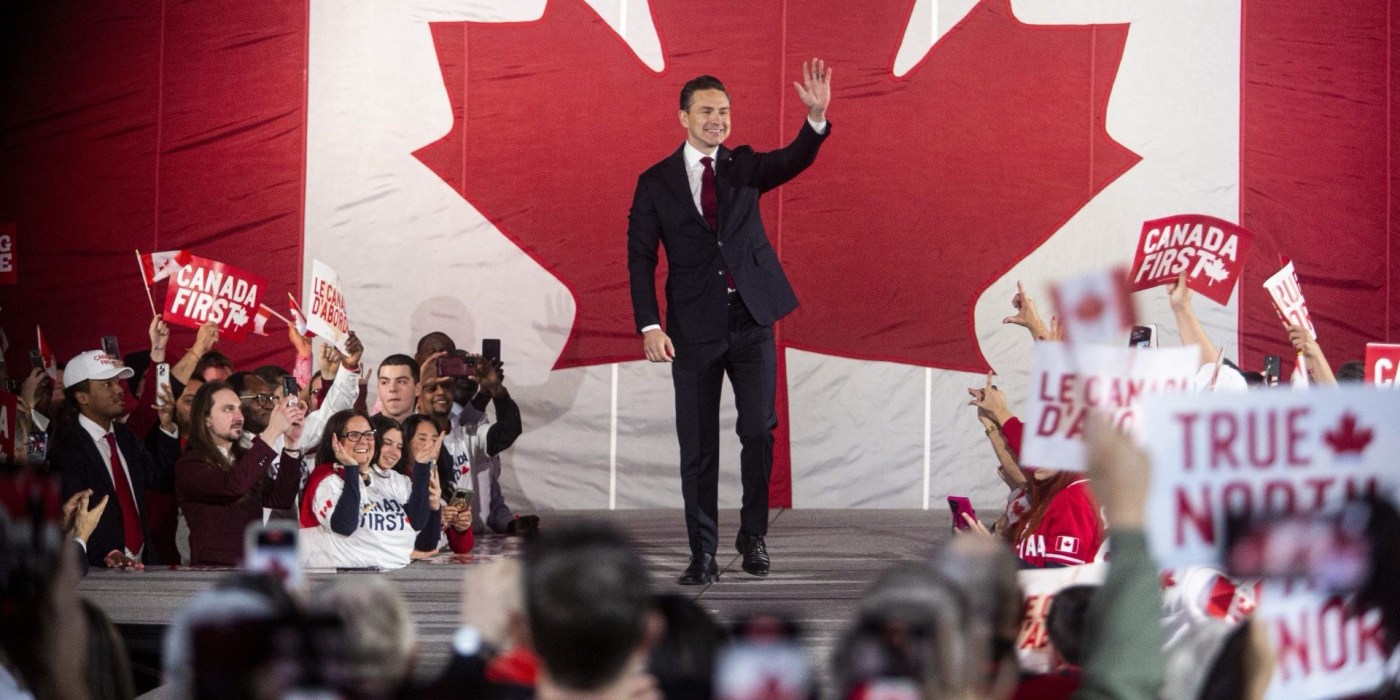
A tale of sound, fury, and absolutely nothing
Listen: Pierre Poilievre was going to be Prime Minister of Canada. Everybody said so. The polls said so for three straight years. The pundits said so. Even the Liberals seemed to believe it, shuffling around like condemned men waiting for the gallows. And then, in the spring of 2025, it didn’t happen. So it goes.
I’ve travelled to 55 countries and lived in nine on four continents. I’ve seen my fair share of despair—economies that have cratered, societies ravaged by violence and war, and governments that have betrayed their own people and failed. But I’ve never seen anything quite like what Canada became under Liberal rule: a nation of defeated people, young folks with dead eyes scrolling through rental listings they couldn’t afford, boomers clutching their home equity like life rafts in a flood, everybody mad at everybody else, the whole country feeling like a dinner party where someone mentioned politics and now nobody’s speaking.
When Trudeau stepped down in January 2025, I expected change. We all did. Poilievre had been leading in the polls since 2022. He had the YouTube videos. He had the righteous anger. He had the catchphrases—“gatekeepers” and “broken system” and all that jazz. He was supposed to ride that wave of national frustration straight into 24 Sussex Drive.
Instead, Mark Carney—a technocrat who sounds like he’s perpetually explaining compound interest at a dinner party—beat him. The Liberals won their fourth consecutive term. And Pierre Poilievre, the man who couldn’t lose, lost.

How does something like that happen? Let me tell you a story.
The Man Who Talked Too Much
Pierre Poilievre had one move, and he did it beautifully for three years: he yelled about how everything was broken. And you know what? He was right. Housing was broken. The economy was broken. Hope was broken. I could see it in every young person I met, that peculiar Canadian hopelessness—polite, apologetic, but utterly without horizon.
The problem was that Poilievre never stopped yelling. He was like a smoke alarm that won’t shut off even after you’ve put out the fire. Except there was no fire anymore—Trudeau had resigned in January 2025, taking his hair and his progressive platitudes with him. The carbon tax was gone. The specific face that Pierre had been screaming at for years had vanished.
But Pierre kept screaming.
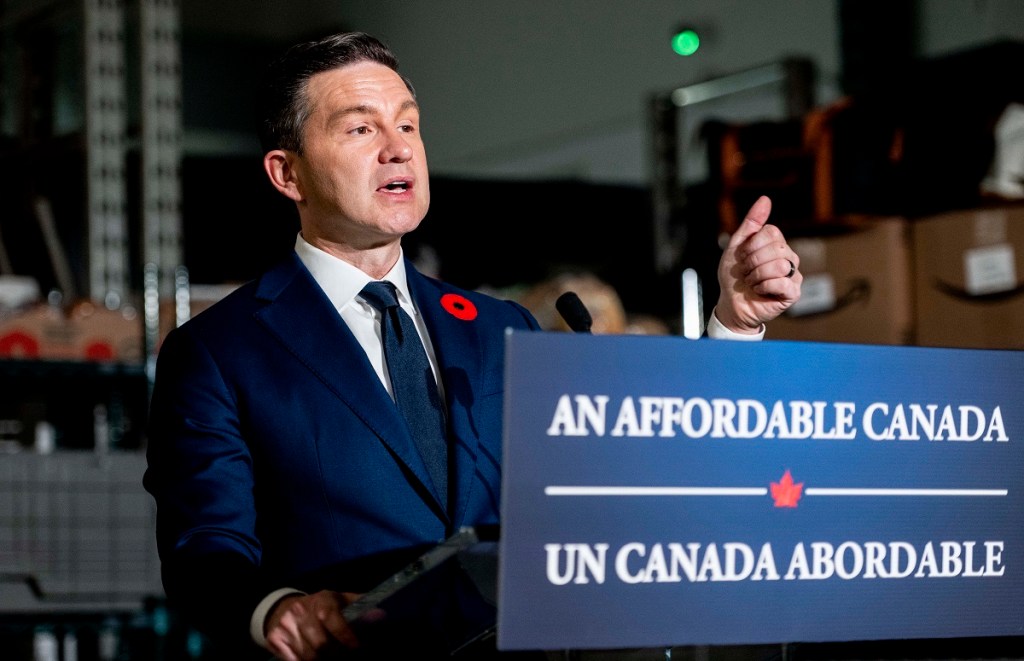
Mark Twain once said the difference between the right word and the almost right word is the difference between lightning and a lightning bug. Poilievre had lightning once—that righteous anger that felt like it might actually burn something down and build something new. But by 2025, he was just a lightning bug, flickering angrily in a jar, making noise but illuminating nothing.
The Dance He Couldn’t Learn
Here’s what great stories need: tension and release, push and pull, the promise of resolution. Poilievre had the tension part down cold. Everything was terrible! The gatekeepers were winning! Your kids would never own homes! Canada was broken broken broken broken broken!
But he never offered the release. He never pivoted from opposition attack dog to reassuring alternative. He never made that turn from “everything is broken” to “here’s how I’ll fix it, and you can trust me to do it without breaking more things.”
Meanwhile, Donald Trump was up north threatening Canada with tariffs, calling us a “51st state,” treating the country like a bankrupt casino he was thinking about buying. It was a genuine crisis, the kind that makes people want a steady hand. And what did Poilievre offer? More anger. More social media videos. More trash-talking. The same act he’d been doing for three years.
Carney, meanwhile, stood there in his banker suit with his banker voice and said, essentially, “I’m boring, I know economics, and I won’t burn anything down.” And Canadians—exhausted, anxious, watching Trump insult their country—chose boring.
Poilievre’s campaign committed what insiders later called “campaign malpractice.” Even his own strategists were screaming at him to pivot, to make the election about Trump and trade and protecting Canada. He wouldn’t. He kept running the 2022 playbook in 2025. It was like watching a man use a map from three years ago and wondering why he keeps walking into walls.
The Trump Problem (Or: How to Look Like Someone’s Cheap Imitation)
Let me be clear about something: Pierre Poilievre is not Donald Trump. He’s a different kind of animal—more YouTube than X (formerly Twitter), more policy wonk than reality TV, Canadian-polite even when he’s furious.
But he looked like Trump. He sounded like Trump. He used Trump’s playbook—attack the media, flood social media, talk about gatekeepers and elites and the forgotten people. For three years, this worked, because Trudeau made an excellent villain for that narrative.

Then Trump started threatening Canada, and suddenly looking like Trump was a problem.
The Liberals ran ads directly comparing Poilievre’s “Canada First” slogan to Trump’s “America First.” They showed clips of him attacking the CBC next to clips of Trump attacking CNN. They made the connection explicit: this guy is importing American rage politics.
And it worked. Because Trump was actively hostile to Canada during the campaign. Trump was the villain Canadians wanted protection from. And Poilievre, with his Trump-style communication, couldn’t credibly position himself as the protector. Carney could. Carney looked like the kind of guy who’d sit across from Trump and bore him into submission with charts about trade balances.
As one analyst put it after the election, “Poilievre’s biggest selling point became his biggest liability.” The style that had energized the base, that had won him the leadership, that had put him ahead in polls for years—it now made him look like he was on Team Trump when Canadians wanted someone on Team Canada.
The Boomer Trap
Here’s a delicious irony: Poilievre’s entire housing message was built for young people like me and my wife, people priced out of cities, people who’d watched home prices quadruple while wages stagnated. He was supposed to be the champion of the locked-out generation.
But his base was boomers. Specifically, boomers with houses.
Now, these boomers were mad too—mad about Trudeau, mad about crime, mad about taxes, mad about kids on their lawn or whatever it is boomers get mad about these days. They loved Poilievre’s anger. They wanted change.
But not that much change.
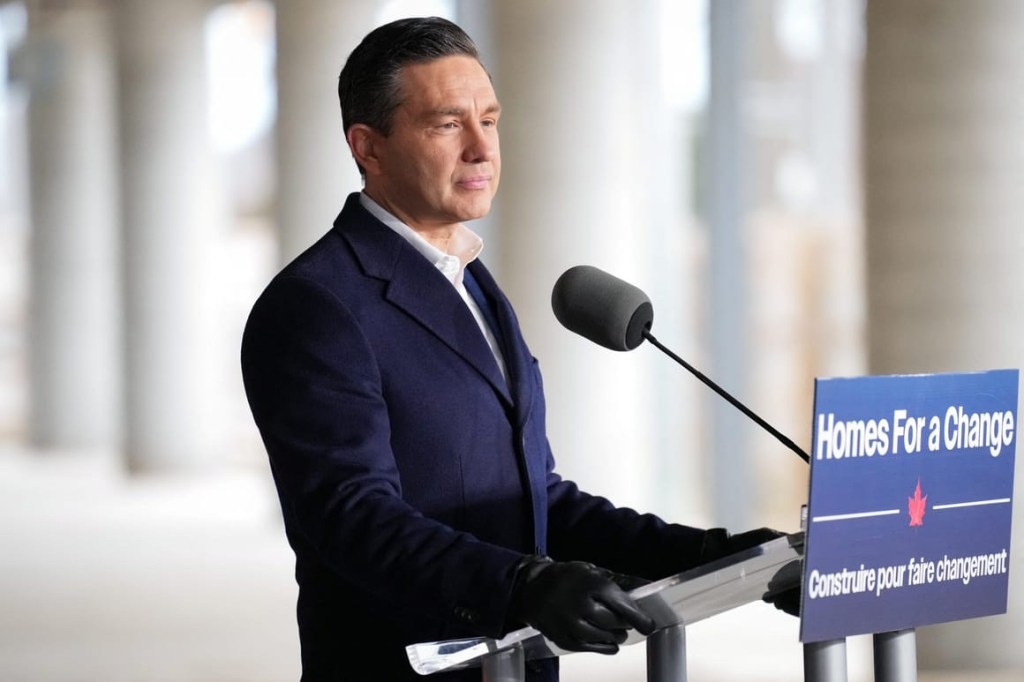
When Poilievre talked about “gatekeepers” and “breaking the system” and “rapid housing construction” and “shaking everything up,” a lot of those boomers started wondering: wait, is he going to crash my home value? Is he going to destabilize the economy my pension depends on? Is he going to change things so much that my comfortable retirement gets uncomfortable?
Carney, meanwhile, promised “calibrated adjustments.” He talked about “data-driven housing policy” and “measured immigration reform.” He sounded like someone who’d make things a bit better without overturning the table.
For young people, that was uninspiring. For boomers with assets, it was reassuring. And guess which group votes more?
Poilievre was trying to ride two horses going in different directions. He wanted to be the revolutionary for young people and the safe choice for old people. He ended up satisfying neither—too scary for the boomers, too establishment for the young folks who wanted actual transformation.
So it goes.
The Immigration Tightrope
Let’s talk about immigration, because this is where things get really uncomfortable.
The Liberal government, under Trudeau, had pushed immigration to absurd levels—500,000 permanent residents a year, plus temporary residents, plus foreign students, plus everyone’s cousin who needed a place to stay. About a million people a year flooding into a country that couldn’t house its existing population. It was madness, and everybody knew it.
By 2025, even the Liberals admitted they’d overdone it. Carney cut the targets to 395,000 and capped temporary residents. He called it “capacity-aligned immigration”—typical Carney, making a retreat sound like a spreadsheet optimization.
Poilievre should have owned this issue. He’d been yelling about immigration for years. His base was overwhelmingly concerned about it—eight in ten Conservative voters said immigration was too high, double the number from five years earlier.
But here’s the trap: Canada’s electorate is increasingly made up of immigrants and children of immigrants. The 905 suburbs around Toronto, the Lower Mainland around Vancouver—these were the swing ridings that would decide the election, and they were full of first- and second-generation Canadians.
Poilievre needed to satisfy his anti-immigration base while not alienating immigrant voters. It’s like trying to serve a seven-course meal where half the diners are vegetarian and half are carnivores and they’re all watching each other eat.
He failed. His rhetoric stayed too harsh, too culture-war adjacent, too focused on numbers and problems rather than integration and opportunity. Meanwhile, Carney threaded the needle: he acknowledged the problems, promised sensible reductions, but framed it all as “sustainable immigration” rather than “too many immigrants.”
Immigrant voters heard the difference. They chose the technocrat who sounded like he’d manage the system better over the populist who sounded like he thought they were part of the problem.
The Public Service Paradox
Here’s my favorite part of the whole debacle: Poilievre explicitly promised to cut federal public service jobs. It was red meat for his base—fewer bureaucrats, smaller government, drain the swamp, all that good stuff.
Then he lost his own riding. Carleton. A seat he’d held for years. Why? Because Carleton is full of public servants, and they’d just heard their MP promise to fire them.
After the election, Poilievre admitted this might have been a mistake.
You think?
It’s the perfect encapsulation of his whole campaign: say whatever excites the base, don’t think about how it plays with actual voters in actual ridings who have actual jobs and actual fears. Politics as performance art rather than persuasion.
The Ads That Didn’t Land
Late in the campaign, Conservative ads stopped featuring Poilievre. His own campaign hid him. Why? Because internal polling showed his personal negatives had climbed so high he was dragging down his party.
Think about that. The man was less popular than his party’s policies. The brand had become the liability.

Meanwhile, Liberal ads hammered the Trump connection over and over. They were simple, clear, devastating: this guy sounds like Trump, looks like Trump, acts like Trump—do you really want that?
Conservative ads tried to call Carney a “Trump stooge” because he’d supposedly go soft on trade. It was weak, vague, confusing. Nobody bought it. You can’t out-Trump a guy by calling the other guy too Trumpy. It’s like trying to win a wet t-shirt contest by accusing your opponent of being too dry.
What We’re Left With
So Mark Carney is Prime Minister. The Liberals won again. And Canada remains a country of quiet desperation, young people locked out of home ownership, boomers anxious about their wealth, immigrants wondering if they made a mistake coming here, everybody mad at everybody else.
I’ve traveled the world. I’ve seen poor countries and rich countries, failed states and functioning democracies. And I’m telling you: I’ve never seen a country as wealthy as Canada feel as hopeless as Canada feels right now. There’s something uniquely depressing about a prosperous nation that’s made prosperity impossible for its young people.
Poilievre was supposed to change that. He had the anger and the momentum and the message. But he never made the turn from opposition to alternative, from critic to solution, from lightning to light.
He just kept yelling into the void, and the void yelled back: not good enough.
What Comes Next
Poilievre says he’ll stay on as Conservative leader. God help him. God help us. Because the problems that fueled his rise—the housing crisis, the economic stagnation, the sense that the future has been sold off to the highest bidder—those problems haven’t gone anywhere. Carney will make some adjustments, calibrate some policies, optimize some spreadsheets. Things will get marginally less terrible, maybe.
But the rage will still be there. The hopelessness will still be there. And someone, eventually, will figure out how to channel it without sounding like a discount Trump, without scaring the boomers, without alienating half the electorate.
Maybe it’ll be Poilievre in 2029, if he learns to pivot. Maybe it’ll be someone else. Maybe it’ll be someone worse.
For now, we’re stuck with Carney’s calm managerial style in a country that’s screaming for transformation. It’s very Canadian, when you think about it: we wanted revolution, and we got a central banker.
So it goes.
And so, I suspect, it will continue to go—until someone figures out how to sell change without looking like chaos, how to channel anger without mirroring madness, how to promise a better future without terrifying everyone who’s still clinging to the present.
Pierre Poilievre wasn’t that person. He had his moment, and he blew it.
The rest of us are still waiting.
Sources:
- “Pierre Poilievre’s Biggest Selling Point Is Now a Huge Problem,” Politico, April 12, 2025. https://www.politico.com/news/magazine/2025/04/12/pierre-poilievre-trump-canada-prime-minister-00286947
- “Poilievre’s Economic Populism Masks the Same Old Failed Conservative Policies,” Canadian Centre for Policy Alternatives, 2025. https://www.policyalternatives.ca/news-research/poilievres-economic-populism-masks-the-same-old-failed-conservative-policies/
- “Canada Election Highlights: Mark Carney Wins New Term as Prime Minister,” The New York Times, April 28, 2025. https://www.nytimes.com/live/2025/04/28/world/canada-election
- “2025 Canadian Federal Election,” Wikipedia, 2025. https://en.wikipedia.org/wiki/2025_Canadian_federal_election
- “Election 2025: A Conservative Postmortem,” Policy Magazine, 2025. https://www.policymagazine.ca/election-2025-a-conservative-postmortem/
- “The Hub Reacts to Pierre Poilievre’s Pivotal Canada First Rally,” The Hub, February 17, 2025. https://thehub.ca/2025/02/17/a-success-the-hub-reacts-to-pierre-poilievres-pivotal-canada-first-rally/
- “Please Advise! Who’s Winning the Ad War, Carney or Poilievre?” The Tyee, March 17, 2025. https://thetyee.ca/Opinion/2025/03/17/Please-Advise-Carney-Poilievre-Winning-Ad-War/
- “8 in 10 Conservative Voters Say Too Many Immigrants Are Coming to Canada,” CBC News, 2025. https://www.cbc.ca/news/politics/conservatives-too-many-immigrants-9.6945905
- “Impact of 2025 Canada Elections on Immigration,” Immigration News Canada, 2025. https://immigrationnewscanada.ca/2025-canada-elections-immigration-impact/
- “Understanding the Impact of Immigration on Demography,” Migration Policy Institute, 2025. https://www.migrationpolicy.org/sites/default/files/publications/mpi-tcm_canada-demographics-immigration-2025_final.pdf
 Notes Beyond the Map
Leave a comment