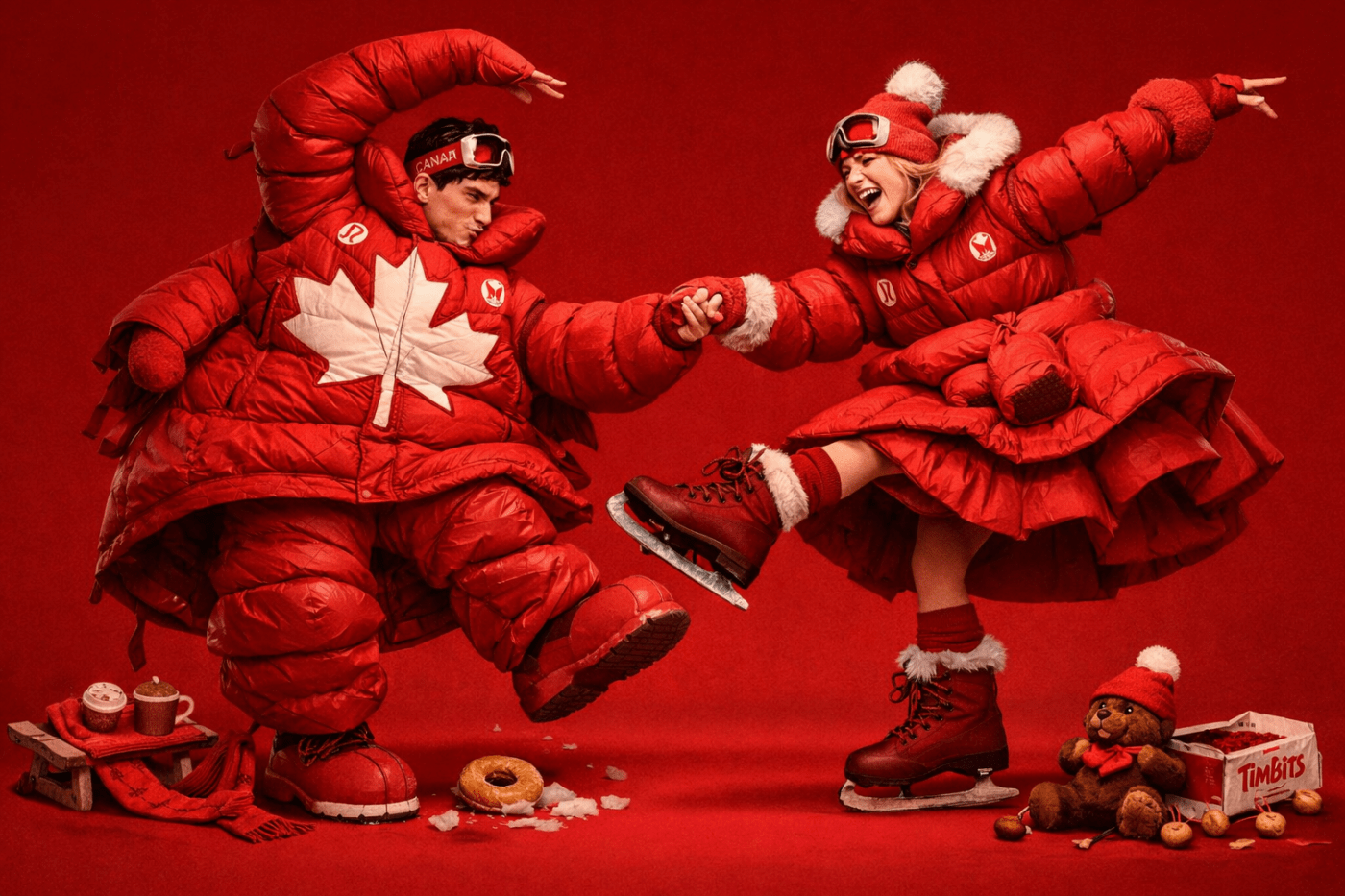
The 2026 Milano Cortina wardrobe malfunction that will go down in Olympic infamy — and why it’s time to hand the jersey over to someone who actually skis.
By a West Coaster Who Still Believes in This Country
So it goes.
Team Canada walked into the 2026 Milano Cortina opening ceremony wearing what can only be described as the aftermath of a quilted fever dream — a garment that appears to have been designed by someone who woke up at 3 a.m., watched a Cirque du Soleil performance, ate an entire wheel of brie, and said, “Yes. This. Ship it.”
I’m a Canadian from the West Coast. I’ve hiked the Rockies in a rainstorm. I’ve stood in line at Horseshoe Bay in November wind. I know what a good jacket looks like because my life has literally depended on it. And what Lululemon sent to Italy was not that. Not even close.
The Crime in Question
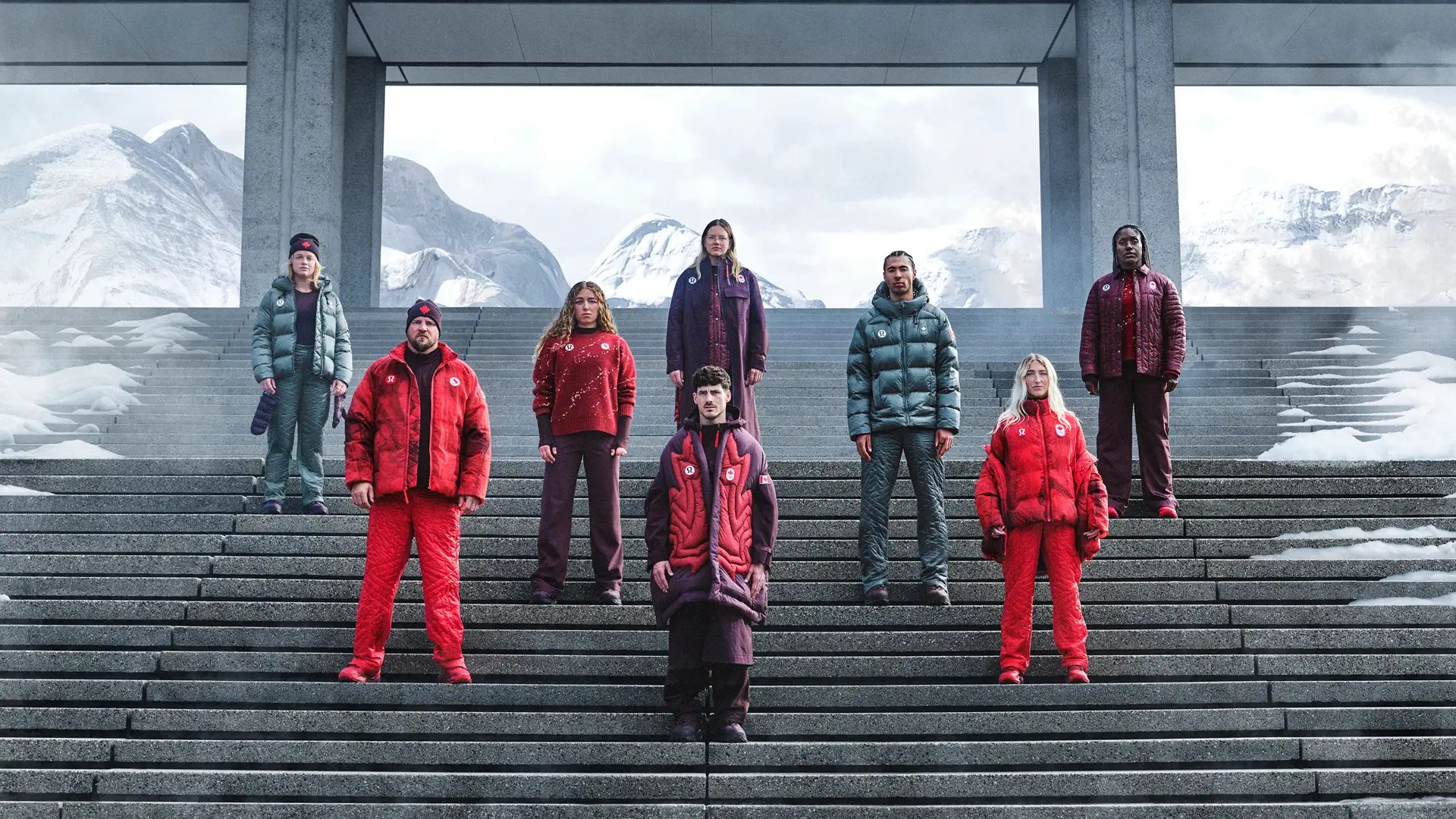
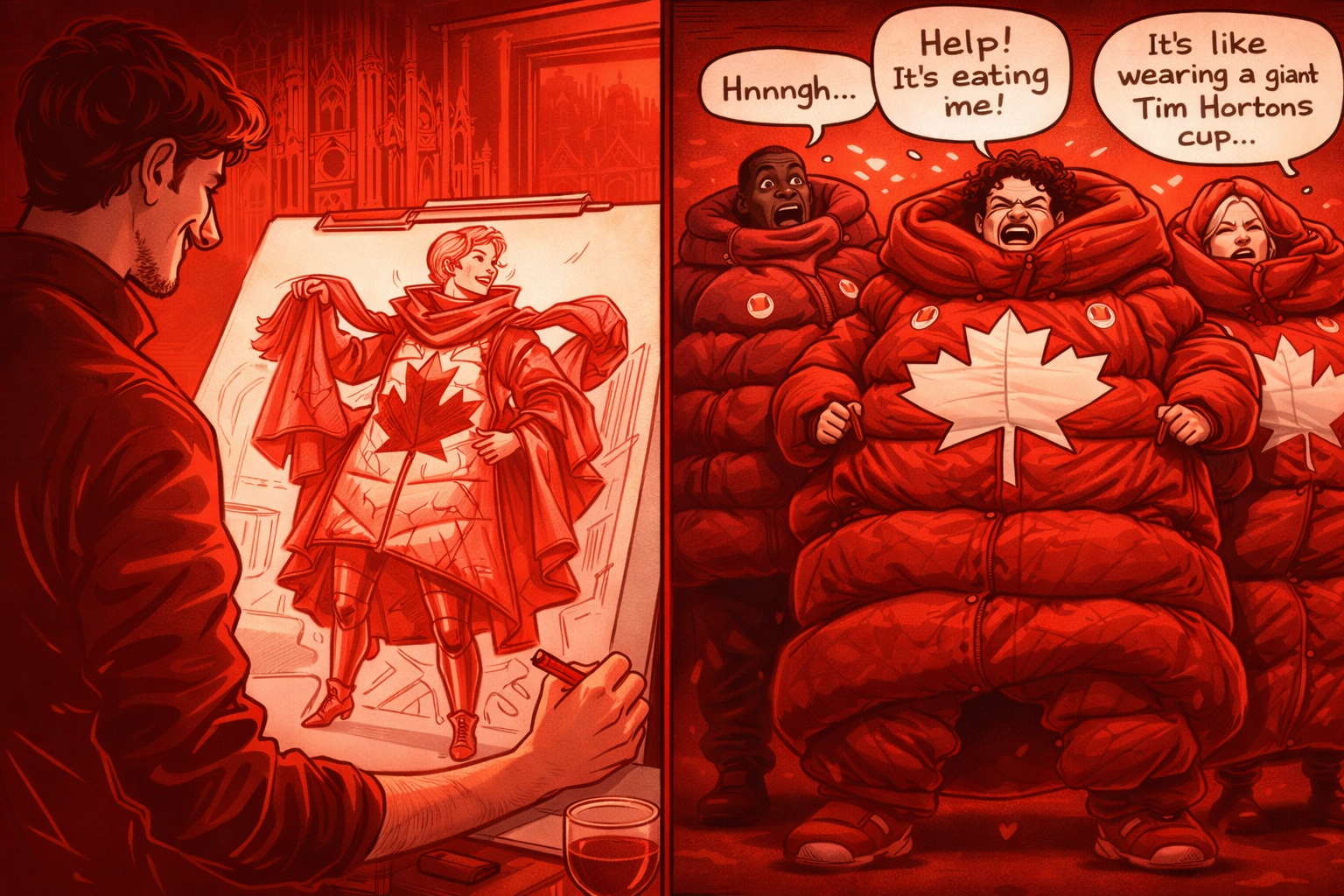
Let’s begin with the centrepiece of the opening ceremony look: a maroon quilted vest of such architectural ambition that it straddles the line between Olympic podium wear and a collapsed bouncy castle. This thing — and I say this with love for a brand I’ve spent embarrassing amounts of money on — features a maple leaf so oversized it stretches nearly the full length of the garment, as if the designer got the proportions off a kindergarten art project and then just went with it.
But here’s the brilliant part: it transforms. Zip up the arm holes, and it becomes a scarf. Cinch the drawcord, and it becomes a pillow. I am not making this up. Canada sent its athletes to represent the nation on the world stage in an outfit that moonlights as bedroom furniture.
Canadians on social media compared the colour scheme — a maroon-on-garnet situation accented with what can only be called “regrettable burgundy” — to a Tim Hortons cup. Which, incidentally, is exactly the aesthetic you want your national Olympic team not to evoke.
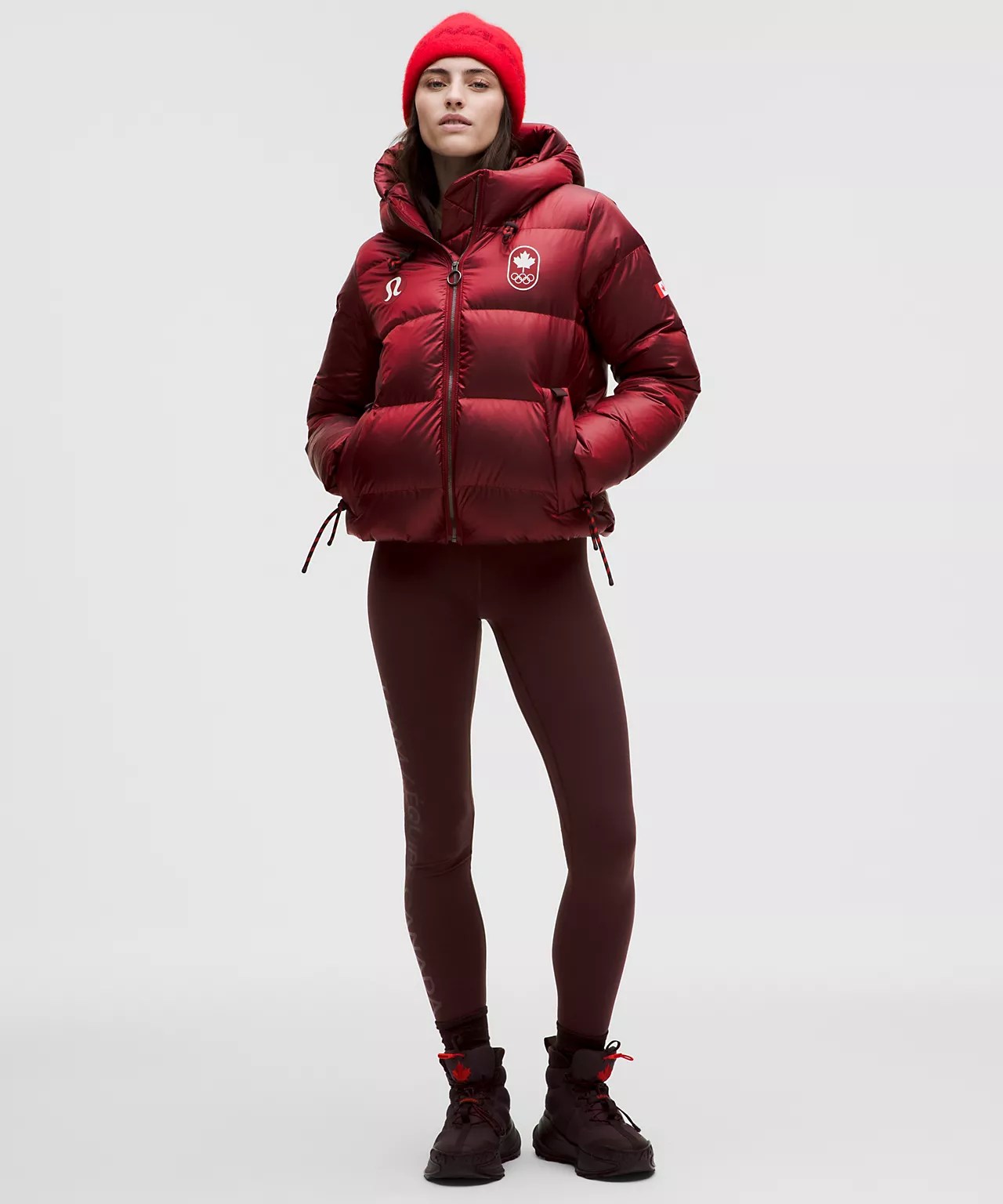
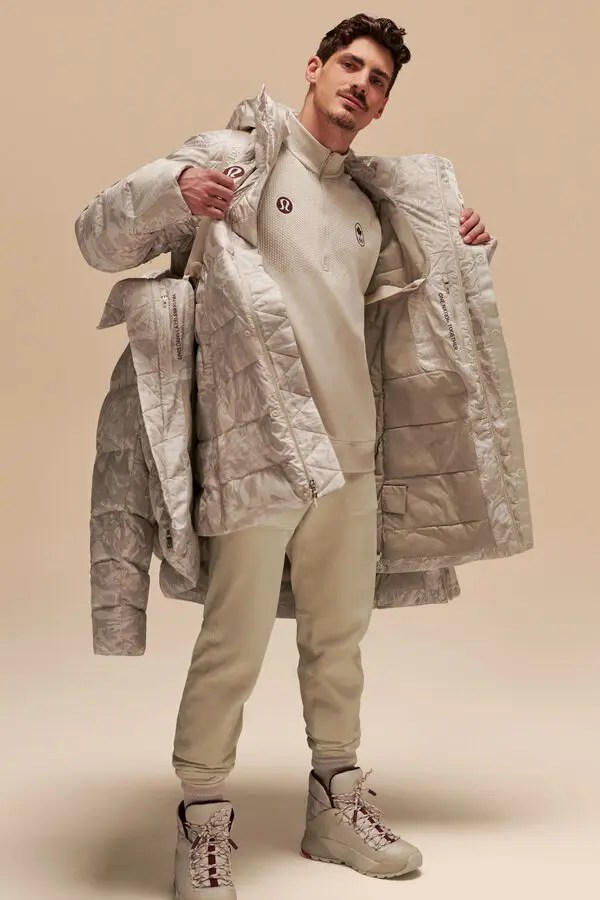
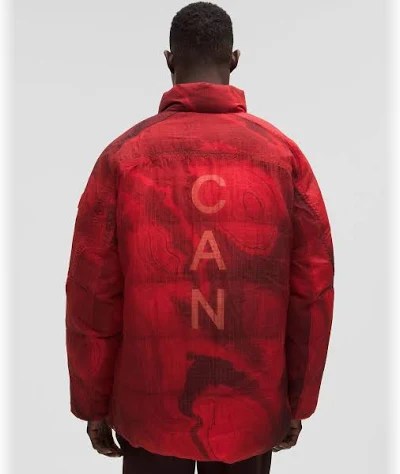
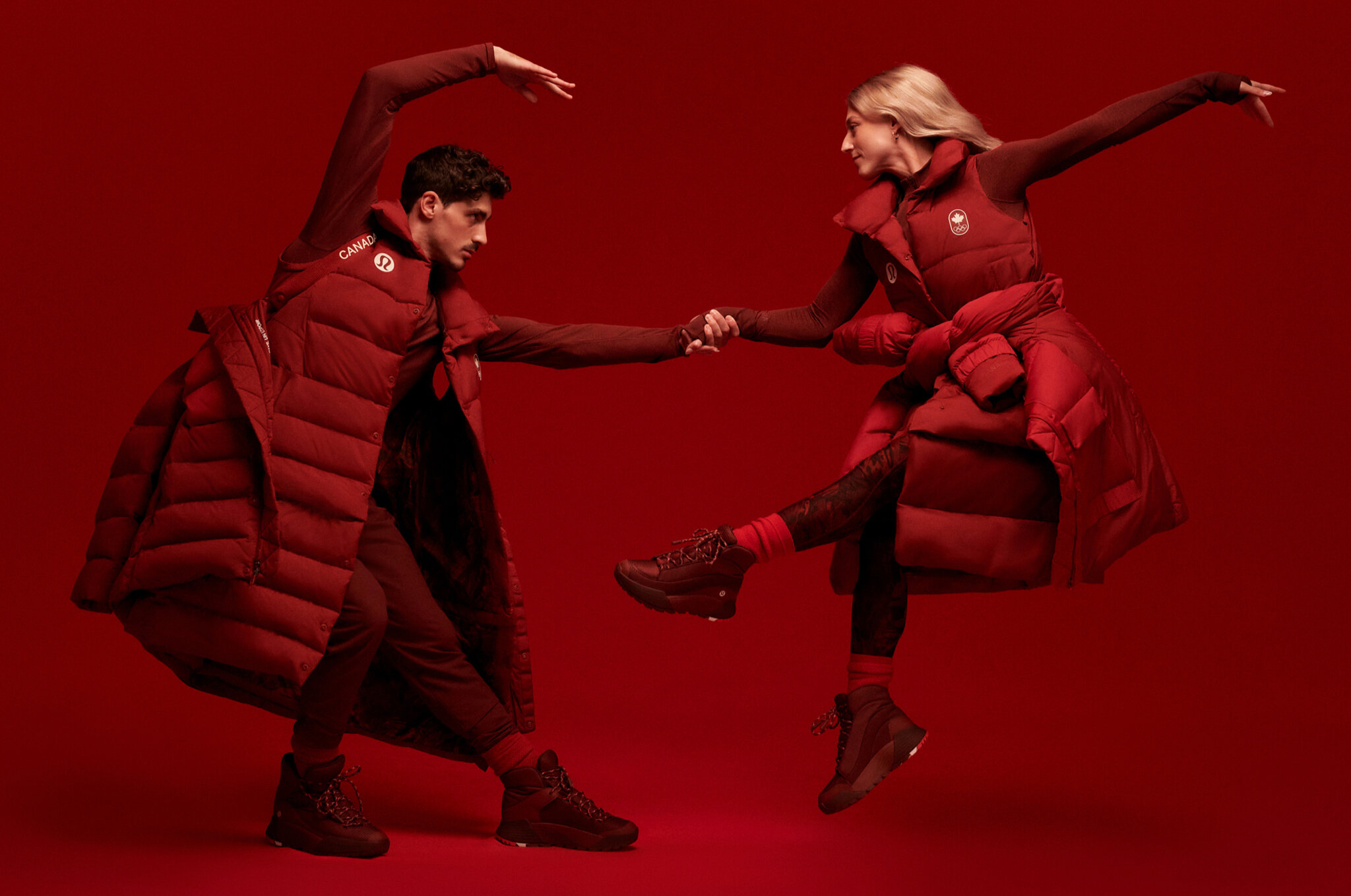
Team Canada’s 2026 lookbook: somewhere between “Milan runway” and “I’m just here to survive the wind chill.” Red-on-red drama, a little camo confusion, and enough puffer to qualify as personal flotation.
Exhibit A: The Brown Coat That Should Not Exist
Now let’s talk about the real villain. Look at the image. You’ve seen it. There’s a man wearing what appears to be a dark brown overcoat of such staggering volume it could comfortably house a family of four through a Canadian winter. The red appliqué swirls across the front like a Jackson Pollock piece that lost its nerve halfway through. The garment extends below the knees. The hood is the size of a satellite dish. This is not outerwear. This is architecture.
Retail price for the privilege of looking like you lost a bet at a design school auction? We’re talking outerwear in this collection, ranging from $298 to $598 CAD. The Wunder Puff 600-Down-Fill Jacket alone will run you nearly $400. The oversized showcase piece? Get out your credit card and a strong drink.
This is the part where I remind you that the Daily Mail called these uniforms “embarrassing and ugly” and compared the athletes to “giant oven mitts.” The Daily Mail. The British tabloid. They’ve seen some things. When they’re coming for your Olympic knitwear, it’s time to have a conversation.
The One Piece You Wouldn’t Be Embarrassed to Wear
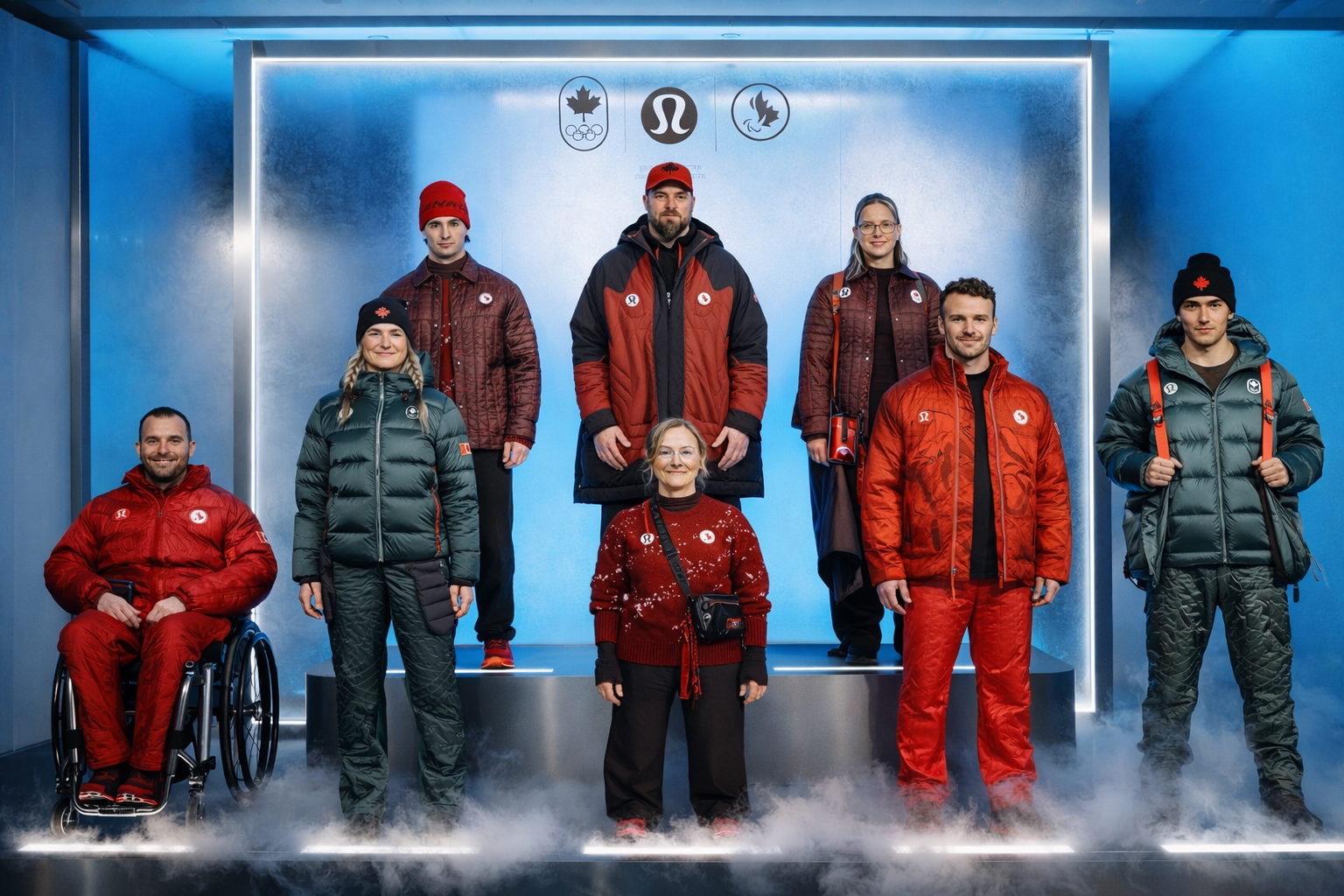
In fairness — and I believe in fairness the way I believe in Gore-Tex — there is one piece that actually landed. The Wunder Puff Translucent Jacket in a clean oatmeal-beige finish looks like something a human being might actually wear to a farmer’s market or a ski hill without being photographed for the wrong reasons. Clean lines. Subtle branding. Normal proportions. It doesn’t announce itself. It doesn’t double as a tent.
It looks, frankly, like what Lululemon is actually good at: functional, refined, understated performance wear. The kind of thing the brand built its entire empire on before it apparently decided its destiny was abstract Olympic performance art.
A Victim of Its Own Success
Here’s the honest diagnosis: Lululemon is a yoga company. A great one. Possibly the best ever. The Align leggings are a masterpiece of human textile engineering. The ABC pants changed men’s workwear. They know stretch fabric the way Bach knew counterpoint.
But this is the third time they’ve dressed Team Canada, and each iteration has edged further toward experimental fashion and further away from, say, surviving a slalom run at altitude. The 2024 Paris collection was compared to uncooked bacon. The 2022 Beijing kit was criticised as puffy overkill — vests over coats over scarves over hats, like the designers had a quota of puffer material to burn through. And 2026 gives us a vest that doubles as a pillow.
They’re not listening to the room. Or maybe they are — just a different room. Word is this collection has been moving briskly in China, where Lululemon has been aggressively expanding and where Canadian Olympic gear carries real cultural cachet. If that’s the target demographic, the design language makes a certain kind of sense. But it doesn’t make it Canadian. And that’s the problem.
Think about what it meant to be Canadian on the Olympic stage in 2010 — Vancouver’s games. Hudson’s Bay Company made red mittens. Simple. Affordable. Everywhere. You couldn’t walk a block in Canada without seeing those mittens on someone’s hands, from grandmothers in Winnipeg to snowboarders in Whistler. That’s a national uniform. That’s telling a story. Not making a pillow.
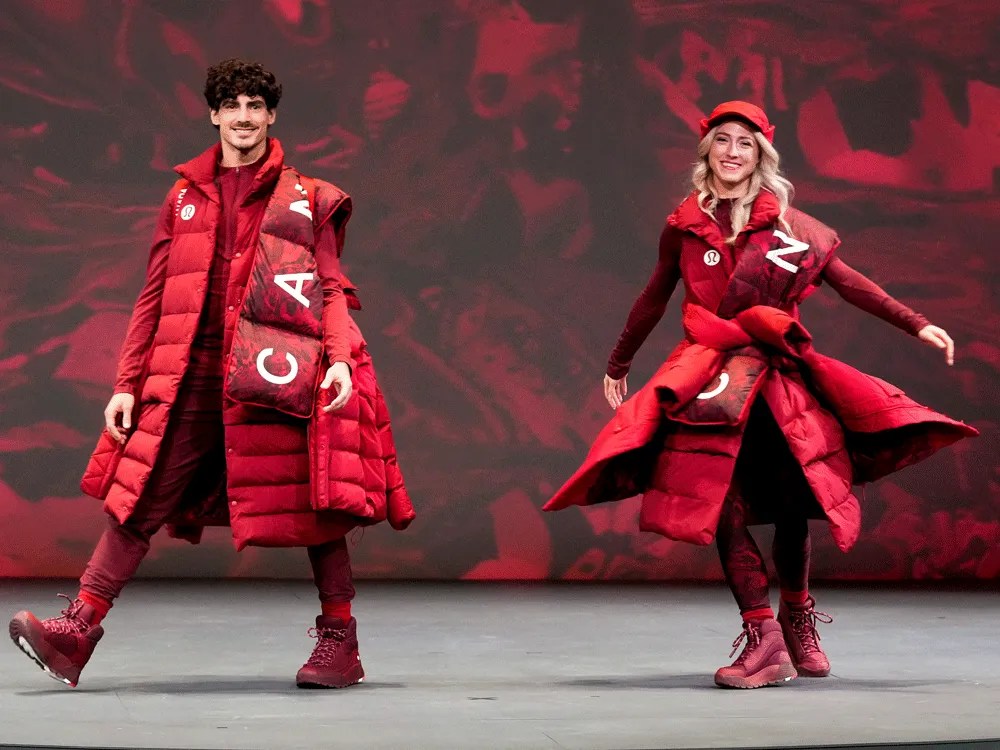
Team Canada’s 2026 outerwear: part Olympic kit, part travelling duvet. Runway-ready in “Canada” so large you can read it from orbit—because subtlety froze somewhere around Winnipeg.
See You on the Clearance Rack
Here’s a pattern worth noting. Previous Lululemon Olympic collections have, predictably, found their way to clearance. The 2022 Beijing pieces showed up at significant markdowns within months of the Games closing. The Paris 2024 items followed suit. So if you’re genuinely tempted by the $598 architectural statement coat but your sensible brain keeps intervening, patience is a strategy.
This is not a knock on the quality — Lululemon makes excellent products. It’s the reality of limited Olympic collections: produced in small quantities, sold over a narrow window, and ultimately discounted when the sporting world moves on. The maroon pillow-vest may yet find its destiny at 40% off.
A Modest Proposal: What If We Called Arc’teryx?
I’m going to suggest something that, once said, cannot be unsaid: the wrong Vancouver-based brand is dressing Team Canada for the Winter Olympics.
Arc’teryx is a North Vancouver company. They make jackets that have been tested in conditions that would end Lululemon’s entire product line. Their GORE-TEX hard shells are worn by backcountry skiers, alpinists, and the kind of Canadians who have opinions about snowpack. They already partner with Climbing Escalade Canada for international competitions. They know how to build gear for athletes who are actually competing in the elements — not posing in front of fog machines.
The difference is architectural: Arc’teryx builds from the mountain down. Articulated patterning, strategic venting, and Down Composite Mapping that puts insulation exactly where a body loses heat. Lightweight warmth without the bulk. Movement without restriction. Their ski jackets and bibs form integrated systems — systems tested in the actual Rockies, not in a studio photoshoot with wind machines.
Picture Team Canada’s athletes at the 2030 Games — which, fittingly, return to the French Alps — in clean, aerodynamic Arc’teryx shells in crisp maple-leaf red with precise white detailing. No quilted vests. No convertible pillows. No maroon anything. Just the best cold-weather gear on earth, proudly Canadian, made by people who understand that a Winter Olympics is, at its core, a competition held in winter.
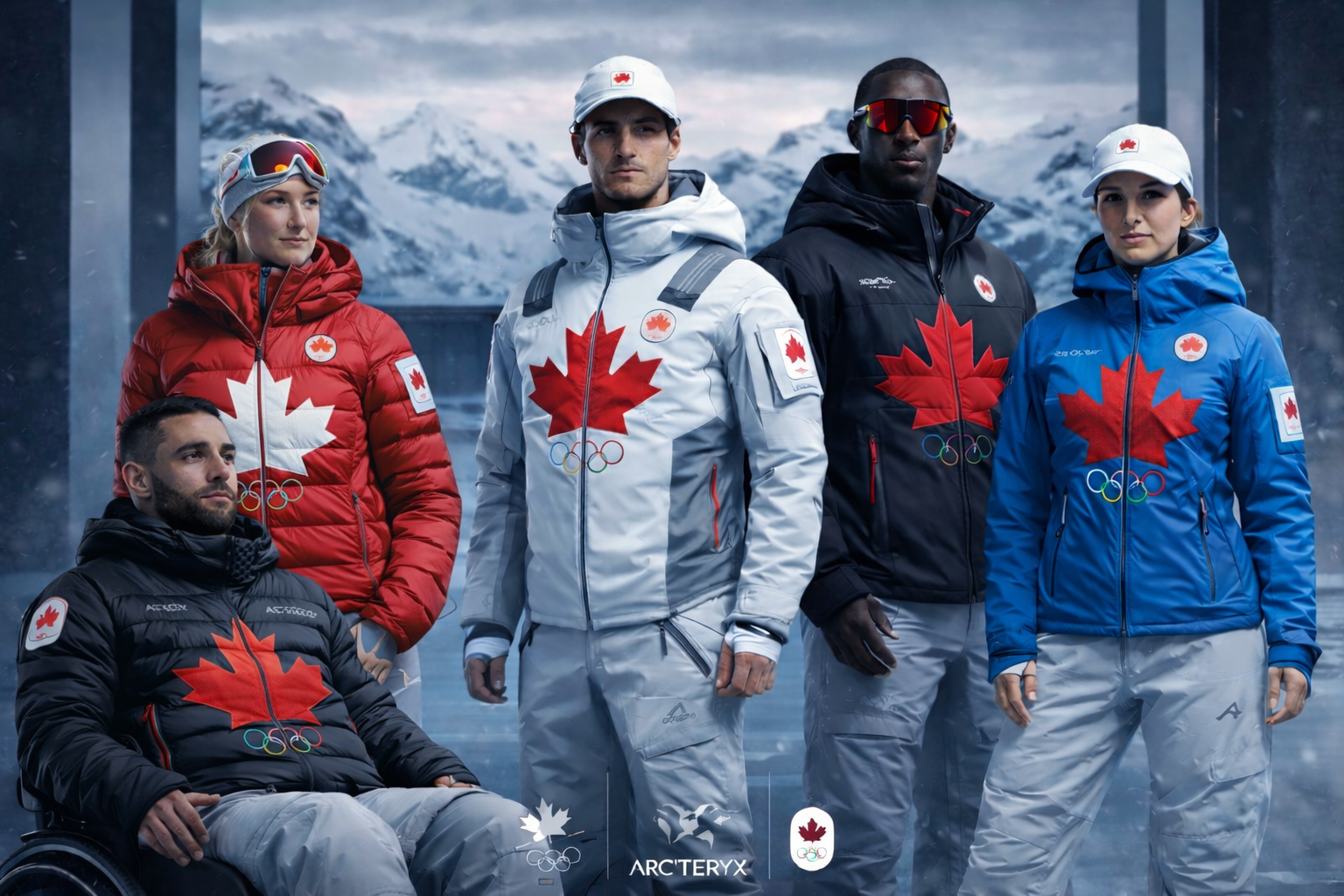
The athletes would approve. Sidney Crosby would probably approve. Anyone who has ever stood on a ski hill in February and been let down by insufficient insulation would definitely approve.
Get Back to the Mountain
I want to be clear: I’m not here to bury Lululemon. I’m here because I’m a die-hard fan who wants them to be better. The brand built its entire identity on the idea that functional clothing can be beautiful — that performance and elegance are not opposites. That’s a true and good idea. It’s why they’re worth billions and why the west side of Vancouver looks like a walking advertisement.
But the 2026 Olympic collection is not that brand. It’s that brand after three glasses of wine at an experimental fashion show, convinced it can be Balenciaga and Under Armour simultaneously. You can’t. Nobody can. There’s a reason Nickelback is a punchline — not because they’re terrible, but because they tried too hard to be everything at once and ended up being nothing in particular.
Canada is not abstract. Canada is not a Tim Hortons cup. Canada is not a maroon pillow that turns into a scarf. Canada is the Rocky Mountains and the Pacific coast, and the first real snowfall in November, and the country that, more than any other on earth, actually knows how to live in the cold.
Dress us like it.
So it goes.
 Notes Beyond the Map
Leave a comment