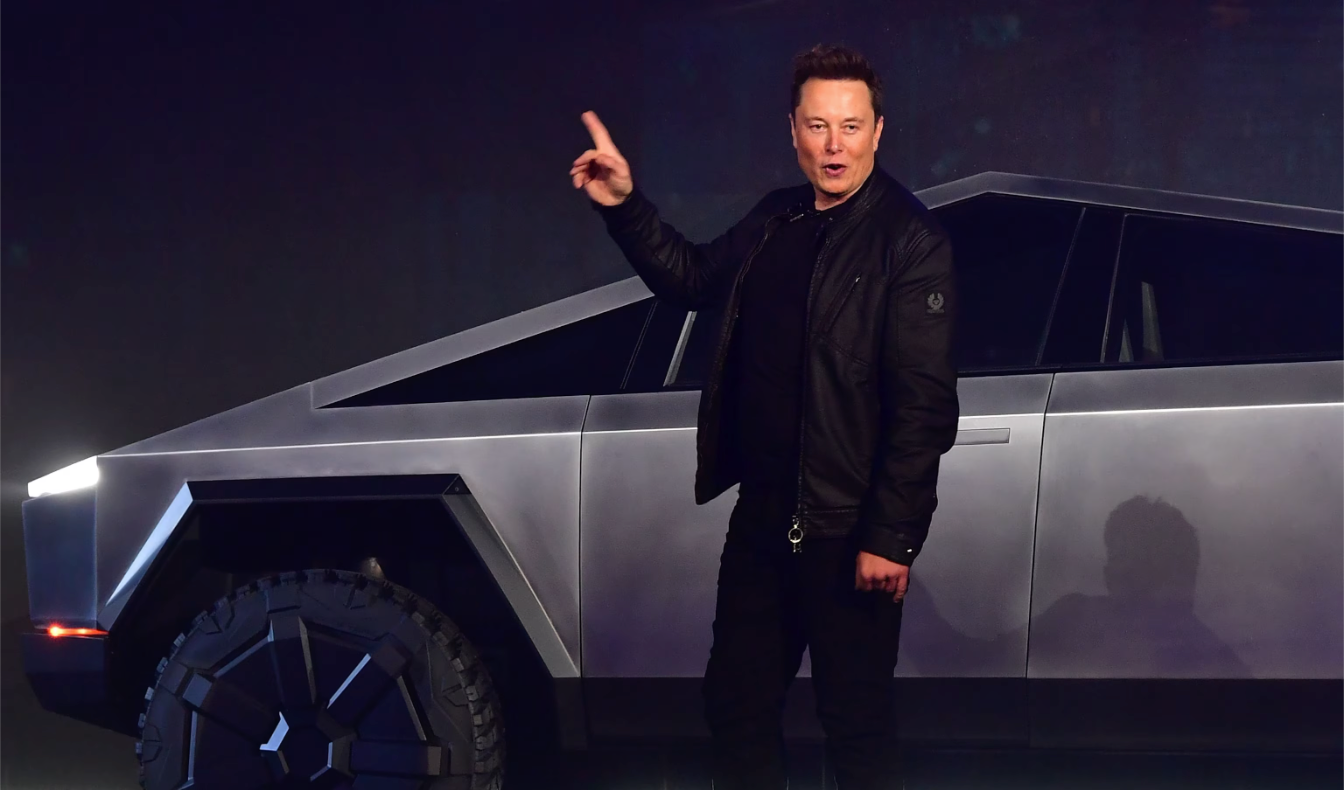
November 21, 2019. 3:07 PM. Hawthorne, California.
Elon Musk, the billionaire extraordinaire, steps onto the stage like Tony Stark. Anticipation is high for what promises to be one of the biggest reveals of all time. Out rolls a brutalist prism or what looks like a prop from a high school production of Blade Runner directed by someone who only read the CliffsNotes. The audience gasps. The windows shatter. The internet loses its mind. A kindergartner eyes a refrigerator box and thinks, “I could sell this.”
The Tesla Cybertruck had arrived.
The Grand Vision (And Why It Sort of Made Sense)
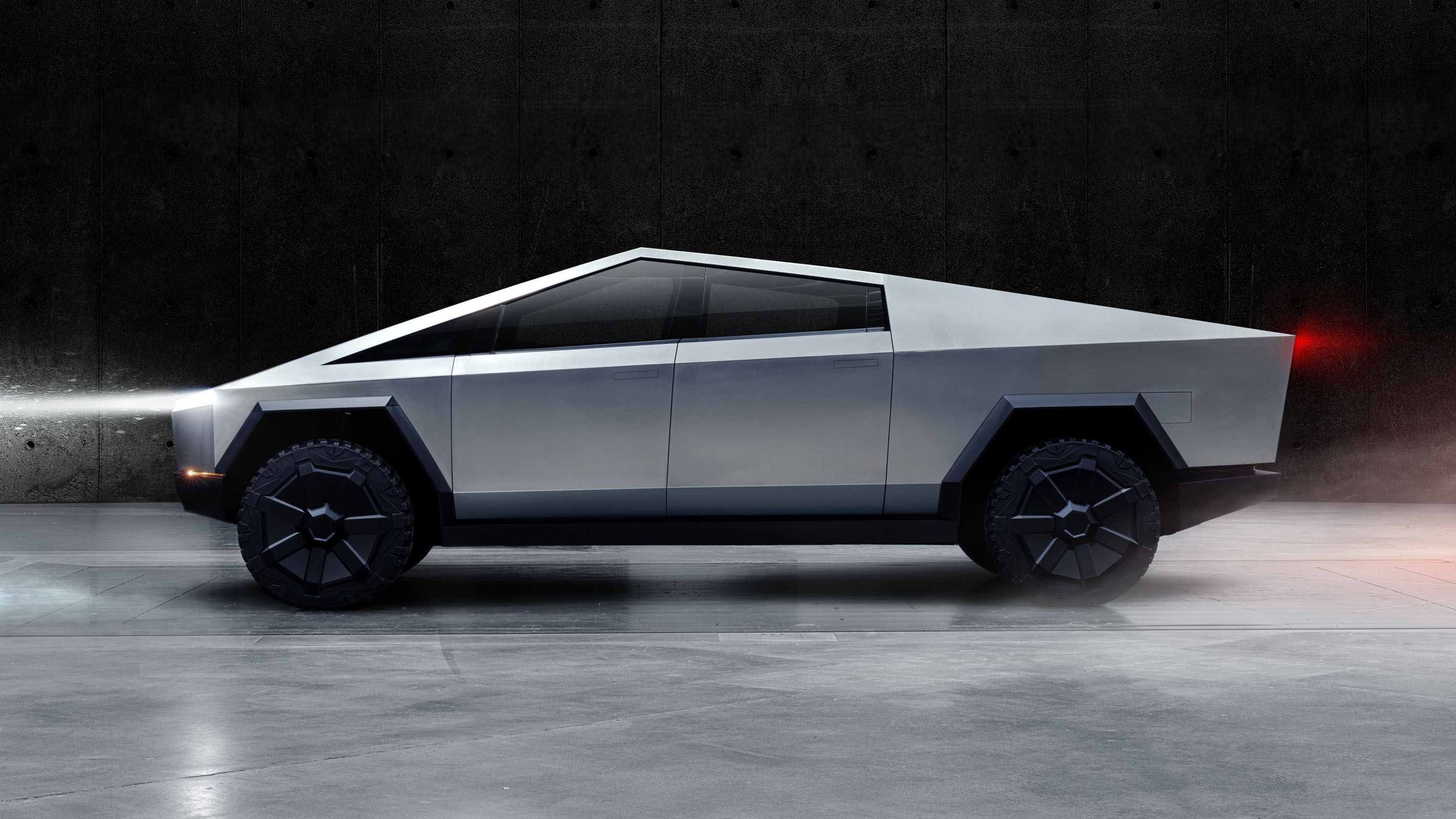
Here’s the thing: Musk wasn’t entirely bonkers. The man wanted to break the mold, literally and figuratively. The Cybertruck wasn’t supposed to look like every other pickup that rolled off an assembly line in Dearborn. It was supposed to scream innovation, durability, and “I’m from the future, deal with it.”
The Original Pitch:
- Indestructible Stainless Steel Exoskeleton – Those panels can stop a bullet. They laugh at shopping cart dings. They’re virtually maintenance-free. In a world where paint jobs cost thousands and rust never sleeps, this was genius.
- Radical Design Language – Why blend in when you can stand out? Musk wanted a truck that looked like it drove off the set of Total Recall. Mission accomplished. Perhaps too well.
- Superior Functionality – Despite looking like it was designed by a T-square with anger management issues, the Cybertruck promised serious specs: 500+ miles of range, 14,000-pound towing capacity, and 0-60 in under 3 seconds. On paper, it was a beast.
- Manufacturing Innovation – Cold-rolled stainless steel meant fewer manufacturing steps, lower costs, and faster production. Tesla was thinking efficiency, not just aesthetics.
The vision was there. The ambition was admirable. But then we all saw it, and something inside us whispered: “Maybe we went a bit too far.”
Where It Went Right (And Where It Face-Planted Into a Ditch)
The Good Stuff:
The stainless steel really is brilliant. Durable, low-maintenance, bulletproof (literally). The specs are genuinely impressive. And that adaptive air suspension? Chef’s kiss. The tech inside is pure Tesla magic—massive touchscreen, over-the-air updates, Autopilot capabilities that make other trucks look like they’re running on Windows 95.
The Not-So-Good Stuff:
- It Looks Like Aggressive Geometry – The design is so polarizing that even people who love Tesla found themselves saying, “Hmmm, maybe I’ll wait for the next one.” It’s not just different; it’s confrontational. Like it’s angry at curves for existing.
- The Price Point Became a Punchline – Tesla promised a $39,900 base model back in 2019. That number became folklore, whispered about in forums like a myth of a better time. What actually shipped? The cheapest Cybertruck starts at $79,990 in the US—exactly double the promise. That’s not disruption; that’s just bait-and-switch. And if you’re in Canada? Buckle up: the starting price is $137,990 CAD (roughly $98,250 USD based on current exchange rates). For that money, you could buy a loaded Ford F-150 Lightning and a Model 3, with enough left over for a nice vacation to forget about the whole ordeal.
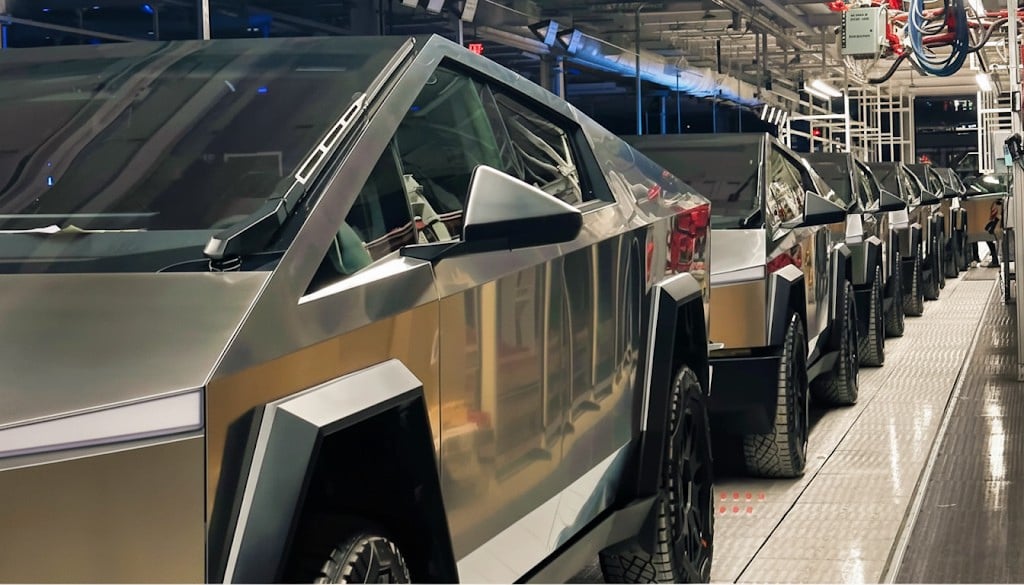
- Manufacturing Complexity – Turns out, building something that looks like it was designed by an angry protractor is really hard. Production delays piled up. Quality issues emerged. Recalls became a regular occurrence.
- Cultural Baggage – Between Musk’s increasingly polarizing public persona and the truck’s aesthetic assault on conventional taste, many potential buyers decided they’d rather stick with their boring F-150s, thank you very much.
- Practical Concerns – Those sharp edges? Pedestrian safety nightmare. The frunk? Guillotine vibes. The rear visibility? What rear visibility? And don’t even get started on trying to fit it in a standard parking space.
The Sales Reality: A Tale of Declining Expectations
Musk originally predicted the Cybertruck would sell around 250,000 units annually. Instead, Tesla sold approximately 39,000 units in 2024—its first full year of production. By the third quarter of 2025, sales had plummeted to just 5,385 units, down from over 14,000 in the same period of 2024. Current estimates suggest Tesla will deliver only around 20,000 Cybertrucks in 2025, representing roughly 8% of original projections.
Cybertruck Sales Data
| Year | Units Sold | Notes |
| 2023 | ~3,878 | Deliveries began on November 30, 2023 |
| 2024 | ~38,965 | First complete year of production |
| 2025 | ~20,000 (projected) | A steep decline from the previous year |
For context, Ford sold more F-150 Lightning electric trucks in several individual quarters than the Cybertruck, despite the Lightning facing its own sales challenges. The Cybertruck is no longer America’s best-selling electric pickup.
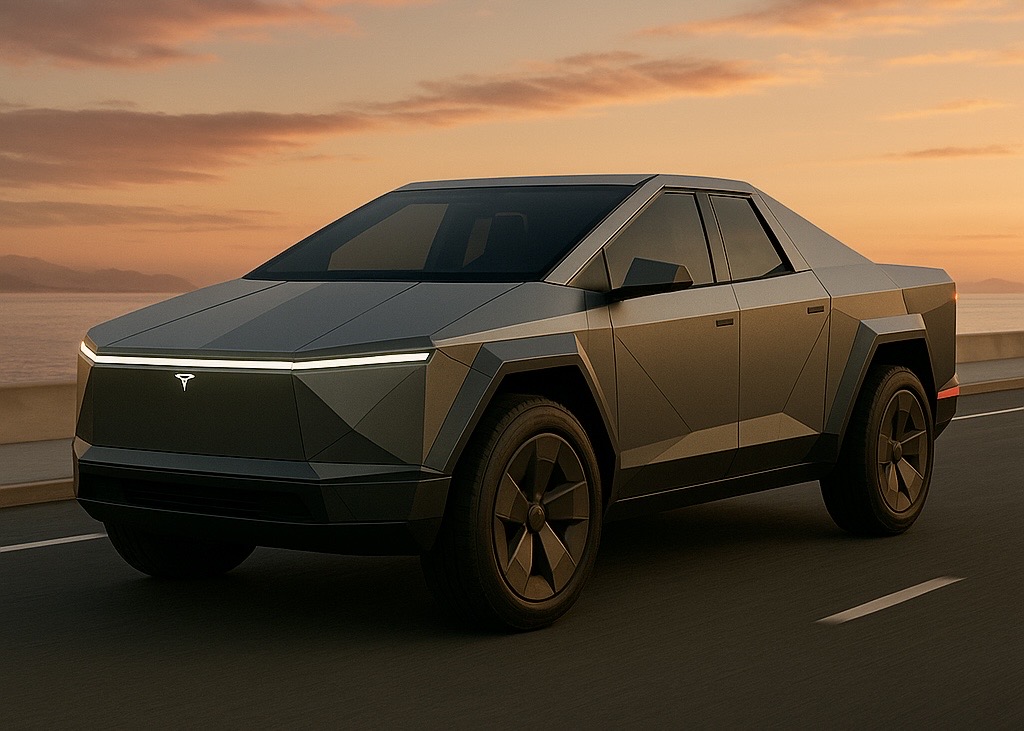
Enter the NeoTerra: Same Vision, Better Execution
We put on our thinking caps and brought AI into the studio. ChatGPT sketched the bones; Gemini refined the lines. What rolled out was a sleek, angular, without-the-attitude silhouette carving a golden-hour coast. This—finally—is what it should have been.
We call it NeoTerra—“new earth.” Not a sci-fi colony; a fresh footing for design. Keep the Cybertruck’s conceptual brilliance, lose the wince. New earth as in new ground rules: strength without hostility, future without the gimmicks, utility with grace.
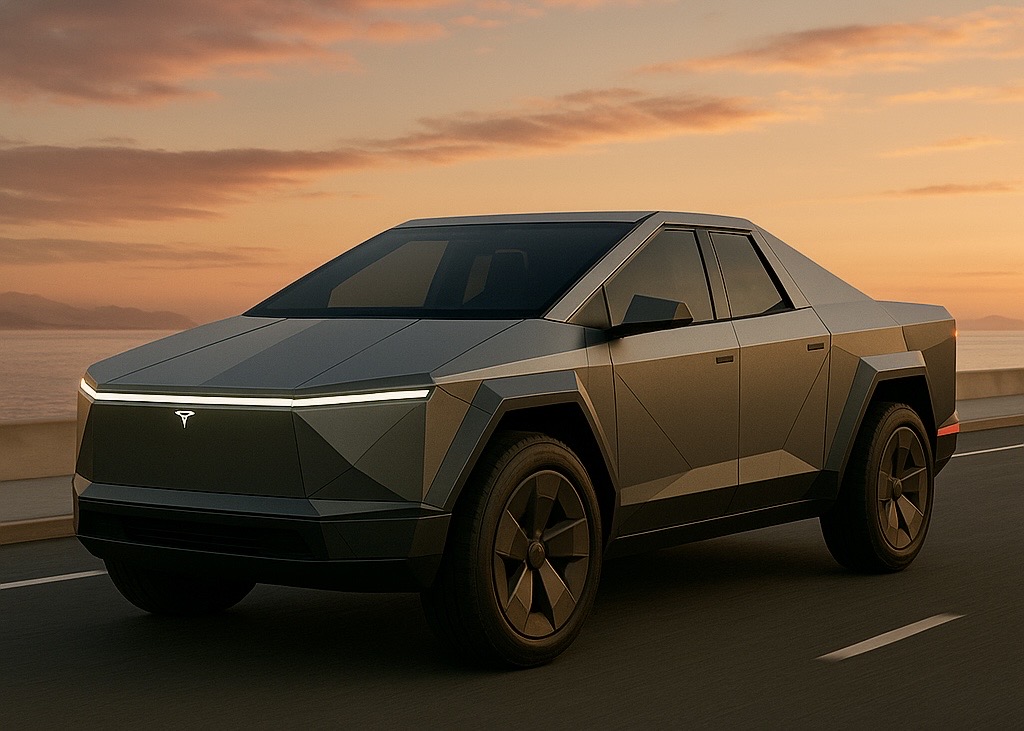
The NeoTerra preserves the stainless exoskeleton, range, and capability—and subtracts the visual combativeness. It’s what happens when engineers and designers collaborate instead of arm-wrestle.
What Makes the NeoTerra Different:
1. The Body: Smooth Geometry Meets Human Sensibility
We kept the stainless steel exoskeleton because—let’s be honest—that was the best idea Tesla had. But instead of looking like it was designed by someone who thought curves were a sign of weakness, the NeoTerra uses multi-axis cold rolling and modular paneling. Think of it as the difference between a MacBook and a metal lunch box. Both are aluminum, but one makes you feel something.
2. Finishes That Don’t Make You Look Like a Kitchen Appliance
Graphite matte. Brushed titanium. Pearl silver. All fingerprint-resistant. Because the current mirror-finish Cybertruck looks like it’s trying to get a job at a high-end restaurant as the world’s most expensive serving tray.
3. Lighting That Suggests Intelligence
Adaptive segmented LEDs that wrap around the front and tail. Ambient running lights that pulse gently when parked—like the truck is resting, not plotting your demise. The current single light bar looks like a laser beam of judgment. We softened that.
4. Interior: For Humans, Not Robots
Vegan leather. Brushed aluminum. Ambient lighting that adapts to mood and road conditions. And here’s the kicker: a retractable central yoke that becomes a traditional wheel for those of us who learned to drive with something round in our hands.
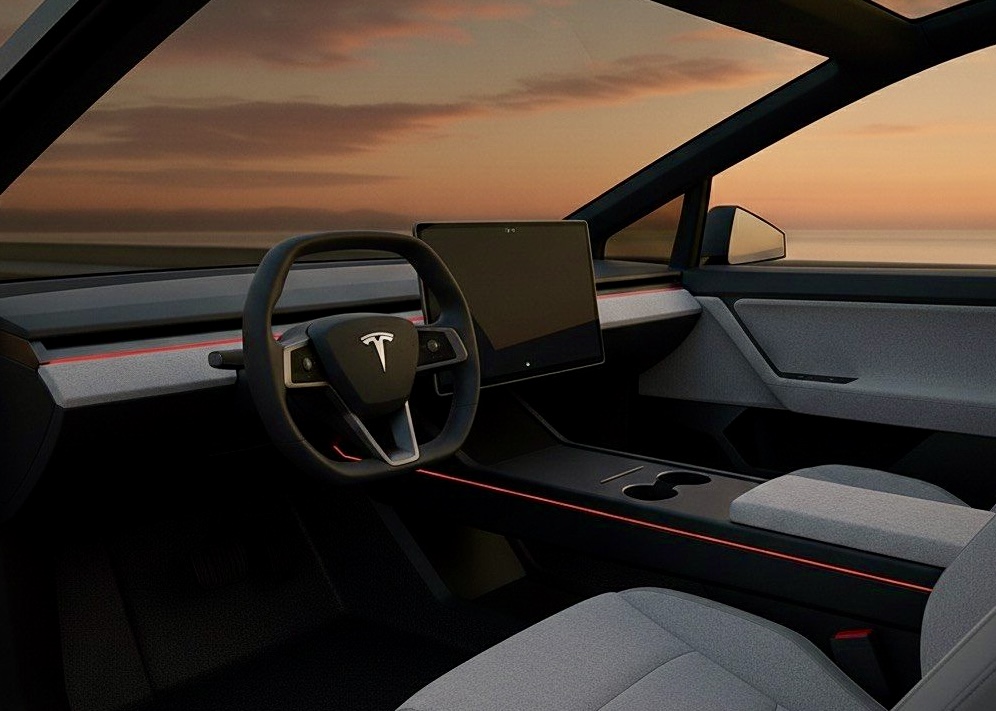
5. Wheels That Think
Adaptive terrain wheels with smart rims that adjust tension and tread depth depending on whether you’re in the city or climbing a mountain. The current chunky wheels look ready for war. These look ready for life.
6. Tech That Actually Enhances the Experience
Tesla Vision HUD with AR overlays showing hazards, routes, and range predictions directly on the windshield. Because the future should feel helpful, not dystopian.
Why the NeoTerra Would Actually Sell
It’s Still Strong, Just Less Scary
The stainless exoskeleton remains. The durability is intact. But the softened form makes it approachable. You can admire it without feeling like it’s about to demand your lunch money.
Aerodynamics = Better Range
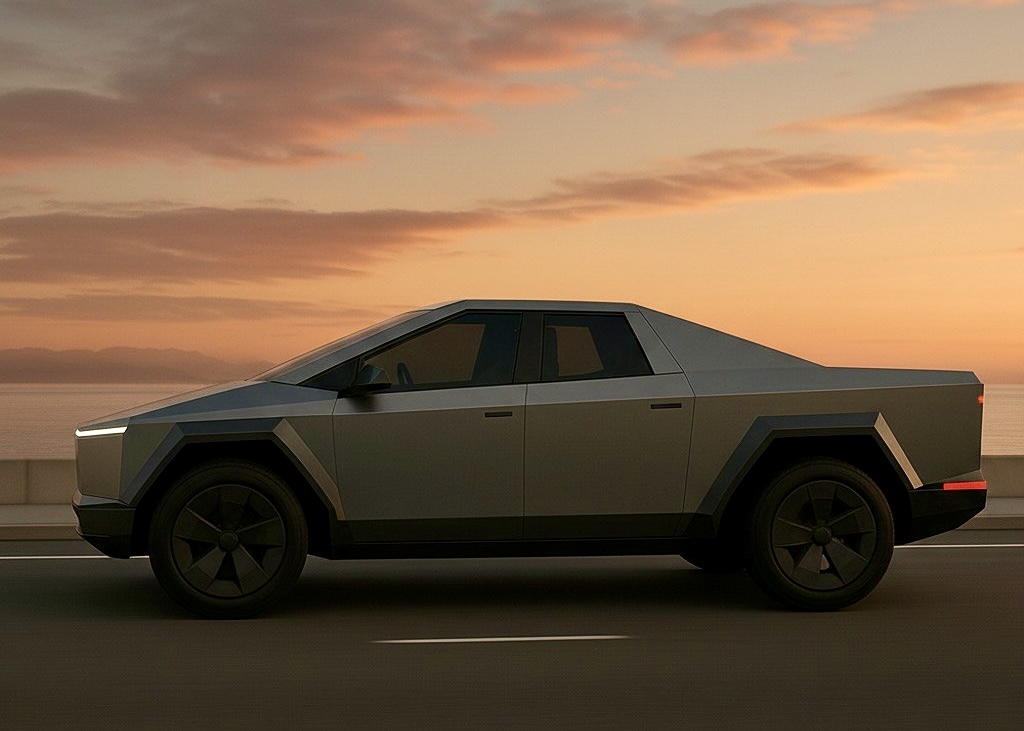
Gentle curvature reduces drag by 8-10%, which means more miles per charge. The current Cybertruck fights the wind like it’s personally offended by air resistance.
Wider Market Appeal
The NeoTerra looks futuristic but familiar. It’s what you’d see in The Martian 2, not Mad Max 7. That’s the difference between 20,000 annual sales and 200,000.
Emotionally Resonant Design
The current Cybertruck looks like it hates people. The NeoTerra feels human-centered—elegant, safe, and forward-thinking. It invites you in rather than challenges you to a duel.
And Here’s the Kicker: It Could Actually Hit That $39,900 Target
Remember that mythical base price Tesla promised? With the NeoTerra, it’s not just possible—it’s probable. Here’s how the math works:
Manufacturing Cost Reductions:
Streamlined Production Process – The current Cybertruck’s ultra-hard stainless steel requires specialized equipment and causes production bottlenecks. The NeoTerra’s multi-axis cold rolling uses existing automotive manufacturing infrastructure. Savings: ~$3,500 per unit
Reduced Quality Control and Rework – Those sharp edges and tight tolerances? They result in high rejection rates and expensive fixes. The NeoTerra’s more forgiving design tolerances cut defect rates by an estimated 40%. Savings: ~$2,200 per unit
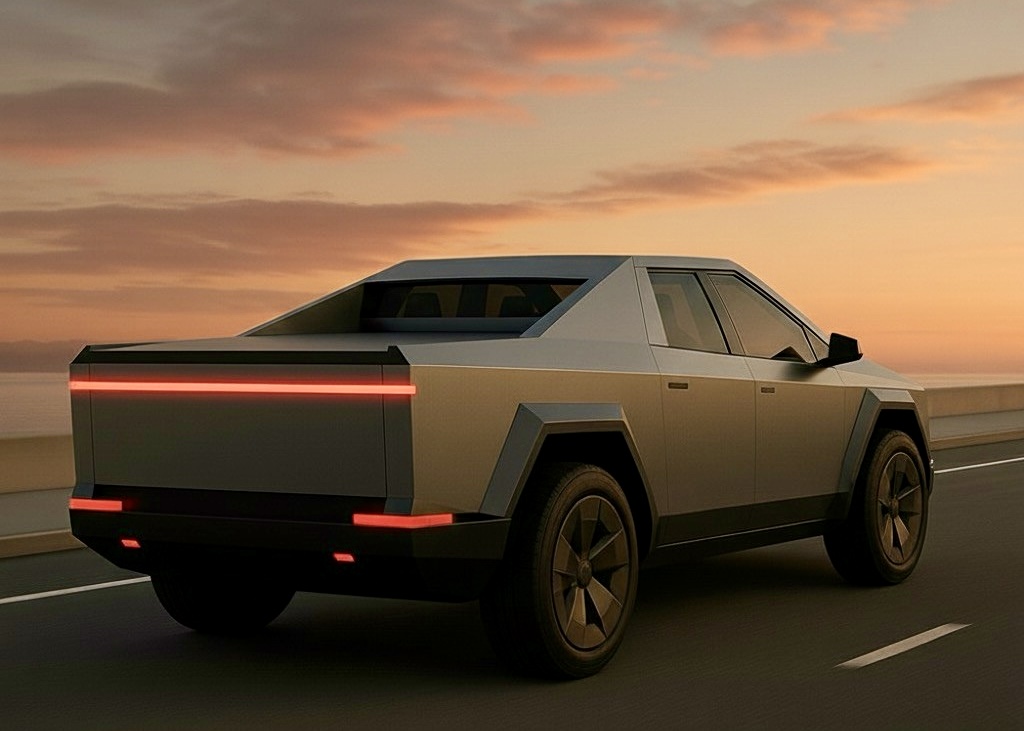
Lower Warranty and Recall Costs – The current Cybertruck has faced multiple recalls (accelerator pedals, trim pieces, software issues). Better design means fewer problems, and fewer problems mean lower long-term costs amortized across production. Savings: ~$1,800 per unit
Improved Aerodynamics = Smaller Battery Option – That 8-10% drag reduction means you can offer a smaller, cheaper battery pack for the base model while maintaining competitive range. A 75 kWh battery instead of 85 kWh? Savings: ~$4,000 per unit
Higher Production Volume Efficiency – When people actually want your truck, you can run production lines at optimal capacity instead of the current start-stop situation. Economy of scale kicks in hard at 150,000+ units annually versus 20,000. Savings: ~$5,500 per unit
Simplified Supply Chain – Standard automotive-grade components instead of custom everything. The current Cybertruck requires unique parts that only a few suppliers can manufacture. The NeoTerra uses modified standard components. Savings: ~$2,000 per unit
Total Manufacturing Cost Reduction: ~$19,000 per vehicle
So if the current base Cybertruck costs approximately $60,000 to manufacture (sold at $79,990 with ~$20,000 margin), the NeoTerra could be built for around $41,000. Add a modest $8,000 margin, and you’re looking at a retail price of $49,000—not quite $39,900, but close enough to be competitive with every other truck on the market.
Want to hit that magical $39,900? Offer a true base model with:
- Rear-wheel drive only (saves $3,500)
- Standard range battery (saves $2,500)
- Simplified interior trim (saves $1,500)
- Basic Autopilot only (saves $1,500)
Boom. You’re at $40,000.
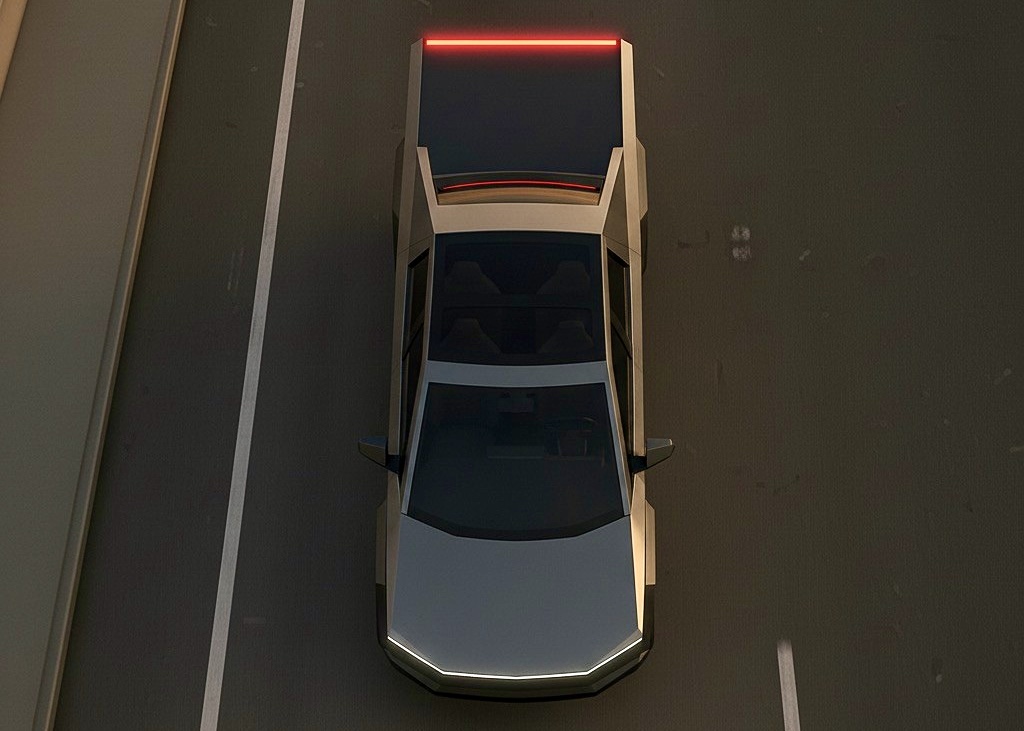
And unlike the current Cybertruck, people would actually buy the base model because it doesn’t look like a compromise—it looks like the truck they’ve been waiting for.
What If Tesla Actually Designed a Cybertruck We Loved?
Here’s the thing nobody wants to say out loud: Tesla could have had it all.
Imagine if the Cybertruck had launched with the NeoTerra’s design from day one. Same revolutionary materials. Same jaw-dropping specs. Same “we’re-from-the-future” swagger. But wrapped in a package that made people say “I want that” instead of “What is that?”
The Market Would Have Been Different
Those 250,000 annual units Musk predicted? Actually achievable. Because here’s what would have happened:
The Tesla faithful would have bought it anyway—they always do. But so would the Ford loyalists who secretly wanted something new but couldn’t bring themselves to drive a geometry problem. The luxury truck buyers who split between the Rivian R1T and the GMC Hummer EV would have had a clear winner. The environmentally conscious professionals who wouldn’t touch the current Cybertruck with a ten-foot charging cable? Suddenly interested.
The Cultural Impact Would Have Been Massive
Instead of becoming a punchline and a political statement, the NeoTerra would have been aspirational. It would have been the truck you saw in a parking lot and immediately pulled out your phone to photograph. The one that made your neighbour ask genuine questions instead of offering condolences.
It would have shifted the entire industry faster. When people love something, competitors scramble to catch up. When people are confused by something, competitors wait and watch from a safe distance.
The Financial Reality Would Have Been Transformed
At 200,000+ units annually instead of 20,000, the Cybertruck would have been a revenue monster instead of a manufacturing headache. Those economies of scale would have kicked in. The stainless steel production would have been streamlined. Tesla’s stock wouldn’t have taken hits every time Cybertruck sales numbers dropped.
And here’s the kicker: they wouldn’t have needed all those discounts and incentives they’re now offering just to move inventory. Desirable products don’t sit on lots. They don’t need desperate sales tactics. They sell themselves.
Innovation Doesn’t Require Alienation
This is the lesson Tesla still hasn’t fully learned. Being revolutionary doesn’t mean being abrasive. The Model S was revolutionary, and it was beautiful. The Model 3 democratized electric vehicles, and people actually wanted to be seen in one.
The original Cybertruck tried to prove a point: that different was better. But the NeoTerra would have proved something more important: that better is better. You can push boundaries without punching people in the face with them.
The Bottom Line
Look, we get it. Elon wanted something unique, something that screamed innovation. And he got it. But somewhere between vision and execution, the Cybertruck became a cautionary tale about what happens when you prioritize being different over being desirable.
The NeoTerra isn’t a rejection of that vision. It’s a refinement. It’s saying, “Yes, let’s be bold. But let’s also remember that people have to look at this thing every day. And maybe, just maybe, they should actually enjoy that experience.”
Because at the end of the day, you can have the best specs in the world, but if your truck looks like it was designed by someone who thinks Brutalist architecture is “too soft,” you’re going to have a problem.
What if Tesla had designed a Cybertruck we actually loved? We wouldn’t be having this conversation. We’d be waiting six months for delivery and arguing about which finish option looks best.
So here’s to the NeoTerra. Same revolutionary spirit. Better execution. And finally—finally—a truck that looks like it came from the future we actually want to live in.
Let’s make automobiles beautiful again. (MABA, if you will. Trump would approve.)


Leave a Reply