
Hint: it is not what your guidance counsellor told you
I watch my son sometimes and wonder if I can already see it. That thing. That impossible-to-name quality separating people who figure life out from people who spend their whole lives waiting for it to start. I look at my nieces and nephews too. Small, loud, still building their personalities like unfinished houses. And I think: which of them are going to be okay?
It is a terrible thing to wonder. And I wonder it constantly.
Can we predict it? Can we look at a child and see the outline of who they are going to become? And if we can, what do we do with that?
The research is both more hopeful and more complicated than the story we were sold.

The Myth We Were Raised On
Work hard. Stay in school. Be smart. Success will arrive like a well-trained dog.
It is the founding myth of the middle class, stitched onto pillows, repeated at graduations with the confidence of people who have never stress-tested it against actual data.
Science has been quietly dismantling it for decades. Success is not a straight line or a reward for virtue. It is something closer to a collision: specific traits meeting specific conditions at a specific moment, with a helping of random chance thrown in to keep everyone humble.
Before we arrive at the complicated part, let us start with what conventional wisdom does get right.
The 7 Traits We Traditionally Associate With Success
If we are going to understand what actually drives success, we first need to understand what we have traditionally been told to look for. These are the signals that parents, teachers, employers, and researchers have pointed at for generations. They are not invented. They are documented. They are also, as we will see, incomplete.
Think of this as the surface layer of the blueprint. The visible part. What shows up in the first impression, the report card, the performance review. It matters. But it is only the beginning of the story.
- General intelligence. Not genius-level. Just enough to process complexity, adapt quickly, and communicate clearly under pressure. The ceiling matters less than people think. The floor matters more.
- A ferocious work ethic. Unglamorous and chronically underrepresented on motivational posters. The willingness to outwork the room is one of the most consistent differentiators between people who reach their potential and people who spend their lives adjacent to it.
- Emotional regulation. The ability to stay functional when everything is on fire. Slow to panic, fast to recalibrate. Not coldness. A practiced discipline that can be built.
- Curiosity. A compulsive need to understand how things work. Curious people read beyond their lane, find connections specialists miss, and see opportunity in terrain others find confusing.
- Social intelligence. Reading rooms. Building trust over time. Knowing when to speak and, more critically, when to be quiet. People who rise consistently tend to bring others with them.
- Directed ambition. Raw ambition without a target is just restlessness. The people who build something want something specific and organize their energy around it with enough discipline to resist the thousand interesting distractions that appear along the way.
- Adaptability. The world does not hold still. The people still standing when it reorganizes are the ones who did not require the old version to stay intact in order to function.
5 Forces That Shape Success Before Grit Ever Enters the Room
Here is where the picture gets more honest. Those seven traits do not emerge from nothing. They are cultivated, suppressed, activated, or extinguished by forces largely outside a child’s control. This is the deeper layer of the blueprint. The part that is harder to see and harder to talk about.
Understanding these forces matters because they explain why two people with identical talent can end up in entirely different lives. And because if we want to actually guide the children we love toward something better, we need to understand the ground beneath their feet, not just the shoes they are wearing.
- Environment and early foundation. Children from low-income families hear up to 30 million fewer words than higher-income peers by school age, directly affecting language development and self-regulation for years afterward. Environment is not destiny. But it is the soil.
- Culture. In Japan, kaizen, relentless continuous improvement, is embedded in daily life from childhood. Failure is treated as information, not identity. North American culture tends to celebrate the overnight success and the disruptor. Both produce exceptional people shaped by entirely different assumptions about what effort is for.
- Self-efficacy. Albert Bandura identified self-efficacy as a domain-specific belief in one’s capacity to succeed at a particular task. People with high self-efficacy treat challenges as problems to solve. People with low self-efficacy treat them as evidence of limitation. That distinction compounds across a lifetime.
- Delayed gratification. The person who drinks heavily through their twenties is not just having fun. They are borrowing against future clarity and compounded time. The investor who sells a strong position five years too early hands their future self a smaller life. Delayed gratification is not about suffering. It is about understanding that the second marshmallow is almost always worth the wait.
- Constructive feedback and the humility to receive it. The people who improve fastest are almost never the most talented. They are the ones who seek honest critique and integrate it rather than deflect it. The refusal to receive honest feedback is one of the most reliable predictors of a plateau. The capacity to sit with it and return to work is one of the most reliable predictors of long-term growth.
The Gifted Children Who Weren’t
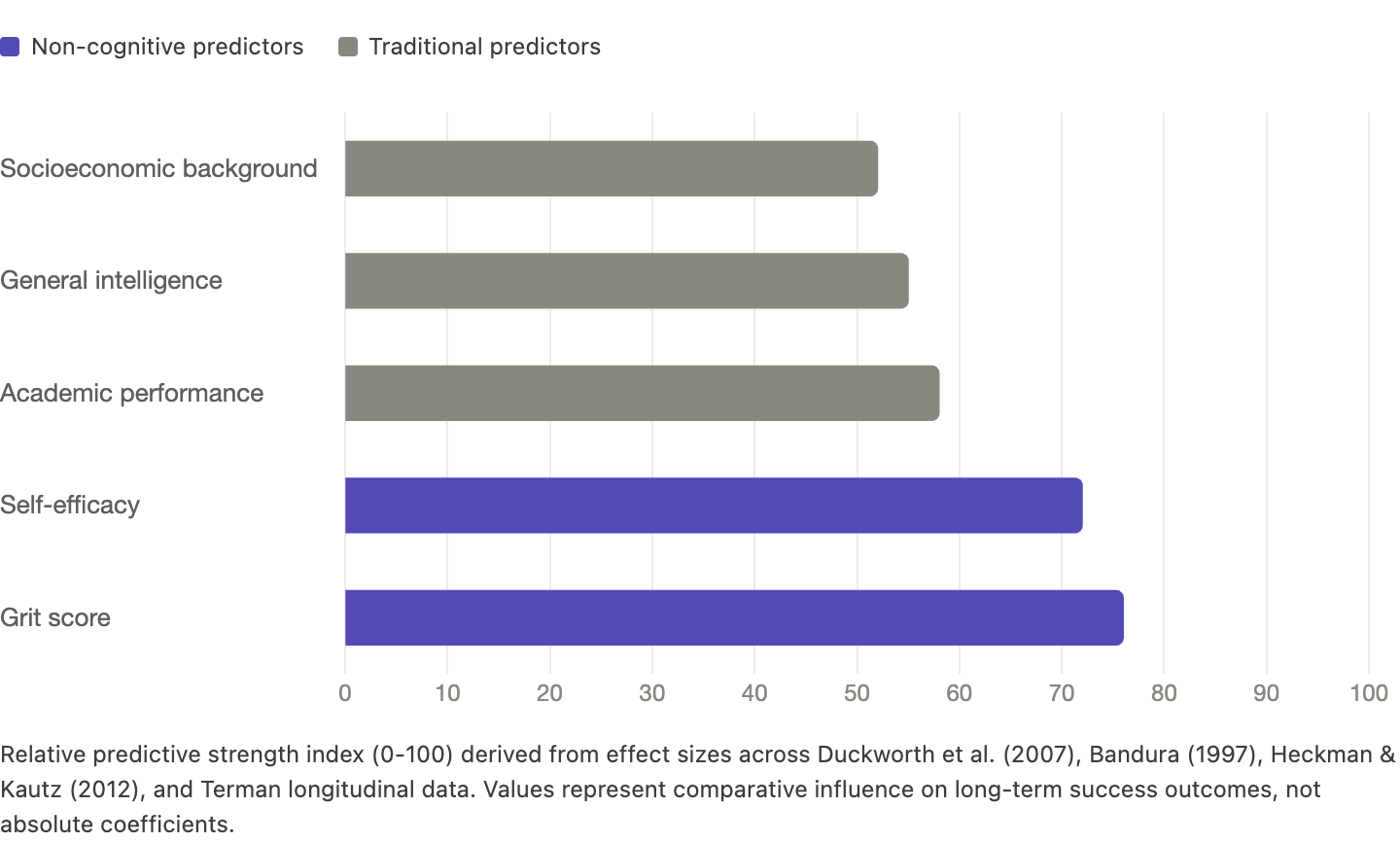
In 1921, Lewis Terman tracked over 1,500 children in the top one percent of IQ scores, handpicked as the future luminaries of American civilization. None of them won a Nobel Prize.
Two children were tested and rejected for not scoring high enough. William Shockley and Luis Alvarez. Both won the Nobel Prize in Physics.
So it goes.
Terman eventually concluded that the difference between his most accomplished subjects and the rest was not intelligence. It was perseverance, self-confidence, and integration toward goals. Slippery, unglamorous, impossible-to-test-in-an-afternoon stuff.
The Marshmallow and the Hidden Truth
Walter Mischel sat small children in a room with a marshmallow. Wait fifteen minutes and you get two. Children who waited grew up to score higher on their SATs and showed stronger social competence as teenagers.
Then a 2013 study modified the experiment by having a researcher either keep or break a small promise before the marshmallow appeared. In the unreliable condition, only one out of fourteen children waited the full time. In the reliable condition, nine out of fourteen waited.
The children were not failing a test of willpower. They were making a perfectly rational calculation. If adults cannot be trusted, why wait for a second marshmallow that might never arrive? The child who eats it immediately might not lack self-control. They might just live in a world that has taught them, reliably, that waiting gets you nothing.
The People Behind the Icons
We love the myth of the self-made titan. It is almost always fiction.
Steve Jobs was given up for adoption at birth. His adoptive father rebuilt the family garage into an electronics workshop and spent hours teaching him how things were built and how they broke. Jeff Bezos watched his stepfather, a Cuban immigrant who arrived in America at sixteen with nothing, build a life through sheer persistence. Bezos also spent summers with his grandfather, who taught him self-reliance and the habit of solving problems rather than waiting for someone else to do it. Elon Musk’s father was, by most accounts, damaging. But his mother Maye raised three children largely alone across multiple countries, worked multiple jobs, and refused to perform helplessness. Elon watched her outwork every room she entered for most of his childhood.
The pattern is not that hardship produces greatness. It is that hardship plus at least one person who models resilience produces something durable. It takes a village. Even for the people building rockets.

Grit, Luck, and the Diamond in the Rough
At West Point, a cadet’s grit score was the single best predictor of surviving Beast Barracks, outperforming intelligence, leadership ability, and physical fitness combined (American RadioWorks). Talent tells you how fast you acquire a skill. Grit tells you whether you will show up long enough for it to matter.
As for luck, researchers Pluchino, Biondo, and Rapisarda modeled why, if human talent follows a normal bell curve, wealth follows a power law where a tiny group controls nearly everything. The bridge was randomness. The most talented were frequently out-competed by moderately talented people standing in the right place at the right moment.
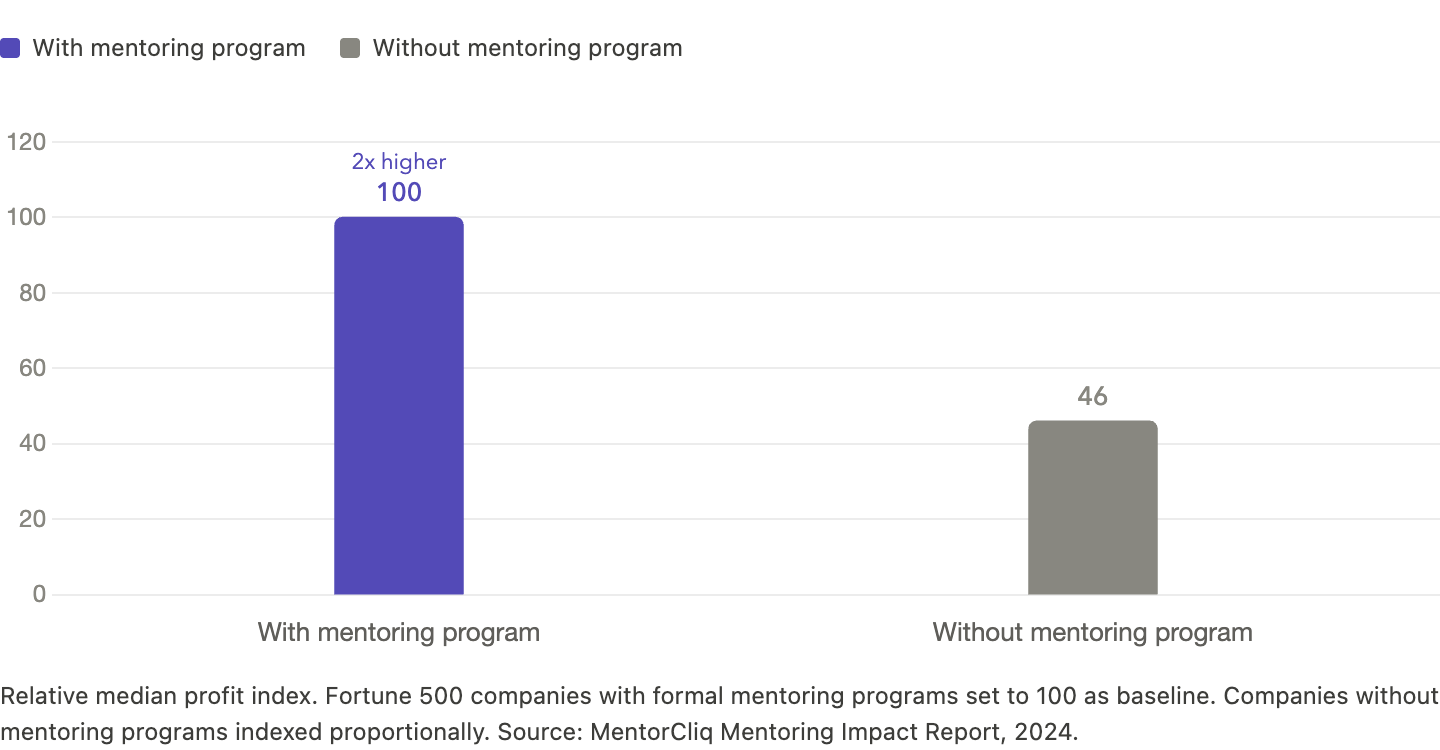
But psychologist Richard Wiseman found that so-called lucky people had behavioral patterns that mathematically increased their odds of encountering opportunity. They built wide networks. They reframed setbacks as data. They were not luckier. They were systematically creating more surface area for luck to land on. Mentorship accelerates this dramatically. As of 2024, median profits at Fortune 500 companies with mentoring programs were more than double those without (MentorcliQ).
The Habits, the Caesar Problem, and Sheer Will
Covey organized his answer to the practical question around seven habits. The first three build the private victory: be proactive, begin with the end in mind, put first things first. The next three build the public victory: think win-win, seek first to understand then to be understood, synergize by combining diverse strengths into something greater than any individual could produce alone. The seventh, sharpen the saw, demands continuous physical, emotional, and spiritual renewal.
Then comes the warning nobody puts on a poster.
Success, left unmanaged, destroys the very qualities that produced it. Caesar rose through intelligence, cunning, and a relentless tolerance for risk. He listened to advisors. He adapted. Then he won. As power accumulated, he stopped listening, dismissed warnings, and surrounded himself with people who agreed with him. He was assassinated on the Senate floor by men he believed were loyal. The pattern repeats across business, sport, and daily life with alarming regularity. Staying sharp, staying humble, staying open to the evidence that you might be wrong is not a one-time achievement. It is a daily choice.

And when all else fails, when luck has not arrived, when the mentor never appeared, when the business collapsed and the marriage ended and the industry changed, there is one final resource.
Sheer will.
Not talent. Not timing. Just a person who refuses to accept that the story is finished. Who builds again at fifty-two. Marcus Aurelius wrote in his private journals, not for publication but for himself, every morning: “You have power over your mind, not outside events. Realize this, and you will find strength.” Epictetus, born into slavery, concluded that the keystone of a meaningful life is the dichotomy of control: focus entirely on what is within your power, and release everything else. Vera Wang designed her first dress at forty. Ray Kroc franchised McDonald’s at fifty-two. Julia Child published her first cookbook at forty-nine.
Will does not guarantee an early arrival. It guarantees an eventual one.
What It All Adds Up To
The research does not lie, but it does complicate things.
Success is not a single thing. It is a sequence. Traits that show up early, shaped by environments largely outside a child’s control, tested by adversity, sustained by grit, accelerated by mentorship, and occasionally handed a running start by sheer luck. Remove any one element and the architecture wobbles. Stack enough of them together and something remarkable becomes possible.
What the science keeps returning to, through every study, every longitudinal survey, every biography of someone who built something worth building, is this: the people who figure it out are almost never the most talented ones in the room. They are the ones who stayed in the room. Who took the feedback seriously. Who built habits that compounded quietly over years while everyone else was waiting for the right moment. Who had at least one person in their corner who believed in them before the evidence was conclusive.
And when none of that arrived on schedule, some of them simply refused to stop. Late, bruised, and occasionally laughed at, they kept building anyway. That is not a strategy you will find in any MBA program. But it is, the data suggests, one of the most reliable paths to an eventual life well built.
Watch the children. Build the conditions. Stay humble long after success makes humility feel optional.
The blueprint was never hidden. It was just quieter than everything else competing for your attention.
Sources
- Duckworth, A. et al. (2007). Grit: Perseverance and Passion for Long-Term Goals. Journal of Personality and Social Psychology.
- Kell, H. J., & Wai, J. (2019). Terman Study of the Gifted. Encyclopedia of Personality and Individual Differences.
- Kidd, C. et al. (2013). Rational snacking. Cognition.
- Pluchino, A. et al. (2018). Talent vs Luck. Advances in Complex Systems.
- Bandura, A. (1997). Self-Efficacy: The Exercise of Control. W. H. Freeman.
- Merton, R. K. (1968). The Matthew Effect in Science. Science Magazine.
- Heckman, J. J., & Kautz, T. (2012). Hard Evidence on Soft Skills. Labour Economics.
- Covey, S. R. (1989). The 7 Habits of Highly Effective People. Free Press.
- Graham, P. (2008). The Anatomy of Determination. paulgraham.com.
- MentorCliq. (2024). Mentoring Impact Report. mentorcliq.com.
- Wiseman, R. (2003). The Luck Factor. Hyperion.
- Aurelius, M. (161-180 AD). Meditations.
- Epictetus. (108 AD). Enchiridion.
 Notes Beyond the Map
Leave a comment