You’re right about the risks. You’re wrong about what it costs to wait.
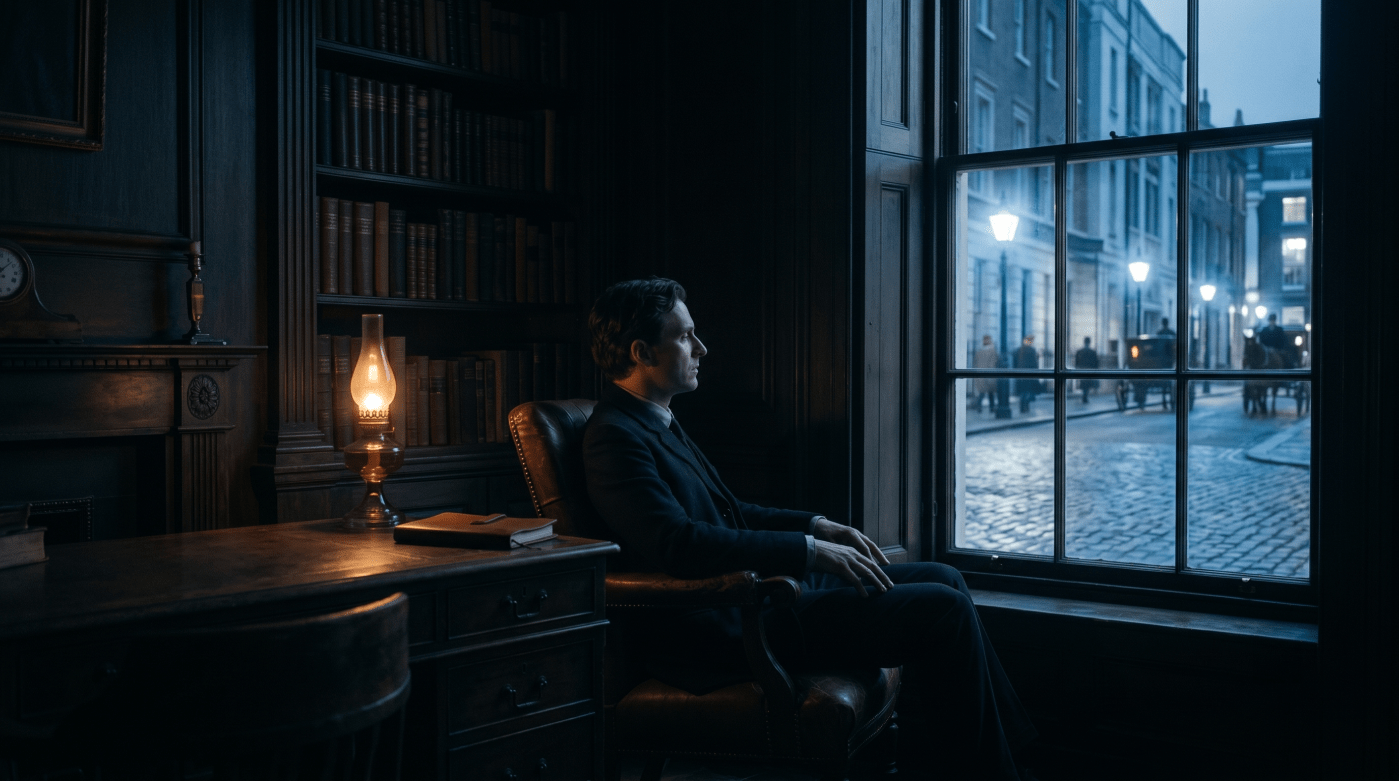
In the autumn of 1882, a careful man in New York looked at Thomas Edison’s electric light and decided to wait.
And who could blame him. The thing flickered. It started fires. The wiring ran through the walls like a rumor, the company behind it might fold by spring, and gaslight had lit his study perfectly well for fifty years. He was not a fool. He was prudent. He would wait until it was proven, until it was safe, until a sensible person could adopt it without feeling like a lab rat. So he waited, by the warm and faithful glow of his gas lamp, and he was still waiting on the day the lights came on up and down his block without him.
Every revolution keeps one of these men. He is never stupid. That is the part worth sitting with. He is careful, and he is completely right about the world that is ending, and that is precisely what buries him.
The Pattern Is Older Than You
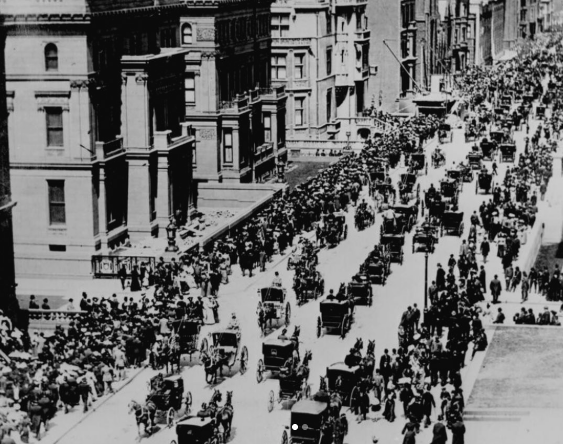
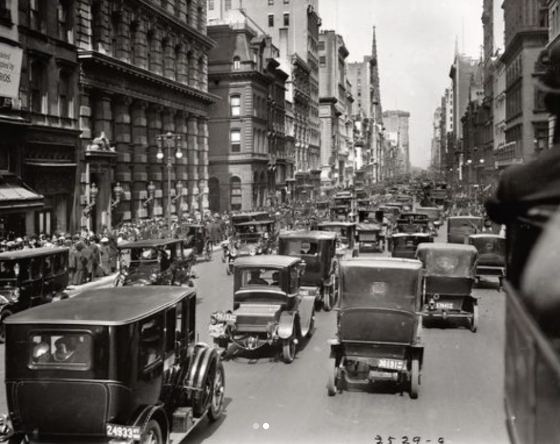
Look at a photograph of Fifth Avenue at Easter, 1900. It is a river of horses. Carriages, hooves, the whole warm animal machinery of a thousand years of getting around. Now look at the same street thirteen years later. It is a river of automobiles, and if you squint you can find one lonely horse in the corner, looking like it wandered in from a museum. Thirteen years. A careful man could have spent that entire window explaining, with excellent evidence, why the automobile was a loud and dangerous toy for rich idiots. He would have been right about the noise. He would have been wrong about everything that mattered, and his beautiful buggy-whip business would have closed all the same.
It happened again with the fax machine. There was an office, and you have met it, that kept its fax humming and holy long after email had eaten the working world, because the fax felt official and the internet felt like a fad for teenagers and shut-ins. The letter, the fax, the phone call on the cord. All of it sensible. All of it gone.
Here is the thing nobody tells you about the sentence “I’ll wait until it’s safe.” It sounds like wisdom. It works like a trapdoor. You say it, you feel responsible, and then you spend the rest of your life standing very still on the spot where the floor used to be.
Now It’s Your Switch
You are the careful man now. The switch on the wall is artificial intelligence, your hand is hovering near it, and your reasons for not touching it are good. I am not going to insult them.
You type your life into a box owned by a company that would sell your grandmother’s shopping habits to a cereal conglomerate for a nickel. The machine lies, with the serene face of a weatherman who does not know he is wrong. Companies will use it to erase jobs and then hold a press conference to call the erasing innovation. It drinks power and water like a small thirsty country, and the strongest versions of it live with a handful of companies who own the largest computers on earth.
Every word of that is true. And not one word of it is new. The 1882 man’s fears were true too. The light did start fires. People did get hurt. Good reasons and a dark house have never once been mutually exclusive.
Who’s Glad You’re Waiting
Let me tell you who buys a round of drinks every time a sensible person sits one out.
For three hundred years, the people with money have made more of it by keeping certain rooms locked and charging you to stand near the door. A lawyer, boiled all the way down, is a man who writes a document in a language only other lawyers can read, and then bills you for the translation. A consultant will explain your own business back to you in a forty-slide deck for the price of a used Honda, and you will shake his hand and thank him. The mystery was always the merchandise.
Then the lock broke. For twenty dollars a month, the stuff that used to live in those rooms leaks into a chat window, and a stubborn person at a kitchen table can think beside a lawyer and a researcher and an analyst at once, on a Tuesday, in their socks. The people who own the locked rooms would love for you to keep finding this too complicated to bother with. Your hesitation is the last brick in their wall.

What Happened When I Stopped Waiting
I built a company alone. No team, no investors, no thick address book of important people who owed me favors. Just stubbornness, too much coffee, and this thing standing at my shoulder for every move.
Let me be specific, because vague is how people lie. I handed it a forty-page contract once and asked which clause was going to bite me. It found the clause. The clause would have bitten me. My portfolio is five times the size it was, and not because a chatbot leaned in and whispered a hot stock tip. Because it helped me think straighter and move before the window shut on my fingers. I am not smarter than I was three years ago. I am amplified. Those are two different animals, and the gap between them is the whole reason for this letter.
The Catch Nobody Sells You
Now the part the cheerful letters always leave out.
They swear it is free and easy. It is neither. Ignore anyone who tells you the tools are getting dumber, because they are not. The free version today is sharper than the most expensive model on earth was two years ago. But the free lane was built to do something specific to you. It cuts you off mid-thought, right as the work gets good. Under heavy load it swaps you down to a dumber cousin and forgets to mention it. It keeps the real horsepower locked behind the paywall where the serious people work, and lately it sells your attention back to you with ads, like a magician charging admission to watch him pick your pocket.
And if ten thousand strangers type the same lazy prompt into the same free box, they all get back the same gray paragraph, the beige carpet of the written word, the painting nobody looks at in the hotel hallway. So do not believe the hype. The ones pulling ahead are not the people who showed up. They are the people with skin in the game, who paid for the good stuff and then did the deeply unglamorous work of learning how to drive it.

It Was Never About Getting Lazy
Go back to that man by his gas lamp one more time, because I’ve been a little unfair to him.
His real fear was never fire. Fire was the excuse. Underneath it sat something more human and harder to admit: the worry that leaning on a new thing makes you less of a man, that the fellow who flips a switch is somehow softer than the one who trims a wick. Calling effort a virtue and convenience a sin is one of our oldest reflexes, and a wrong one more often than not.
So let me correct the record. This was never about getting lazy. Lazy is the cheap version, and the cheap version was always on the shelf. This is about getting amplified.
In 1950, the first pneumatic nail gun hit the housing market, firing forty to sixty nails a minute into the subfloor a man used to nail by hand, one swing at a time. The careful carpenter sniffed at it, the way careful men always do. But the builder who picked up that gun outbuilt the whole hammer crew by Friday, and the holdout who stuck with his wrist watched the work walk over to someone faster. The nail gun did not fire the carpenter. It turned one good carpenter into three.
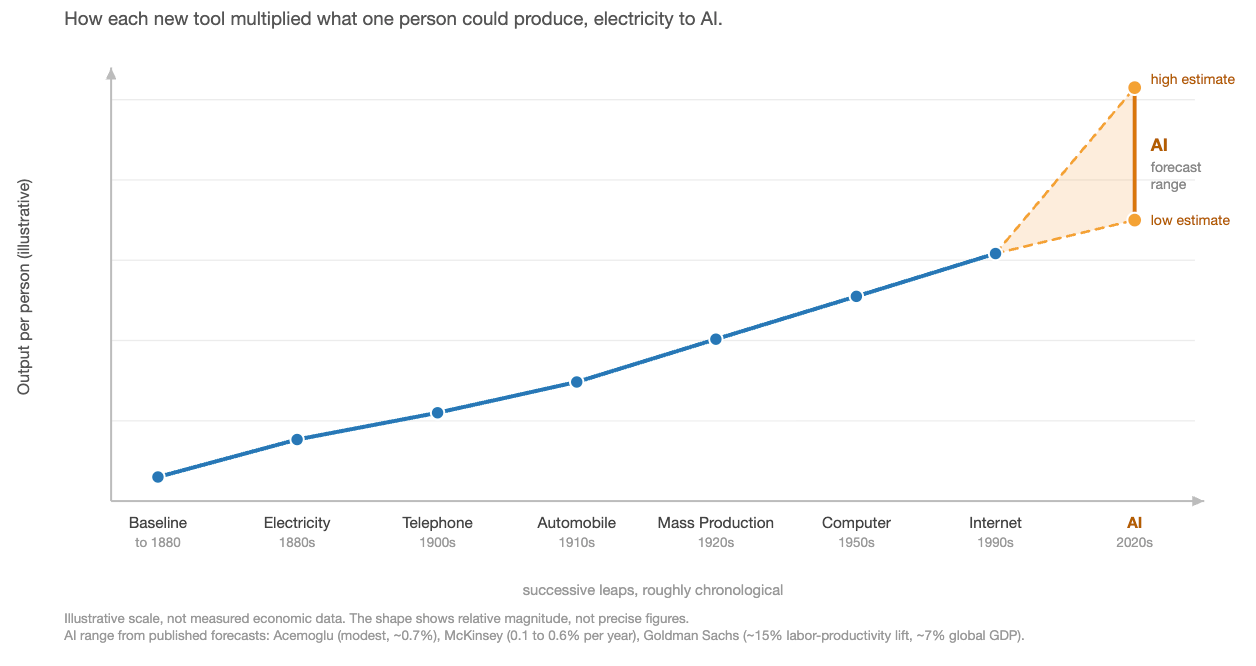
AI is the same kind of leap, and that is the whole reason it is suddenly everywhere. Tools like this do not spread because they are clever. They spread because the person holding one out-produces the person who isn’t, and the gap compounds until the holdout stands alone. AI is doing to the blank page and the week of research what the nail gun did to the hammer, except it needs no compressor and no hose, only a sentence in plain English, which is why it is spreading faster than anything before it. The purpose is the same. Not to replace the hands, but to multiply what they build.
That is what it does for me. Not the lazy prompt flung into the void with a shrug when garbage comes back, but the targeted one, the question sharpened to a point, the kind that takes my own thinking and hands it back bigger than I sent it. I am still the carpenter. I just put down the hammer.
The Future Belongs to the Curious
The doomsayers have it backwards. The next era will not belong to the most intelligent. It will belong to the curious and the creative, the ones who keep asking sharper questions, now holding a tool that answers at the speed of thought.
Which brings me to the example that should rattle you more than any lightbulb. Almost six hundred years ago, a man in Mainz built a press with movable type, and the men who had spent centuries keeping knowledge in Latin and in their own hands were right to be terrified. The press spread lies as fast as truth. It fueled wars. It was dangerous in exactly the ways they feared. And it remade the world anyway, because it took reading, the most powerful thing a person could own, and handed it down to everyone. The ones who learned to read inherited the future. The ones who waited for it to settle down inherited a pew.
We are there again, only faster. The skill on the table now is not reading. It is learning to think alongside a machine, and within your lifetime it is going to matter more than knowing how to drive a car or work a phone. So learn it, flaws and dangers and all. Then do the thing the gatekeepers never did. Teach the person next to you. Refuse to hoard it like a secret. That is the true power of this thing, and it is the exact opposite of a locked room.
Why I Want You in the Room
Read the people who are frightened of this thing. The sharpest critics it has, Bostrom and Harari and the authors of AI Snake Oil, are not telling you to look away. They are telling you to look harder. Kissinger, one hundred years old and presumably finished being surprised by anything, spent the last year of his life writing a book about whether a species should hand its gravest decisions to a mind it does not understand. He died before it reached a shelf. When a hundred-year-old drops everything to warn you on his way out the door, you lean in close. You do not wait.
And here is the real reason I want you in the room, which is not the reason the cheerleaders give. The dangerous people in this story are not the doubters. They are the true believers, the ones who trust the machine all the way down to the floor and never once ask it to show its work. This thing needs hands on it that flinch. It needs people who read the fine print, who refuse to be dazzled, who keep asking who got rich and who got automated out of a living. You flinch professionally. In this economy that is not a flaw. It is the rarest thing in the room, and you are giving it away for nothing by staying home.
So. There is a switch on the wall. It has been there the whole time. Nobody is going to cross the room and flip it for you, and that is either the worst news in this letter or the best, depending entirely on whether you stand up.
Somewhere a hundred years ago, a careful man is still sitting by his gas lamp, waiting for the light to prove itself.
The room is already bright. Come in.
Notes Beyond the Map is a blog about mind, world, and enterprise, written for people who refuse to follow the herd. New articles published at joshnash.ca.


Leave a comment